Skip to content
Save up to 80%
Betadine
Active ingredient: Povidone-iodine

Betadine

Quality products
24/7 Support
Fast delivery
Delivery from 4 days
Select pack Package Per unit Price

Free delivery on orders from $ 296.00, free express delivery from $ 444.00

Secure Payments
Track your order
Best price guarantee

Betadine supports topical antiseptic care for minor skin injuries and localized skin cleansing. Its ointment format is intended for external application to the skin, where a thin layer can help protect affected areas from microbial contamination.

Overview

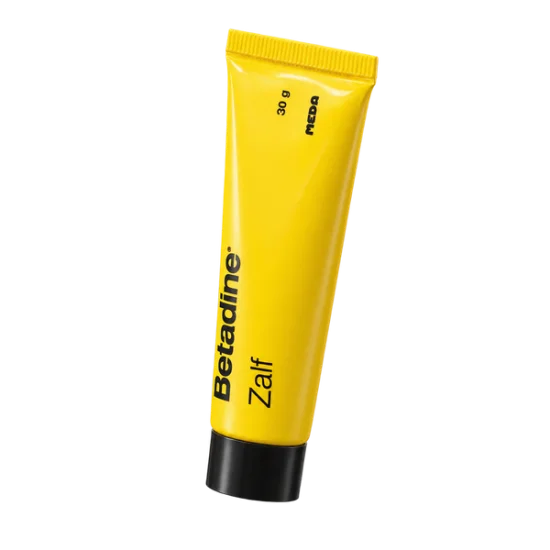
Betadine is supplied as an ointment in a tube for external skin application. The product belongs to the topical antiseptic category and is used on minor cuts, grazes, superficial abrasions, and limited areas of irritated or damaged skin. Its purpose is local skin hygiene rather than treatment of deep wounds, extensive burns, or systemic infection.

Dosage and administration

  • Route: Apply Betadine ointment topically to the affected external skin surface. It is not an oral product.
  • Amount: Apply a thin film over the minor cut, graze, superficial abrasion, or limited area of irritated or damaged skin.
  • Frequency: Apply as part of localized care for a minor superficial skin injury. The ointment is intended for external skin application rather than systemic treatment.
  • Timing: Wash your hands before touching the injured area, rinse away visible dirt with clean running water when suitable, pat the surrounding skin dry with a clean material, and then apply the ointment.
  • Duration: Use for localized care of a minor superficial skin injury. Betadine does not replace wound closure, professional debridement, or care for a large burn.

Formulation

The ointment base keeps the preparation in contact with the skin for longer than a rapidly evaporating liquid. This can be useful when a small affected area needs continued surface coverage between applications. A thin film is usually preferable to a thick coating because excessive product can make the skin macerated, greasy, or difficult to inspect.

Betadine ointment is intended for use on intact surrounding skin and minor superficial injuries. Deep puncture wounds, animal bites, heavily contaminated wounds, and spreading redness require clinical assessment rather than prolonged self-treatment.

Apply only enough ointment to form a light, even film over the affected surface. A heavy layer does not provide proportionally better antiseptic coverage and can keep moisture trapped against the skin.

How it affects the body

Topical antiseptics reduce microbial contamination at the surface of the skin. Their role is different from that of an oral antibiotic, which acts throughout the body after absorption. Betadine ointment is therefore suited to local skin care, not to fever, bloodstream infection, or unexplained swelling.

A wound should first be cleared of visible dirt with clean water when appropriate. The ointment can then be applied gently without vigorous rubbing. Scrubbing a fresh abrasion may damage fragile tissue and prolong bleeding.

The World Health Organization describes antisepsis as a method of reducing microorganisms on living tissue through an appropriate antiseptic preparation [1]. The same principle applies to minor wound care: reduce contamination while avoiding unnecessary irritation.

Therapeutic indications

Betadine ointment is used as a localized preparation for superficial skin problems. Common situations include a small kitchen cut, a shallow graze, a minor paper cut, or a limited abrasion caused by friction. It is not designed to replace wound closure, professional debridement, or treatment for a large burn.

A practical application sequence is:

  • Wash hands before touching the injured area.
  • Rinse away visible dirt with clean running water when suitable.
  • Pat the surrounding skin dry with a clean material.
  • Apply a thin film of Betadine ointment to the affected surface.
  • Keep the area protected from repeated friction.
  • Reapply according to the product’s approved directions or a clinician’s instructions.

Do not force ointment into a deep wound. Do not use it as a substitute for removing glass, metal, gravel, or other embedded material. A wound that continues to bleed after sustained gentle pressure needs medical attention.

For a small abrasion under clothing, place the ointment on the skin rather than saturating a dressing. Too much product can soften the surrounding skin and make the dressing adhere unevenly.

Application to superficial cuts and abrasions

A superficial cut has limited depth and usually stops bleeding with direct pressure. Once bleeding is controlled, a thin topical layer may support local antiseptic care. The surrounding skin should be watched for increasing warmth, swelling, tenderness, pus, or redness that expands beyond the original injury.

Abrasions can contain fine particles from pavement, flooring, or other surfaces. Rinsing is more important than applying a large amount of ointment. If particles remain embedded, professional cleaning may be needed.

Betadine ointment should not be applied into the eyes, swallowed, or used as a general body wash. External skin use is the relevant route for this tube format.

Application around minor burns

Minor superficial burns can be painful and sensitive. Cool running water is the first practical measure for a recent thermal burn; ice can injure already damaged tissue. After cooling, a small topical area may be managed according to approved product directions.

Do not apply ointment to extensive burns, electrical burns, chemical burns, or burns involving the face, hands, genitals, major joints, or a large body area without medical assessment. Blistering, pale or charred skin, severe pain, and reduced sensation are warning signs for prompt evaluation.

The American Burn Association distinguishes minor burns suitable for basic first aid from burns requiring specialized care. The size, depth, location, and cause determine the level of treatment rather than the choice of antiseptic alone [2].

Common mistakes

Several habits can reduce the usefulness of topical wound care:

  • Applying a thick coat that keeps the wound excessively moist.
  • Skipping rinsing when dirt or grit is visible.
  • Rubbing an abrasion aggressively during application.
  • Using the ointment on a deep puncture or bite.
  • Covering a worsening infection with repeated applications.
  • Applying it inside the eye or swallowing residue.
  • Using several antiseptics at the same time.
  • Continuing repeated large-area use without reassessing the skin.
  • Sharing one tube between several people.
  • Assuming a painful wound is minor because its surface area looks small.

Another common mistake is confusing temporary staining or ointment residue with treatment failure. The wound’s pain, swelling, drainage, and redness provide more useful information than the appearance of the preparation alone.

When not to use it

Betadine ointment is not suitable for every skin problem.

People with kidney disease, thyroid disorders, or previous reactions to iodine-containing preparations should discuss repeated topical use with a physician. The concern is greater when the skin barrier is widely damaged, when treatment lasts for an extended period, or when dressings create prolonged contact.

Avoid combining several antiseptics on the same wound unless a clinician has advised the combination. Using different products together can increase irritation and makes it difficult to identify which preparation caused a reaction.

When this is not for you

  • You have a known allergy to the product or one of its ingredients.
  • The injury is deep, punctured, heavily contaminated, or caused by an animal or human bite.
  • You have a major burn, electrical burn, chemical burn, or extensive damaged skin.
  • You need treatment inside the eye, mouth, or another internal body site.
  • The wound contains embedded glass, metal, gravel, or another foreign object.
  • Redness is spreading, pain is increasing, pus is present, or fever has developed.
  • You have a history of thyroid disease and intend to use a topical antiseptic repeatedly or over a large area.
  • You are pregnant, breastfeeding, or caring for a newborn and plan repeated or extensive application without specific medical direction.

Possible side effects

Most topical antiseptic preparations are used for short periods and on limited skin areas. Local irritation can occur, especially when the skin barrier is already damaged. Possible reactions include burning, itching, redness, dryness, rash, or swelling at the application site.

Stop applying the ointment and seek prompt medical advice if facial swelling, widespread hives, breathing difficulty, or rapidly worsening skin inflammation develops. These symptoms can indicate a significant hypersensitivity reaction.

Repeated application over large areas may raise the risk of systemic exposure, especially when the skin is extensively broken, occluded, or burned. Children, older adults, and people with thyroid disease may need more cautious use when an iodine-containing antiseptic is prescribed or selected.

A mild sting immediately after application can occur on an abrasion because exposed nerve endings react to contact. Persistent burning is different. It suggests irritation or intolerance and should not be managed by covering the area with a thicker layer.

Comparison

Betadine can be compared with antiseptic categories by active mechanism and intended use rather than by brand. The best choice depends on wound depth, tissue location, sensitivity, and the reason for antiseptic treatment.

Antiseptic category Typical role Main limitation
Iodine-based topical antiseptic Broad surface antisepsis for selected skin applications Irritation and thyroid-related precautions may matter
Chlorhexidine-based antiseptic Skin cleansing and procedural antisepsis in selected settings Some formulations are unsuitable for eyes, ears, or certain wounds
Alcohol-based antiseptic Rapid skin disinfection on intact skin Stings damaged skin and is unsuitable for many open wounds

Chlorhexidine and alcohol products are not interchangeable with an ointment intended for minor wound care. Alcohol can cause marked stinging on abrasions, while some chlorhexidine products carry specific warnings for mucous membranes and the eyes. Product selection should follow the intended site and approved use.

The European Medicines Agency evaluates antiseptic medicines according to their formulation, route, exposure, and safety profile. Those factors explain why a product intended for skin cannot automatically be substituted for a mouth, throat, eye, or vaginal preparation [3].

What doctors say

In clinical practice, physicians usually begin by assessing the wound rather than choosing an antiseptic first. Depth, contamination, bleeding, tissue loss, burn severity, and vaccination status can change the treatment plan.

A doctor would usually expect Betadine ointment to be used on a small, localized area for a limited period. More product is not a substitute for irrigation, removal of debris, wound closure, or treatment of an established infection.

Patients often focus on the colour or amount of ointment, yet the more useful clinical signs are the wound’s direction of change. Gradual improvement in tenderness and redness is reassuring. Increasing pain, swelling, discharge, or fever needs reassessment. A clinician should also consider the wound’s depth, contamination, and location. These findings help determine whether routine topical care remains appropriate.

The Cochrane review literature on topical antiseptics shows that antiseptic choice and wound outcome depend on the clinical setting, the type of wound, and the quality of comparative evidence; no topical preparation is suitable for every wound [4].

Common questions

Can Betadine be used with antibiotics or dietary supplements?

Topical Betadine has limited exposure when applied to a small area of intact or mildly damaged skin, so it usually has fewer interaction concerns than an oral medicine. Health Canada advises considering the application site, treatment duration, and extent of exposure when assessing topical products, especially in people with thyroid or kidney conditions. Do not apply it together with another antiseptic or antibiotic cream unless the combination has been specifically recommended. Health Canada’s Drug Product Database (2024) is the reference for product-specific directions.

How long does one application of Betadine keep working?

The duration of surface antiseptic contact depends on the amount applied, the wound’s moisture, friction from clothing, washing, and whether a dressing covers the area. Health Canada product information should determine the application interval for the specific tube and intended use. Reapplying more often than directed can increase irritation without providing a proportional benefit. Health Canada’s Drug Product Database (2024) is the reference for product-specific directions.

Can Betadine be used with cosmetics, sunscreen, or other topical products?

Cosmetics and sunscreen should not be layered directly over an open wound because they may irritate damaged tissue or interfere with observation. The Canadian dermatology approach is to keep wound care products separate from cosmetic products until the surface has closed. Apply sunscreen to healed surrounding skin, while keeping it away from the injured area unless a clinician has advised otherwise. Health Canada’s Drug Product Database (2024) provides product-specific information for topical use.

Is Betadine suitable for older adults?

Older skin is often thinner and more vulnerable to irritation, tearing, and delayed healing. Health Canada safety principles support using the smallest practical amount on the smallest practical area, with extra caution when the skin is extensively damaged or treatment is repeated. An older adult with diabetes, poor circulation, kidney disease, or thyroid disease may need earlier assessment for a wound that is not improving. Health Canada’s Drug Product Database (2024) provides relevant product-specific safety information.

What should be discussed with a doctor before starting Betadine?

Mention thyroid disease, kidney disease, pregnancy, breastfeeding, allergy to previous antiseptics, and any planned use on a large or heavily damaged area. The World Health Organization recommends matching antiseptic practice to the tissue site and clinical purpose rather than treating every wound in the same way. Also describe the wound’s cause, depth, contamination, and vaccination history when seeking medical advice. The World Health Organization’s 2014 guidance provides context for matching antiseptic practice to the clinical purpose.

Which condition rules out self-treatment with Betadine?

A deep puncture wound is a clear reason not to rely on Betadine ointment alone. The Canadian Red Cross and Health Canada first-aid principles support medical assessment when a wound may involve deeper tissue, retained debris, a bite, uncontrolled bleeding, or infection. Spreading redness, pus, fever, severe pain, or loss of movement also rules out routine self-care. Health Canada’s Drug Product Database (2024) and Canadian Red Cross first-aid guidance support prompt assessment for these warning signs.

Do you offer anonymous delivery?

Your order will be securely packed and shipped within 24 hours. This is exactly what your package will look like (images of an actual item sent). It has the size and look of a regular private letter (24x11x0.7 cm) and its contents cannot be seen.

Customer Feedback on Betadine

4
Based on 5 reviews
Martin, 32 Vancouver
Verified
Rating: 4 out of 5

I used a thin layer on a shallow scrape after cleaning it with water. The area felt protected under a small dressing, and the scrape looked much calmer after several days. I liked that the tube was easy to keep in a first-aid drawer.

Oct 10, 2026
Christopher, 64 Saint John
Verified
Rating: 5 out of 5

I applied Betadine to a small cut on my hand after gardening. The cut settled without becoming more tender, and the ointment stayed in place better than a watery preparation. The 30 g tube was practical for occasional household use.

Oct 19, 2026
Adam A., 68 Barrie
Verified
Rating: 3 out of 5

I used a small amount on a recurring crack near a knuckle. It helped the surface feel less irritated, although the improvement was slower than I expected. I stopped repeated use and arranged medical advice when the skin kept reopening.

Oct 21, 2026
Neil, 60 Red Deer
Verified
Rating: 5 out of 5

Betadine was useful for a minor abrasion from a home repair job. I cleaned the area first and applied only a light film, which kept the dressing from becoming overly greasy. The wound became less sore over the following days.

Nov 1, 2026
Darren, 39 Thunder Bay
Verified
Rating: 3 out of 5

I tried it on a scrape that was more inflamed than I first thought. The ointment did not settle the problem, and the redness continued to spread, so I stopped relying on it and sought medical assessment. It may be useful for minor surface care, but it was not enough for that wound.

Nov 6, 2026

Sources

  1. World Health Organization (2014). WHO Guidelines on Hand Hygiene in Health Care.
  2. American Burn Association (2023). Burn Triage and Treatment Guidelines.
  3. European Medicines Agency (2018). European Union guidance for topical and locally applied medicinal products.
  4. Cochrane (2015). Topical antiseptics for preventing surgical site infection.
Get our free app Shop faster and track your orders 4.0 · 289 reviews Install