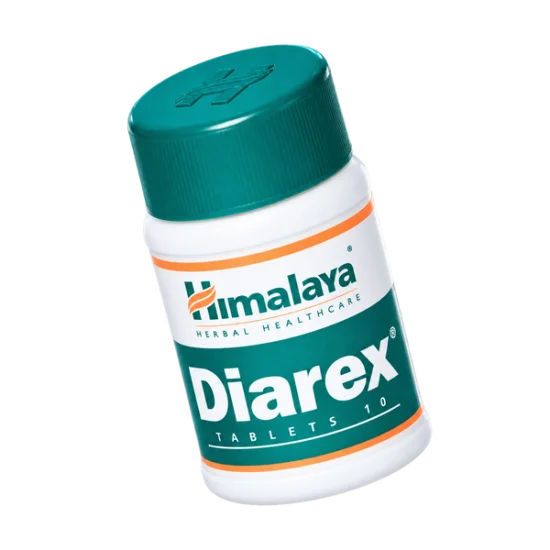
I used Diarex tablets during a short episode of loose stools. My bowel movements settled over the next couple of days, and the cramping became easier to manage. I also kept drinking oral rehydration solution, which made the recovery feel more complete.
Diarex is a herbal antidiarrhoeal tablet formulation from Himalaya Herbal Healthcare for digestive upset involving loose stools and intestinal discomfort. Its plant-based approach is intended to support bowel control through astringent, soothing, antispasmodic, and antimicrobial activity.
Overview
Diarex Tablets are oral tablets supplied in a bottle of 30 tablets. The product belongs to the herbal antidiarrhoeal category and is intended for digestive conditions associated with frequent loose stools, bowel irritation, and abdominal discomfort.
The formulation is designed for adults who need supportive management of diarrhoeal symptoms.
Dosage and administration
Diarex tablets are taken orally with water. Dosing differs between strengths and between users, so there is no single amount that suits everyone.
- Use the dose selected for the individual’s age, symptoms, and clinical situation.
- Do not transfer an adult dosing schedule to a child.
- Do not take extra tablets to compensate for a missed dose.
- If a dose is forgotten, resume the planned schedule rather than doubling the next intake.
- Continue oral rehydration during treatment.
- Seek medical assessment when diarrhoea persists, returns repeatedly, or is accompanied by danger signs.
The bottle contains 30 tablets. The number of tablets in a bottle does not determine the correct course length. Acute episodes and longer-lasting bowel disorders require different treatment decisions.
A tablet should be swallowed with sufficient water unless a clinician has given a different instruction. Crushing or splitting a tablet can alter how it is taken and may make accurate dosing harder.
Formulation
Diarex is a botanical tablet formulation. The product information identifies Bael and Coneru as named plant components associated with the preparation.
Bael
Bael is a botanical ingredient traditionally used in digestive preparations. Its astringent and bowel-regulating properties are relevant to loose stools and intestinal irritation. The botanical name, plant part, extract ratio, and amount per tablet determine pharmacological strength; these details should not be inferred from the common plant name alone.
Coneru
Coneru is another named botanical component of Diarex. It is associated with traditional digestive support and may contribute to the formulation’s astringent, soothing, and bowel-calming profile.
Plant ingredients can still cause adverse reactions. A history of allergy to herbal products, pregnancy, breastfeeding, liver disease, or regular prescription treatment changes the suitability assessment.
How it affects the body
Diarex is described through several pharmacological properties relevant to bowel irritation. Astringent activity may reduce excessive intestinal secretion by causing superficial tissue proteins to contract. Demulcent activity refers to a soothing effect that helps reduce friction and irritation along mucosal surfaces. Antispasmodic action may ease cramping caused by excessive intestinal contractions. Individual responses vary. Clinical evidence for branded botanical combinations may be limited.
Antimicrobial activity describes an ability to inhibit or limit some microorganisms under tested conditions. It does not mean that every bacterial, viral, or parasitic cause of diarrhoea will be eliminated in a person.
Therapeutic indications
Diarex is positioned for diarrhoea and dysentery-related digestive symptoms, including acute and chronic diarrhoea. It may also be used as supportive treatment in chronic amoebiasis and as an adjunct in irritable bowel syndrome, where bowel habit changes and cramping can occur.
These conditions are not interchangeable:
- Acute diarrhoea develops over a short period and commonly follows infection, food exposure, or a sudden dietary trigger.
- Chronic diarrhoea persists or recurs over a longer period and may reflect inflammatory, infectious, endocrine, malabsorptive, or medication-related causes.
- Dysentery involves diarrhoea with blood or mucus and requires prompt medical assessment.
- Amoebiasis is a parasitic infection that may require specific antimicrobial treatment.
- Irritable bowel syndrome is a functional gastrointestinal disorder. Symptoms can include abdominal pain, diarrhoea, constipation, or alternating bowel habits.
Common mistakes
Several habits can reduce the usefulness of diarrhoea treatment or delay necessary care:
- taking tablets but drinking too little fluid;
- using adult instructions for a child;
- doubling a dose after a missed intake;
- continuing self-treatment despite blood in stool or high fever;
- assuming chronic diarrhoea is the same as a brief stomach infection;
- taking several gastrointestinal remedies together without checking for overlapping ingredients;
- eating heavily while nausea and watery stools continue;
- stopping oral rehydration as soon as stool frequency falls;
- ignoring reduced urination because thirst is mild.
One easily missed detail is the distinction between symptom improvement and recovery. A person may have fewer bowel movements while still losing fluid through ongoing watery stools, vomiting, or poor intake.
When not to use it
The product should be avoided or medically assessed first in the following situations:
- known allergy to Diarex or any botanical component;
- bloody diarrhoea, black stool, or suspected dysentery;
- severe abdominal pain, abdominal swelling, or persistent vomiting;
- high fever or signs of systemic infection;
- severe dehydration or very low urine output;
- pregnancy or breastfeeding without a specific clinical recommendation;
- chronic diarrhoea that has not been investigated;
- significant liver or kidney disease;
- use in a young child without age-appropriate medical guidance.
Drug interactions may also matter. Herbal preparations can affect tolerability or absorption when taken alongside medicines for diabetes, blood pressure, clotting, epilepsy, or immune disorders. Separate medicines by several hours only when a clinician or pharmacist has confirmed that separation is appropriate; spacing does not remove every interaction risk.
When this is not for you
Diarex is NOT for you if you have bloody diarrhoea, severe dehydration, unexplained chronic diarrhoea, or a suspected serious infection without medical assessment.
Possible side effects
Diarex is generally described as well tolerated when used appropriately, but “herbal” does not mean free from adverse effects. Possible problems include nausea, abdominal discomfort, constipation, an unpleasant taste, or an allergic reaction to a botanical component.
Stop using the product and seek urgent medical help for facial swelling, breathing difficulty, widespread hives, fainting, severe abdominal pain, blood in stool, or rapidly worsening weakness. These symptoms may indicate allergy, significant dehydration, bleeding, or a condition requiring treatment beyond symptom support.
Comparison
Diarex differs from other diarrhoea-management approaches by its botanical, multi-property profile. Oral rehydration corrects fluid and electrolyte loss, while targeted antimicrobial treatment addresses a confirmed infectious cause. These approaches may be complementary rather than interchangeable.
| Approach | Main role | Main limitation |
|---|---|---|
| Diarex botanical tablets | Support bowel comfort, stool control, and intestinal irritation | Does not replace assessment of serious or persistent causes |
| Oral rehydration solution | Replaces water and electrolytes | Does not directly treat every cause of diarrhoea |
| Targeted medical treatment | Treats a confirmed infection or underlying disorder | Requires clinical assessment and diagnosis |
Diarex may be most relevant when the aim is supportive control of uncomplicated diarrhoeal symptoms. Oral rehydration remains necessary when fluid loss is substantial. Prescribed treatment takes priority when testing identifies amoebiasis, bacterial infection, inflammatory disease, or another specific condition.
What doctors say
In clinical practice, physicians usually start by identifying the severity and likely cause of diarrhoea. A supportive antidiarrhoeal tablet may have a role when symptoms are mild and there are no red flags, yet hydration and monitoring remain more important than simply reducing stool frequency.
Doctors also distinguish symptom relief from eradication of infection. Antimicrobial activity described for a botanical ingredient does not replace stool testing or targeted therapy when amoebiasis, bacterial dysentery, or another persistent infection is suspected. Health Canada evaluates natural health products within its regulatory framework, while clinical decisions still depend on the person’s symptoms and medical history.[1]
A practical medical expectation is modest: improvement should be judged by fewer stools, better hydration, reduced cramping, and a return of normal activity. A product that slows symptoms while dehydration progresses has not produced a satisfactory clinical result.

Common questions
Can Diarex be taken with prescription medicines or supplements?
Potential interactions depend on the medicine, the botanical ingredients, and the person’s health history. Health Canada’s 2023 natural health product framework does not mean every herbal product can be combined freely with prescription treatment. Extra care is needed with medicines affecting blood sugar, blood pressure, clotting, seizure control, immune function, or intestinal absorption. A clinician or pharmacist should review the full medicine and supplement list before combining treatments, especially during pregnancy, breastfeeding, or treatment for chronic disease.
Can Diarex cause constipation?
Astringent and bowel-regulating effects can make stools firmer, so constipation is possible in some users. The risk may increase if fluid intake is poor or if another stool-slowing product is used at the same time. The EMA’s 2011 guidance on herbal medicinal products supports evaluating botanical preparations according to their ingredients, dose, and intended use rather than assuming that all herbal products behave identically.[2] Stop and seek advice if constipation becomes severe, painful, or is accompanied by abdominal swelling or vomiting.
Which symptoms require urgent medical attention?
Urgent assessment is needed for blood or black material in stool, severe abdominal pain, persistent vomiting, confusion, fainting, or marked weakness. A high fever, very low urine output, rapid worsening, or inability to keep fluids down also raises concern. WHO’s 2024 guidance identifies dehydration as a major danger in diarrhoeal illness, especially in children, older adults, and people with other health conditions. Do not continue self-treatment while these symptoms are progressing.
How quickly should an effect become noticeable?
The timing varies with the cause of diarrhoea, the severity of fluid loss, and individual response. Some people may notice less urgency or cramping during the early part of treatment, while others may see little change until the underlying episode begins to resolve. Health Canada’s 2023 assessment framework for natural health products does not guarantee a fixed onset time for every user. Persistent symptoms, deterioration, or no meaningful improvement require clinical assessment rather than repeated dosing.
How long does a course last, and is long-term use acceptable?
The appropriate course depends on whether symptoms are acute, recurrent, or linked to a diagnosed chronic condition. Long-term self-treatment is unsuitable when diarrhoea has not been investigated, because it can delay diagnosis of infection, inflammatory bowel disease, malabsorption, or medication-related illness. The EMA’s 2011 herbal-medicine guidance emphasizes that duration and use should match the product’s intended indication and safety information. Recurrent or chronic diarrhoea needs an individualized treatment plan instead of indefinite tablet use.
Which condition rules Diarex out?
Bloody diarrhoea is a clear reason to stop self-managing symptoms with Diarex and obtain prompt medical assessment. Blood may occur with dysentery, inflammatory bowel disease, ischemic injury, or another condition requiring targeted care. WHO’s 2024 diarrhoeal disease guidance treats blood in stool and dehydration as clinically significant warning features. Severe pain, high fever, persistent vomiting, and minimal urination are additional reasons for urgent evaluation.
Do you offer anonymous delivery?
Your order will be securely packed and shipped within 24 hours. This is exactly what your package will look like (images of an actual item sent). It has the size and look of a regular private letter (24x11x0.7 cm) and its contents cannot be seen.
Customer Feedback on Diarex
The tablets helped reduce the urgency after several days of digestive upset. The improvement was gradual rather than immediate, but I was able to return to normal meals and work. The bottle format was convenient to keep in the medicine cabinet.
Diarex did not help much with my episode. The loose stools continued, and I stopped using it when the abdominal discomfort became more noticeable. A medical review was needed because the symptoms were not settling.
Sources
- Health Canada (2023). Natural health products: Product licensing and safety information.
- European Medicines Agency (2011). Guideline on quality of herbal medicinal products/traditional herbal medicinal products.