Skip to content
Save up to 80%
Spiriva
Active ingredient: Tiotropium

Spiriva

Quality products
24/7 Support
Fast delivery
Delivery from 4 days
Select pack Package Per unit Price

Free delivery on orders from $ 296.00, free express delivery from $ 444.00

Secure Payments
Track your order
Best price guarantee

Breathing symptoms from COPD need daily airway support, not only relief during flare-ups. Spiriva Respimat contains tiotropium, a long-acting muscarinic antagonist that helps keep the airways open. It is used as maintenance treatment and is not a rescue inhaler for sudden breathlessness.

Overview

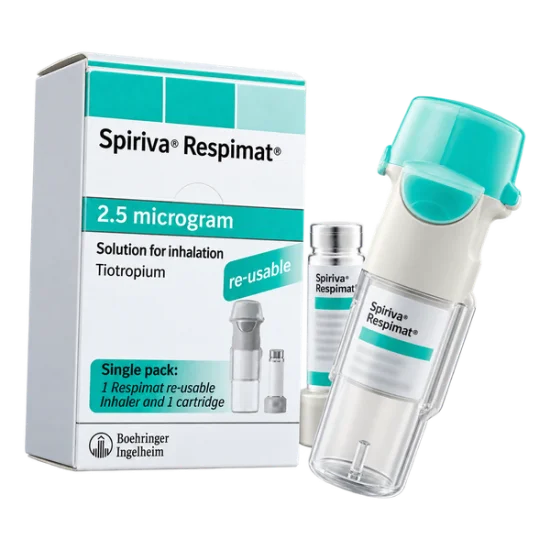
Spiriva Respimat is an inhaled tiotropium product for long-term management of airflow limitation, mainly in chronic obstructive pulmonary disease (COPD). The supplied form is a reusable Respimat inhaler with a cartridge containing inhalation solution. Each actuation delivers 2.5 micrograms of tiotropium.

Active Ingredient and Drug Class

Tiotropium is an anticholinergic bronchodilator. “Anticholinergic” means that it reduces the effect of acetylcholine, a chemical messenger involved in airway-muscle contraction and glandular secretions.

As a long-acting medicine, tiotropium is designed for regular maintenance rather than repeated use every few hours. The Respimat device produces a slow-moving inhaled mist, which differs from capsule-based inhalers.

COPD Treatment Role

The Canadian product information describes tiotropium as a once-daily maintenance bronchodilator for COPD. Clinical decisions may also consider whether a person has asthma features, frequent flare-ups, troublesome mucus, or a need for another inhaled class.

Spiriva can improve airflow and reduce the burden of symptoms, yet some people need combination therapy. A worsening cough, increasing sputum, fever, or a clear decline in exercise tolerance deserves clinical review rather than simply adding extra inhalations.

Dosage and administration

Spiriva Respimat Administration

Spiriva Respimat is used through the inhaler device. The cartridge is inserted into the reusable Respimat inhaler, and the medicine is inhaled as a fine mist. The capsule procedure used with HandiHaler products does not apply to this Respimat presentation.

The usual COPD regimen for the 2.5-microgram inhalation strength is two inhalations once daily, taken at approximately the same time each day. The prescriber may select a different regimen for another indication or patient group, so the prescribed instructions take priority.

Use the device in this sequence:

  1. Prepare the Respimat inhaler and ensure the cartridge is correctly inserted.
  2. Turn the clear base until it clicks.
  3. Open the cap fully.
  4. Breathe out slowly, away from the mouthpiece.
  5. Seal your lips around the mouthpiece without covering the air vents.
  6. Start a slow, deep breath while pressing the dose-release button.
  7. Continue breathing in slowly for as long as comfortable.
  8. Hold the breath briefly, if possible, then breathe normally.
  9. Repeat for the second inhalation when two inhalations are prescribed.
  10. Close the cap after use.

Do not swallow the cartridge or use the solution as an oral medicine. Do not spray it into the eyes. The inhaler should not be shared.

A common technique problem is breathing in too quickly. A slow inhalation helps the mist reach the lower airways instead of depositing mainly in the mouth or throat. Exhaling into the mouthpiece can also interfere with proper use.

If the inhaler produces little or no mist, do not keep pressing the button repeatedly. Device preparation, cartridge insertion, and priming may need checking by a pharmacist before another dose is taken.

Clean the mouthpiece and exterior according to the device instructions provided with the product. A blocked mouthpiece can change the spray pattern. Do not attempt to repair the inhaler or transfer the cartridge into another device.

Spiriva Dose, Timing and Missed Doses

Tiotropium dosing differs between strengths, indications, and individual treatment plans. There is no single amount that suits everyone.

For COPD, Spiriva Respimat is commonly used at the same time each day. Taking extra inhalations does not provide a safe replacement for a missed dose and may increase anticholinergic adverse effects.

Situation Appropriate principle
Regular maintenance Use the prescribed inhalations once daily
Missed dose Take it when remembered unless the next scheduled dose is near; do not double up
Sudden breathlessness Use the prescribed rescue inhaler and seek urgent help when symptoms are severe

If a dose is missed, the next step depends on how close it is to the next scheduled dose. Avoid taking two doses together. Repeated missed doses can make it harder to judge whether the treatment is controlling symptoms.

Spiriva Respimat and other tiotropium devices are not automatically interchangeable. Different devices can deliver different strengths and inhalation schedules, even when the active ingredient is the same.

Formulation

Spiriva Respimat contains tiotropium, an anticholinergic bronchodilator. Each actuation delivers 2.5 micrograms of tiotropium from an inhalation-solution cartridge used with the reusable Respimat inhaler.

How it affects the body

Acetylcholine can activate muscarinic receptors on airway smooth muscle. That signal encourages the muscles around the bronchi to contract, narrowing the airway passage.

Tiotropium interrupts this pathway:

  1. Acetylcholine is released in the airway.
  2. Muscarinic receptors receive the signal.
  3. Tiotropium blocks the receptor response.
  4. Airway smooth muscle remains more relaxed.
  5. Airflow may improve during regular treatment.

Tiotropium acts at several muscarinic receptor subtypes, including M1 and M3 receptors. M3 blockade is closely linked with reduced airway smooth-muscle contraction. M1 activity is part of the broader cholinergic network involved in airway signalling. This receptor model helps explain the medicine, but it does not predict every person’s clinical response.

The same anticholinergic action can affect tissues outside the lungs. Dry mouth is a familiar example. It can occur because salivary secretion is also influenced by cholinergic signalling.

Tiotropium stays associated with airway muscarinic receptors for a prolonged period, supporting its long-acting profile.

Therapeutic indications

Spiriva Respimat is an inhaled tiotropium product for long-term management of airflow limitation, mainly in chronic obstructive pulmonary disease (COPD).

Tiotropium blocks muscarinic signalling in airway smooth muscle. This reduces bronchial constriction and can make breathing easier during regular activity. It may also reduce daily respiratory symptoms and the likelihood of COPD exacerbations when used as prescribed [1].

COPD treatment depends on symptoms, lung function, smoking history, exacerbation history, and other conditions. Spiriva helps control airway narrowing; it does not reverse the underlying lung damage or cure COPD.

Keep a prescribed rescue inhaler available if one has been supplied. Spiriva should not be used as a substitute during a sudden breathing attack.

Common mistakes

Common Patient Mistakes

Frequent errors include:

  • Treating Spiriva as a rescue inhaler
  • Taking extra inhalations after a missed dose
  • Stopping treatment once breathing improves
  • Spraying the mist while holding the breath or inhaling too quickly
  • Covering the side vents with the lips or fingers
  • Failing to close the cap after use
  • Using an old or blocked device
  • Combining it with another anticholinergic medicine without review
  • Ignoring new urinary difficulty or eye pain
  • Assuming every tiotropium inhaler uses the same strength and schedule

One small detail matters: the inhalation should begin slowly as the dose-release button is pressed. A forceful breath can make the mist feel uncomfortable and may reduce coordination.

Another practical point is that a rescue inhaler and Spiriva should have clearly different roles in the daily plan. Confusing them can delay treatment during acute bronchospasm.

When not to use it

A known serious hypersensitivity to tiotropium, atropine, ipratropium, or related ingredients is a reason for medical review before use.

  • Narrow-angle glaucoma
  • Previous urinary retention
  • Enlarged prostate or difficulty urinating
  • Moderate or severe kidney impairment
  • Heart rhythm problems or significant cardiovascular disease
  • Pregnancy or breastfeeding
  • Previous reactions to inhaled anticholinergic medicines

Using Spiriva with other anticholinergic medicines may increase dry mouth, constipation, blurred vision, urinary retention, or confusion. This includes some bladder medicines, certain medicines for motion sickness, and selected medicines used for allergy or sleep symptoms.

When this is not for you

Spiriva is not suitable for everyone. NOT for you if you have a serious allergy to tiotropium or related anticholinergic medicines, or if a clinician has advised against its use.

Tell the prescriber or pharmacist about narrow-angle glaucoma, previous urinary retention, an enlarged prostate or difficulty urinating, kidney impairment, heart rhythm problems, pregnancy or breastfeeding, or previous reactions to inhaled anticholinergic medicines.

Kidney function matters because tiotropium is eliminated largely through the kidneys. Older adults may also be more sensitive to dry mouth, constipation, blurred vision, confusion, or urinary effects.

Pregnancy and breastfeeding require an individual risk assessment. Do not assume that an inhaled route removes all systemic exposure.

Possible side effects

The most characteristic adverse effect of tiotropium is dry mouth. Other possible effects include constipation, throat irritation, cough, headache, dizziness, and unpleasant taste. The Canadian monograph describes the frequency and seriousness of adverse reactions in the product-specific safety information [2].

Dry Mouth and Routine Effects

Dry mouth may be mild and temporary, but ongoing dryness can contribute to dental discomfort, difficulty swallowing, bad breath, and a higher risk of tooth decay. Water, sugar-free gum, and regular brushing can help.

Constipation may be more troublesome in people who already use other medicines with anticholinergic effects. Increasing fibre and fluid intake may help when medically appropriate. Persistent constipation, abdominal pain, or vomiting needs assessment.

A sore throat or cough after inhalation may improve when the inhalation is slower and the mouthpiece is positioned correctly. Do not reduce or stop the treatment without a clinical plan.

Serious Reactions and Medical Review

Seek prompt medical assessment for:

  • Eye pain, halos around lights, blurred vision, or sudden visual changes
  • Difficulty starting urination or inability to pass urine
  • New or worsening wheezing immediately after inhalation
  • Swelling of the lips, tongue, face, or throat
  • Hives, faintness, or severe dizziness
  • Severe palpitations or chest discomfort

Acute narrow-angle glaucoma can be worsened by anticholinergic medicines. Urinary retention can also occur, especially in people with bladder-outflow obstruction or prostate-related urinary symptoms.

Avoid directing the mist toward the eyes. Eye exposure can worsen pressure-related eye symptoms, especially in someone with narrow-angle glaucoma.

Comparison

The choice between inhalers depends on the diagnosis, symptom pattern, exacerbation risk, inhaler technique, and coexisting asthma features. A longer duration does not automatically make one inhaler suitable for every patient.

Inhaler or class Main role and limitation
Spiriva — tiotropium Long-acting muscarinic antagonist for maintenance; not a rescue inhaler
Atrovent — ipratropium Shorter-acting muscarinic antagonist; regular or symptom-based use may be prescribed
Albuterol Short-acting beta2 agonist for rapid relief of bronchospasm; does not replace maintenance therapy
Salmeterol/fluticasone Long-acting bronchodilator plus inhaled corticosteroid; corticosteroid risks require clinical assessment

Atrovent contains ipratropium, which is also an antimuscarinic bronchodilator. Tiotropium generally lasts longer, while ipratropium is used on a shorter-acting schedule.

Albuterol works through beta2-adrenergic stimulation rather than muscarinic blockade. It is commonly used for quick relief, while Spiriva supports regular airway control. A person who needs rescue inhalations more often than usual may have worsening COPD or another problem requiring assessment.

Salmeterol/fluticasone combines a long-acting beta2 agonist with an inhaled corticosteroid. Fluticasone addresses airway inflammation but can contribute to oral thrush, hoarseness, and pneumonia risk in susceptible people with COPD. Rinsing the mouth after corticosteroid inhalation can reduce local effects.

Do not switch between Spiriva, Atrovent, albuterol, or combination inhalers without a prescribed plan. Each class has a different role and dosing pattern.

What doctors say

The FDA recognizes tiotropium as a long-acting maintenance bronchodilator for COPD, while the Global Initiative for Chronic Obstructive Lung Disease places long-acting bronchodilators within evidence-based COPD management [3]. NICE and the American Thoracic Society also publish COPD guidance. The best regimen depends on the individual clinical picture.

In clinical practice, perceived treatment failure often comes from technique rather than a lack of pharmacological activity. A person may turn the Respimat base incorrectly, fail to coordinate breathing with actuation, cover the air vents, or inhale too rapidly. These errors can leave more medicine in the mouth and less in the lungs.

Symptoms may improve gradually. Breathlessness during routine activity can become less limiting, but Spiriva does not remove all symptoms or prevent every flare-up. COPD can still progress, especially with ongoing smoking, repeated infections, or advanced airflow limitation.

Common questions

Does narrow-angle glaucoma rule out Spiriva?

A history of narrow-angle glaucoma requires medical assessment before using Spiriva. Tiotropium mist entering the eyes may increase the risk of eye pain, blurred vision, halos, or raised eye pressure. A person with sudden eye pain or visual change needs urgent assessment. Do not aim the inhaler toward the eyes. The 2024 Health Canada product monograph describes eye-related precautions with tiotropium.

Do you offer anonymous delivery?

Your order will be securely packed and shipped within 24 hours. This is exactly what your package will look like (images of an actual item sent). It has the size and look of a regular private letter (24x11x0.7 cm) and its contents cannot be seen.

Customer Feedback on Spiriva

4
Based on 4 reviews
Richard, 57 Fredericton Several weeks
Verified
Rating: 4 out of 5

I used two inhalations of Spiriva Respimat once daily for several weeks for COPD. After several weeks, walking up the hill near my home was easier and I was less aware of the tight feeling in my chest. The reusable inhaler was straightforward once I practised the slow breath.

Oct 17, 2026
Lee, 34 Peterborough The first month
Verified
Rating: 2 out of 5

I used two inhalations of Spiriva Respimat once daily for the first month, but it did not make much difference to my breathing. I also developed a dry mouth that became annoying at work, so I stopped using it and discussed other options with my doctor.

Oct 25, 2026
Ben, 37 Kamloops For a while
Verified
Rating: 5 out of 5

I used two inhalations of Spiriva Respimat once daily. I had been struggling with breathlessness during routine chores, and Spiriva helped me manage those activities more comfortably after I had used the device consistently for a while. I liked that the schedule fitted into my morning routine.

Oct 31, 2026
Graham, 29 Halifax
Verified
Rating: 5 out of 5

I used two inhalations of Spiriva Respimat once daily. The main benefit for me was less interruption from daily chest tightness. It took some practice to coordinate the inhalation with the button, but the Respimat became easy to use after that.

Nov 12, 2026

Sources

  1. Health Canada (2024). Canadian Product Monograph: Spiriva Respimat (tiotropium bromide inhalation solution).
  2. Health Canada (2024). Product Monograph: Spiriva Respimat — Adverse Reactions and Warnings.
  3. U.S. Food and Drug Administration (2023). Spiriva Respimat (tiotropium bromide) Prescribing Information.
Get our free app Shop faster and track your orders 4.0 · 419 reviews Install