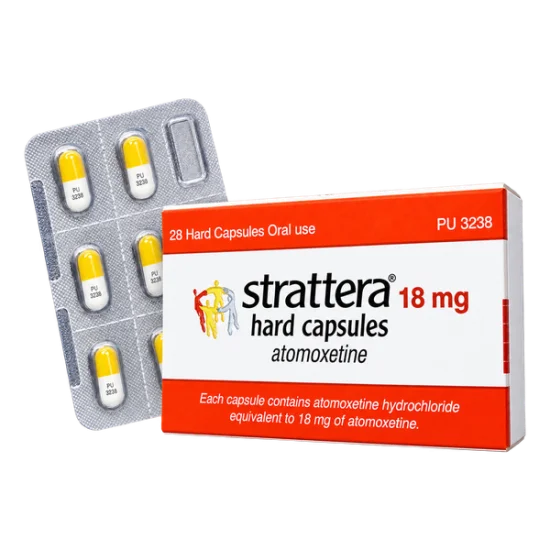
I used Strattera for several weeks but did not notice a meaningful improvement in concentration. The nausea was manageable at first, yet the lack of benefit made me stop after discussing it with my prescriber.
Atomoxetine, the active ingredient of Strattera, is a non-stimulant treatment prescribed for Attention Deficit/Hyperactivity Disorder (ADHD). It may help reduce inattention, impulsivity and hyperactivity in children, adolescents and adults selected after clinical assessment. Atomoxetine increases noradrenaline signalling in brain pathways involved in attention and impulse control.
Overview
Strattera is the product name for atomoxetine, a prescription non-stimulant medicine approved for the treatment of Attention Deficit/Hyperactivity Disorder. Atomoxetine belongs to the selective noradrenaline reuptake inhibitor class. “Non-stimulant” describes its pharmacological class; it does not mean that the medicine is automatically more suitable for every person or free from cardiovascular, psychiatric or other adverse effects.
Dosage and administration
How much Strattera to use and how often depends on the purpose of use and is agreed with a doctor or pharmacist. The prescriber selects the regimen according to age, body weight, response, tolerability and relevant medical factors. [2]
- Take the capsule by mouth according to the prescription directions.
- Swallow the capsule whole with water.
- Do not open, crush, chew or empty the capsule into food or drink.
- Take it at a consistent time each day unless the prescriber gives different instructions.
- If a dose is missed, do not double the next dose unless a clinician specifically directs this.
- Ask a pharmacist or prescriber what to do when the next scheduled dose is uncertain.
- Keep follow-up appointments during dose adjustment.
Daily Use and Missed Doses
A missed dose is not corrected by taking two capsules together. Doubling can increase nausea, dizziness, drowsiness, heart rate or blood pressure.
One practical detail is easy to overlook: opening a capsule exposes the mouth and eyes to atomoxetine powder. Avoid contact with the powder and wash the area with water if accidental exposure occurs.
Follow-up During Dose Adjustment
Clinical monitoring may include:
| Monitoring point | What the clinician reviews | Why it matters |
|---|---|---|
| ADHD symptoms | Attention, impulsivity, activity and daily tasks | Shows whether functioning is improving |
| Appetite and sleep | Food intake, weight trend and sleep quality | Detects tolerability problems |
| Pulse and blood pressure | Baseline and follow-up measurements | Identifies cardiovascular changes |
The prescriber may also review mood, irritability, urinary symptoms, sexual function and adherence. Monitoring is routine care during ADHD treatment; it does not by itself mean the medicine is unsuitable.
Formulation
The product is supplied as hard capsules for oral use. How much to use and how often depends on the purpose of use and is agreed with a doctor or pharmacist.
How it affects the body
Atomoxetine acts as a selective inhibitor of the noradrenaline transporter. This reduces the reuptake of noradrenaline and increases its availability in brain pathways involved in attention, alertness and impulse control. [1]
Noradrenaline is a chemical messenger used by nerve cells. In practical terms, altered noradrenaline signalling may make it easier for some people with ADHD to sustain attention, pause before acting and manage activity levels.
Noradrenaline Transporter Inhibition
The medicine does not work by directly correcting every cause of ADHD. It changes signalling in selected neural circuits, and symptom improvement depends on the person’s biology, diagnosis, dose, adherence and other treatment supports.
Atomoxetine is not a controlled stimulant. Its non-stimulant action may be considered when a prescriber wants a different pharmacological approach, when stimulant treatment has not provided suitable control, or when tolerability and treatment history favour another option.
Therapeutic indications
Strattera is the product name for atomoxetine, a prescription non-stimulant medicine approved for the treatment of Attention Deficit/Hyperactivity Disorder. ADHD treatment may target difficulty sustaining attention, impulsive decisions, excessive activity and problems organising everyday tasks.
Clinical Role in ADHD Management
A prescriber considers age, body weight, symptom pattern, coexisting conditions, previous treatment, cardiovascular history and daily functioning before selecting Strattera. The response differs between individuals. Some people notice better concentration, while others see greater improvement in impulsivity or activity regulation.
Strattera does not replace behavioural strategies, educational support, sleep routines or regular clinical review. Its role is to support ADHD symptom management as part of an individual treatment plan.
Common mistakes
Treatment Adherence Errors
Common mistakes include:
- Doubling a missed dose.
- Opening or chewing the capsule.
- Stopping after a few days because improvement is not immediate.
- Changing the dose without a prescribing review.
- Ignoring reduced food intake or unexplained weight change.
- Failing to report difficulty urinating.
- Omitting glaucoma, seizure, cardiovascular or pregnancy information.
- Stopping silently because of erectile dysfunction or another sensitive adverse effect.
Capsule handling matters. Powder from an opened capsule can irritate the eyes, and swallowing the capsule whole preserves the intended oral dosage form.
Symptoms Requiring Prompt Contact
Routine side effects and emergency symptoms should be separated. Mild dry mouth may be discussed at follow-up, while fainting, chest pain, severe breathlessness, sudden vision change, inability to urinate or sustained palpitations require prompt medical assessment.
A prescriber may need to review other medicines, including antidepressants and drugs that affect blood pressure or heart rhythm. The review should occur before adding, stopping or restarting treatment.
When not to use it
Atomoxetine should not be used in people with narrow-angle glaucoma unless a specialist has determined an appropriate plan.
Other important exclusions include monoamine oxidase inhibitor treatment, certain serious cardiovascular conditions and specific liver-related concerns.
When this is not for you
Strattera is not suitable for everyone. It may not be for you if you have narrow-angle glaucoma, certain cardiovascular conditions, or a medical history requiring specialist review. A complete medical history should include eye disease, tics, seizure history, urinary symptoms, cardiovascular conditions, psychiatric symptoms, pregnancy plans and breastfeeding.
Tell the prescriber about hypertension, heart disease, fainting, unexplained chest symptoms, known rhythm problems and a family history of sudden cardiac death. The clinician decides whether blood pressure, pulse, cardiovascular examination or additional assessment is appropriate.
Discuss breastfeeding before starting or continuing atomoxetine. The clinician can review the available information, the need for ADHD treatment and possible alternatives before making an individual recommendation.
Possible side effects
Atomoxetine may cause dry mouth, insomnia, nausea, decreased appetite, constipation, erectile dysfunction or dizziness. The Canadian product information does not justify treating every listed reaction as inevitable, and individual tolerability varies.
Digestive and Appetite Effects
Nausea and reduced appetite can occur during treatment. Constipation may add abdominal discomfort, especially when fluid intake, dietary fibre or physical activity is low.
Small, regular meals can be easier to manage than large meals when nausea is present. Contact the prescriber if nausea prevents eating or drinking, if weight falls, or if constipation becomes persistent. Children and adolescents need closer attention when appetite or weight changes become clinically significant.
Sleep, Mouth and Balance Effects
Dry mouth may improve with frequent sips of water, sugar-free gum or sugar-free lozenges. Persistent dry mouth can contribute to dental problems, so regular oral care matters.
Insomnia may be linked to the timing of the daily dose. Do not change the timing without discussing it with the prescriber. Dizziness can be more noticeable when standing quickly; rise slowly and avoid driving, cycling in traffic or hazardous work until the personal response is clear.
Sexual Effects
Erectile dysfunction and other changes in sexual function can occur. These effects can be embarrassing to mention, yet they are clinically relevant. Report persistent problems rather than stopping treatment silently, because the prescriber may review the dose, timing, other medicines or alternative treatment options.
Comparison
Atomoxetine and methylphenidate are both used in ADHD care, but they belong to different pharmacological classes. Atomoxetine is a non-stimulant selective noradrenaline transporter inhibitor, while methylphenidate is a stimulant that affects dopamine and noradrenaline transport.
| Treatment approach | Main pharmacology and response pattern | Practical limitations |
|---|---|---|
| Atomoxetine | Non-stimulant; regular daily use; benefit may build gradually | Can cause nausea, appetite reduction, sleep problems, dizziness, sexual effects or cardiovascular changes |
| Methylphenidate | Stimulant; some formulations act more quickly and may be scheduled differently | May affect appetite, sleep, mood, pulse or blood pressure; formulation and treatment history influence suitability |
Methylphenidate may be preferred when a faster change in attention is needed and its risk profile fits the patient. Atomoxetine may be considered when a non-stimulant approach is preferred or when previous treatment has not been satisfactory.
Neither option is universally superior. Cochrane reviews and NICE guidance support individualised selection. The choice depends on symptom pattern, comorbidities, cardiovascular history, adverse effects, previous response and the person’s daily schedule. Self-switching between atomoxetine and methylphenidate is unsafe because the medicines have different dosing and monitoring requirements.
What doctors say
In clinical practice, doctors often judge Strattera by repeated changes in daily functioning, not by one early impression. A useful review considers attention, impulsivity, school or work performance, appetite, sleep, mood, pulse, blood pressure and adherence.
Common questions
Can Strattera capsules be split, crushed or chewed?
No. Strattera capsules should be swallowed whole, because opening, crushing or chewing changes how the oral dosage form is handled and exposes the mouth or eyes to atomoxetine powder. Health Canada’s product information, reviewed in 2020, supports following the prescribed capsule instructions. A pharmacist or prescriber should provide the specific advice if swallowing is difficult.
How does atomoxetine differ from methylphenidate?
Atomoxetine selectively inhibits the noradrenaline transporter, while methylphenidate is a stimulant affecting dopamine and noradrenaline transport. NICE guidance from 2018 recognises that ADHD treatment selection depends on clinical response, adverse effects, comorbidities and patient circumstances. Atomoxetine often requires regular daily use and gradual assessment, while methylphenidate may have a more rapid noticeable effect depending on its formulation.
Can alcohol be used during Strattera treatment?
Alcohol can worsen dizziness, impaired alertness, poor judgement and sleep disruption while using atomoxetine. The FDA prescribing information from 2022 supports caution with activities requiring alertness when the individual response is not known. Avoid driving or hazardous activity if alcohol and Strattera together cause drowsiness, light-headedness or reduced concentration.
Which condition rules out Strattera?
Narrow-angle glaucoma is a condition that can rule out atomoxetine unless a specialist provides a specific treatment plan. The European Medicines Agency product information from 2015 also supports careful review of cardiovascular disease, urinary outflow problems, seizure history and tic disorders. Acute eye pain, sudden visual change or inability to urinate requires urgent medical attention rather than routine medication advice.
Can Strattera be taken with food or on an empty stomach?
Atomoxetine can generally be taken with or without food, but taking it consistently in relation to meals may make changes in nausea easier to interpret. Health Canada’s 2020 product information supports using the prescribed schedule rather than changing administration from day to day. If nausea is troublesome, discuss meal timing with a pharmacist or prescriber instead of altering the dose.
Do you offer anonymous delivery?
Your order will be securely packed and shipped within 24 hours. This is exactly what your package will look like (images of an actual item sent). It has the size and look of a regular private letter (24x11x0.7 cm) and its contents cannot be seen.
Customer Feedback on Strattera
I noticed fewer interruptions and found it easier to finish paperwork after several weeks. The improvement was practical rather than dramatic, and I was satisfied with how much more organised my afternoons felt.
Strattera helped with starting tasks, although the benefit was slower and less complete than I expected. I had some dry mouth and needed to pay closer attention to drinking water during the day.
I became more consistent with household tasks and missed fewer small appointments after treatment settled into my routine. The capsules were easy to take each morning, and the change felt useful at work.
My attention during long meetings improved, especially when I had several documents to review. It took patience to notice the difference, but the improvement in finishing tasks made the treatment worthwhile for me.
Sources
- United States Food and Drug Administration (2022). Strattera (atomoxetine hydrochloride) Capsules Prescribing Information.
- European Medicines Agency (2015). Strattera: EPAR - Product Information.