Skip to content
Save up to 80%
Symbicort
Active ingredient: Budesonide, Formoterol fumarate dihydrate

Symbicort

Quality products
24/7 Support
Fast delivery
Delivery from 4 days
Select pack Package Per unit Price

Free delivery on orders from $ 296.00, free express delivery from $ 444.00

Secure Payments
Track your order
Best price guarantee

Symbicort delivers budesonide to calm airway inflammation and formoterol to relax tightened airway muscles. It is prescribed for asthma or COPD when both anti-inflammatory control and bronchodilation are needed.

Overview

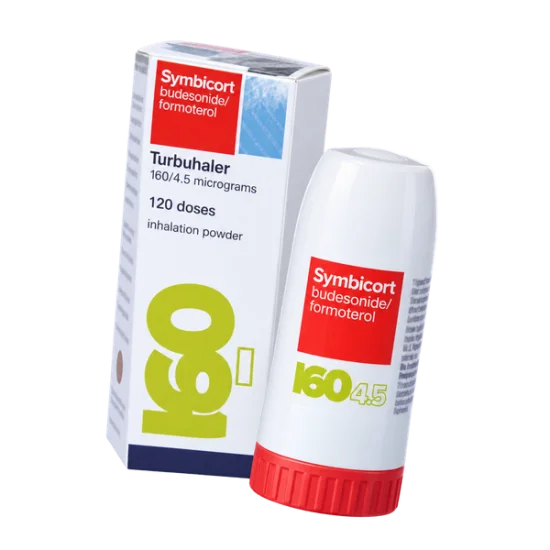
The Turbuhaler formulation contains 160/4.5 micrograms per inhalation and provides 120 doses.

Symbicort combines two active substances: budesonide, an inhaled corticosteroid, and formoterol, a long-acting beta2-agonist.

Dosage and administration

Formoterol begins working relatively quickly compared with some other long-acting bronchodilators, while its action lasts for an extended period. The exact role of Symbicort depends on the prescribed asthma or COPD regimen. Some patients use it as maintenance therapy, while selected asthma plans use budesonide/formoterol for both regular treatment and symptom relief.

Turbuhaler Technique Essentials

The basic sequence is:

  • Keep the inhaler upright while preparing a dose.
  • Twist the grip in the prescribed loading direction until the device clicks.
  • Breathe out away from the mouthpiece.
  • Seal your lips around the mouthpiece.
  • Breathe in strongly and deeply.
  • Remove the inhaler and hold your breath briefly if comfortable.
  • Rinse your mouth after the inhaled dose, then spit out the water.
Never exhale into the Turbuhaler. Moisture from your breath can affect the powder inside the device and may interfere with reliable dose delivery.

The inhalation may feel almost tasteless. That does not prove that no dose was delivered. The dose counter is more useful for tracking remaining inhalations, and the inhaler should not be shaken like a liquid spray device.

Pressurised Metered-Dose Inhaler Technique

A pressurised metered-dose inhaler generally requires slow inhalation during canister activation. Some people need a spacer because it reduces the coordination required and can improve medicine deposition in the lungs.

The instructions for a metered-dose device cannot be transferred directly to a Turbuhaler. Using the wrong breathing pattern is a common cause of poor control.

A missed dose is generally handled by taking the next scheduled dose rather than doubling up. The precise action depends on the prescribed regimen.

Formulation

Symbicort combines two active substances: budesonide, an inhaled corticosteroid, and formoterol, a long-acting beta2-agonist. The product sold as Symbicort Turbuhaler is an inhalation powder delivered through a breath-actuated device. Its stated strength is 160/4.5 micrograms per inhalation, with 120 doses.

Budesonide reduces swelling and irritation inside the airways. Formoterol relaxes airway muscle, helping the breathing tubes remain more open. This combination addresses two different features of asthma and COPD: airway inflammation and reversible airway narrowing. Health Canada’s product information describes Symbicort within prescribed treatment plans rather than as a universal inhaler for every breathing problem [1].

Budesonide as an Inhaled Corticosteroid

Budesonide belongs to the inhaled corticosteroid class. It reduces inflammatory activity in the airway lining, which can decrease swelling, mucus production and sensitivity to triggers over time.

Corticosteroids used by inhalation are anti-inflammatory medicines. They are different from anabolic steroids used to increase muscle mass. The main benefit of budesonide is prevention and control, not instant relief from every episode of breathlessness.

Symptoms may improve before airway inflammation is fully controlled. That difference explains why a person can feel better while still needing regular controller treatment.

Formoterol as a Long-Acting Beta2-Agonist

Formoterol is a long-acting beta2-agonist. It stimulates beta2 receptors in airway muscle, causing the muscle to relax and the airway diameter to increase.

How it affects the body

Asthma and COPD can narrow the airways through different processes. Airway inflammation causes swelling and irritation inside the breathing tubes, while muscle contraction reduces the space available for airflow.

Symbicort works in a sequence:

  1. Budesonide reduces inflammatory activity in the airway lining.
  2. Formoterol relaxes tightened airway muscle.
  3. A wider airway can allow air to move more easily.
  4. Regular anti-inflammatory treatment can reduce the tendency toward recurring symptoms.

The two ingredients complement each other, but they do not remove the need for an individualized action plan. A sudden deterioration in breathing can require urgent treatment even when regular Symbicort use has been consistent.

Anti-Inflammatory Airway Control

Inhaled corticosteroids target the inflammatory component of asthma. This matters because airway inflammation can continue between noticeable attacks. Regular use may reduce the frequency and intensity of symptoms when the prescribed regimen is followed.

Budesonide does not work by simply forcing the airway open. Its role is to reduce the biological processes that make the airway swollen, reactive and more likely to narrow.

Bronchodilation and Breathing Improvement

Formoterol acts directly on airway smooth muscle. Relaxation can improve airflow and reduce the sensation of chest tightness or wheezing.

Bronchodilation and inflammation control are related but separate outcomes. A person may notice easier breathing after the bronchodilator begins working, while the full preventive benefit of the corticosteroid requires repeated use over time.

The U.S. Food and Drug Administration describes inhaled corticosteroids and long-acting beta2-agonists as complementary components in combination inhalers [2].

Therapeutic indications

Symbicort is used within treatment plans for asthma and COPD. The appropriate role depends on the diagnosis, symptom pattern, lung-function findings, previous treatment, exacerbation history and inhaler technique.

Condition Symbicort’s clinical role
Asthma Reduces airway inflammation and supports bronchodilation; the regimen may be maintenance-only or include prescribed symptom relief
COPD Helps improve airflow and symptoms when an inhaled corticosteroid and long-acting bronchodilator are clinically appropriate
Worsening respiratory symptoms Requires review of the written action plan and prompt assessment when symptoms are severe or do not respond as expected

Asthma Treatment Roles

Asthma severity ranges from occasional symptoms to persistent moderate or severe disease. Symbicort may be selected when an inhaled corticosteroid alone does not provide sufficient control, or when a combination approach suits the person’s treatment plan.

The product should not be treated as a single universal regimen for mild asthma, moderate asthma and severe asthma. The prescribed schedule can differ according to the strength, age, diagnosis and use of other inhalers.

The Novel START trial assessed budesonide/formoterol in adults with mild asthma, but results from one study do not automatically define the correct plan for every patient or for COPD.

COPD Symptom and Exacerbation Management

COPD involves persistent airflow limitation and may include chronic cough, sputum production and exertional breathlessness. Symbicort can form part of a COPD plan when the prescriber considers the combination appropriate.

COPD care may also include smoking-cessation support, vaccination, pulmonary rehabilitation, physical activity and monitoring of exacerbations. Increasing breathlessness, a marked change in sputum or reduced exercise tolerance deserves clinical review.

Common mistakes

One common mistake is breathing out through the Turbuhaler before the dose is loaded, then inhaling too late. The loading step should occur before the inhalation, and exhalation should happen away from the mouthpiece.

Another is assuming that the absence of a strong taste means the inhaler failed. Dry-powder inhalers can deliver medication without a noticeable flavour.

Some patients use Symbicort only on difficult days despite having a regular controller prescription. Others stop it as soon as symptoms settle. Both patterns can reduce anti-inflammatory control.

A further mistake is treating every episode of breathlessness as a reason for repeated extra doses. Follow the written plan and obtain urgent help when symptoms are severe, speech is difficult, lips look blue or the action plan is not working.

When not to use it

Symbicort is not appropriate for everyone. The product requires careful assessment in people with certain medical conditions or medicine combinations.

Tell the prescriber about heart rhythm problems, significant heart disease, high blood pressure, diabetes, thyroid disease, low potassium, osteoporosis, glaucoma, cataracts, tuberculosis history and recurrent fungal infections. Strong CYP3A4 inhibitors, including some antifungal medicines and certain antiviral medicines, can increase corticosteroid exposure. Other medicines that lower potassium or affect heart rhythm may increase concern when combined with a beta2-agonist.

Pregnancy and breastfeeding require an individual assessment of asthma or COPD control and treatment benefits.

When this is not for you

This medication is not for you if:

  • You have had a serious allergic reaction to budesonide, formoterol or an ingredient in the inhaler.
  • You are experiencing severe acute breathlessness that needs emergency treatment.
  • You intend to replace a prescribed rescue plan without specific instructions.
  • You plan to use it more often than prescribed to compensate for worsening control.
  • You have an untreated respiratory infection or another condition requiring a different treatment approach.

Severe breathing difficulty, facial or throat swelling, widespread hives, fainting or a poor response to the prescribed action plan requires urgent medical help.

Possible side effects

Commonly reported effects can include oral thrush, hoarseness, throat irritation, tremor, palpitations, muscle cramps and headache. Budesonide contributes to local corticosteroid effects, while formoterol can contribute to beta2-agonist effects.

Rinsing the mouth after use lowers the amount of corticosteroid remaining in the mouth and throat. Spit the water out rather than swallowing it. Hoarseness or recurring oral soreness should be reported for treatment review.

Possible beta2-agonist effects include tremor, palpitations, muscle cramps and headache.

Comparison

Formoterol is a long-acting beta2-agonist. Albuterol, also called salbutamol, is a short-acting beta2-agonist commonly used for rapid symptom relief.

Medicine category Main role
Budesonide/formoterol Anti-inflammatory control plus long-acting bronchodilation
Albuterol or salbutamol Short-acting bronchodilation for prescribed rescue use
Other controller inhalers Preventive treatment selected according to diagnosis and treatment response

Symbicort is not automatically a universal emergency inhaler. Some asthma treatment plans use budesonide/formoterol for both maintenance and symptom relief, while other plans keep a separate albuterol or salbutamol inhaler. Follow the written regimen provided for the specific prescription.

What doctors say

In clinical practice, physicians usually assess three things before changing Symbicort: symptom frequency, exacerbation history and inhaler technique. A patient who reports poor control may be receiving too little medication, inhaling incorrectly, missing doses or facing a trigger that needs separate treatment.

Doctors also distinguish symptom relief from disease control. Formoterol may improve airway opening relatively quickly, while budesonide’s preventive effect depends on regular anti-inflammatory treatment. Feeling better after several doses does not automatically mean the underlying airway inflammation has resolved.

A practical review often includes the dose counter, inhalation demonstration, mouth-rinsing routine and frequency of albuterol or salbutamol use. Persistent night waking, reduced activity, repeated oral steroid courses or increasing rescue use signals the need for reassessment.

Common questions

How does Symbicort differ from a salbutamol or albuterol inhaler?

Symbicort combines budesonide with formoterol, while albuterol and salbutamol are short-acting bronchodilators used for prescribed rescue relief. Health Canada’s 2023 product information describes budesonide as the anti-inflammatory component and formoterol as the long-acting bronchodilator. Symbicort may be prescribed in a maintenance-only plan or in a maintenance-and-relief asthma plan. Use the role assigned in the written treatment plan. The correct choice depends on the prescribed diagnosis and regimen.

Can Symbicort be combined with other medicines or supplements?

Many people use Symbicort alongside other medicines, but combinations require a review of the complete list. Health Canada information from 2023 identifies interaction concerns with strong CYP3A4 inhibitors, medicines affecting heart rhythm and treatments that can lower potassium. Include prescription medicines, non-prescription products and supplements when the medication list is assessed. Do not add another long-acting beta2-agonist without specific prescribing instructions.

What should happen after a missed Symbicort dose?

For most prescribed schedules, the next dose is taken at the usual time rather than doubled. The Health Canada Symbicort information available in 2023 advises against taking extra inhalations to compensate for a missed dose. If symptoms are already worsening, use the written asthma or COPD action plan instead of improvising. Seek urgent help for severe breathlessness or poor response to the plan.

What should be done if Symbicort does not provide the expected result?

A lack of improvement can reflect incorrect inhalation, missed doses, an unsuitable regimen, infection or a different cause of breathlessness. Guidance from the Global Initiative for Asthma reviewed in 2025 places inhaler technique and adherence among the first issues to assess when control is poor. Check technique with a trained clinician and record rescue-inhaler use. Severe symptoms, blue lips, confusion or inability to speak normally require urgent medical care.

Can Symbicort cause oral thrush or hoarseness?

Yes. Budesonide can contribute to oral candidiasis and voice changes, especially when medicine remains in the mouth or throat. The U.S. Food and Drug Administration prescribing information reviewed in 2024 supports rinsing the mouth after inhaled corticosteroid use and spitting out the water. Persistent white patches, painful swallowing or continuing hoarseness needs clinical assessment.

How long does a Symbicort course last, and is long-term use acceptable?

Asthma and COPD controller treatment is often reviewed over months or longer, rather than used as a short fixed course. Health Canada’s 2023 product information supports regular monitoring of response, adverse effects and the continued need for treatment. The prescriber may adjust the regimen when control is stable or symptoms change. Do not stop regular inhaled corticosteroid treatment abruptly without a treatment review.

How soon can Symbicort start to feel effective?

Formoterol may begin relaxing airway muscle relatively quickly, while budesonide’s anti-inflammatory benefit develops through consistent use. The U.S. Food and Drug Administration’s 2024 prescribing information distinguishes rapid bronchodilation from longer-term inflammatory control. A person may notice easier breathing before experiencing the full preventive benefit. Continued worsening, severe breathlessness or poor response to the action plan needs urgent assessment.

Do you offer anonymous delivery?

Your order will be securely packed and shipped within 24 hours. This is exactly what your package will look like (images of an actual item sent). It has the size and look of a regular private letter (24x11x0.7 cm) and its contents cannot be seen.

Customer Feedback on Symbicort

3.7
Based on 5 reviews
Lee, 37 Red Deer After the first couple of weeks
Verified
Rating: 4 out of 5

I used the Turbuhaler as prescribed and noticed that walking uphill became easier after the first couple of weeks. The dose counter was simple to follow, and I liked not needing to coordinate a spray with my breathing.

Oct 16, 2026
Darren, 63 Winnipeg
Verified
Rating: 4 out of 5

Symbicort helped reduce the chest tightness I had in the mornings. I kept it beside my regular medicines and rinsed my mouth after using it, which made the routine easy to remember.

Oct 23, 2026
Gareth C., 50 Sudbury
Verified
Rating: 4 out of 5

The biggest improvement was being able to sleep through the night more often. I had expected an instant change, but the benefit became clearer after using it regularly.

Oct 29, 2026
Craig, 59 Ottawa The first week
Verified
Rating: 3.5 out of 5

My breathing improved, though the first week included some hand trembling after inhalation. The sensation settled, but I still needed a separate rescue inhaler at times and discussed that with my doctor.

Nov 5, 2026
John K., 26 Kamloops
Verified
Rating: 3 out of 5

It helped during the first part of the day, but I struggled with the inhalation technique and did not feel consistently controlled. I stopped changing the schedule on my own and arranged a review instead.

Nov 14, 2026

Sources

  1. Health Canada (2023). Product monograph for Symbicort Turbuhaler (budesonide/formoterol).
  2. U.S. Food and Drug Administration (2024). Prescribing Information — Symbicort (budesonide/formoterol).
Get our free app Shop faster and track your orders 4.0 · 390 reviews Install