Skip to content
Save up to 80%
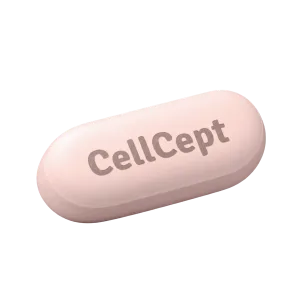
CellCept
Active ingredient: Mycophenolate mofetil

CellCept

Quality products
24/7 Support
Fast delivery
Delivery from 4 days
Select pack Package Per unit Price

Free delivery on orders from $ 296.00, free express delivery from $ 444.00

Secure Payments
Track your order
Best price guarantee

Adults who have received a kidney, heart, or liver transplant may be prescribed CellCept to help prevent rejection of the transplanted organ. CellCept contains mycophenolate mofetil, an antimetabolite immunosuppressant that reduces the growth of immune cells involved in organ rejection.

Overview

Its dose is decided individually according to age, other medicines, organ function, and transplant history.

Dosage and administration

CellCept tablets are taken by mouth. The dose is decided individually, taking age, other medicines, kidney or liver function, infection history, and the transplanted organ into account.

Typical administration principles include:

  • Take CellCept at the same times each day.
  • Swallow tablets whole with water.
  • Do not crush, split, or chew the tablets unless a transplant specialist gives a specific instruction.
  • Keep doses separated from medicines that reduce mycophenolate absorption when the prescriber has provided timing instructions.
  • Continue treatment for the duration prescribed by the transplant team.
  • If a dose is missed, take it when remembered unless the next dose is close; do not double the next dose.
  • Report repeated vomiting or diarrhoea because these symptoms can affect absorption and may signal infection or drug toxicity.

Standard transplant protocols use different regimens for kidney, heart, and liver recipients. The amount may also change after surgery, during an infection, after a blood-count change, or when another interacting medicine is added. A dose that was suitable early after transplantation may not remain suitable later.

A missed dose is different from a deliberately skipped dose. Record the time you noticed the omission, follow the transplant team’s missed-dose plan, and avoid taking two doses together.

Handling and Preparation Precautions

Mycophenolate mofetil can harm an unborn baby. People who are pregnant, planning pregnancy, or able to become pregnant need specific instructions before handling or taking CellCept.

Tablet handling should be practical and careful. Avoid crushing tablets because this can create powder and remove the intended tablet form. Anyone who handles damaged tablets should wash their hands afterward. Pregnant people should avoid direct contact with crushed or broken tablets.

CellCept treatment also requires contraception planning. The choice depends on the patient’s circumstances, other medicines, and advice from the transplant team. Contraception remains relevant because mycophenolate exposure has been linked with pregnancy loss and congenital malformations.

Antacids and phosphate binders can interfere with absorption. The correct separation interval depends on the product and the full medication list.

Formulation

CellCept contains mycophenolate mofetil, an immunosuppressant used with other transplant medicines to reduce the risk of rejection after solid-organ transplantation. It is used in adult kidney, heart, and liver transplant recipients under specialist supervision.

How it affects the body

Mycophenolate mofetil is converted in the body to mycophenolic acid. This active metabolite inhibits inosine monophosphate dehydrogenase, an enzyme needed for purine production in activated T and B lymphocytes. These lymphocytes depend heavily on this pathway, so their multiplication and antibody production are reduced.

This mechanism helps control the immune response directed toward a transplanted kidney, heart, or liver. CellCept is usually part of a combination regimen that may include a calcineurin inhibitor and a corticosteroid. The complete regimen is chosen by the transplant team.

Mechanism of Immunosuppression

Mycophenolate mofetil limits the production of guanosine nucleotides required for lymphocyte DNA synthesis. Activated lymphocytes then have less capacity to multiply when they encounter transplant-related immune signals.

The effect is selective rather than absolute. Other immune cells and tissues can still be affected, which explains the possibility of infections, gastrointestinal symptoms, and reduced blood-cell production.

Therapeutic indications

CellCept contains mycophenolate mofetil, an immunosuppressant used with other transplant medicines to reduce the risk of rejection after solid-organ transplantation. It is used in adult kidney, heart, and liver transplant recipients under specialist supervision.

This mechanism helps control the immune response directed toward a transplanted kidney, heart, or liver. Clinical transplant protocols treat CellCept as a long-term medicine. Missing doses repeatedly can increase the risk of rejection, while excessive immunosuppression can increase infection and blood-count complications. The balance is individual.

The U.S. FDA and Health Canada product information describe mycophenolate mofetil as an immunosuppressant for prevention of organ rejection in selected transplant recipients [1].

Common mistakes

Common Patient Mistakes

Several practical errors can reduce treatment reliability:

  • Taking CellCept only when symptoms appear
  • Doubling a dose after a missed tablet
  • Crushing tablets to make them easier to swallow
  • Starting an antacid without checking the timing
  • Treating persistent diarrhoea as a minor stomach problem
  • Failing to report a new antibiotic, antiviral, or herbal supplement
  • Assuming a blood test is unnecessary when the patient feels normal
  • Stopping contraception planning after a single negative pregnancy test
  • Receiving a live vaccine without transplant-team review
  • Hiding missed doses because of concern about disappointing the medical team

One common mistake is confusing a medicine-related stomach upset with transplant infection. Persistent diarrhoea needs assessment because both conditions can look similar at first.

Another is taking CellCept at irregular times around work shifts. A fixed routine linked to breakfast and the evening meal can improve adherence, provided the timing fits the instructions for the rest of the transplant regimen.

When not to use it

CellCept is not suitable for everyone. It must not be used in people with a known hypersensitivity to mycophenolate mofetil, mycophenolic acid, or an excipient in the prescribed formulation.

  • You have had a serious allergic reaction to mycophenolate mofetil or mycophenolic acid.
  • You are pregnant, unless a transplant specialist has made a carefully documented decision that treatment is essential.
  • You are able to become pregnant but cannot follow the required pregnancy-prevention plan.
  • You are breastfeeding while taking mycophenolate mofetil.
  • You have severe uncontrolled infection or a major blood-count abnormality requiring urgent treatment.
  • You cannot attend the blood tests and clinical follow-up required for safe immunosuppressive treatment.

When this is not for you

CellCept is not for you if:

  • You have had a serious allergic reaction to mycophenolate mofetil or mycophenolic acid.
  • You are pregnant, unless a transplant specialist has made a carefully documented decision that treatment is essential.
  • You are able to become pregnant but cannot follow the required pregnancy-prevention plan.
  • You are breastfeeding while taking mycophenolate mofetil.
  • You have severe uncontrolled infection or a major blood-count abnormality requiring urgent treatment.
  • You cannot attend the blood tests and clinical follow-up required for safe immunosuppressive treatment.

Pregnancy requires special attention. Mycophenolate exposure is associated with a high risk of spontaneous abortion and congenital malformations, including abnormalities affecting the ears, face, heart, and limbs. A negative pregnancy test and reliable contraception are part of treatment planning for people who could become pregnant.

Vaccination also needs planning. Live vaccines may be unsuitable during immunosuppression, while some non-live vaccines may produce a weaker immune response. The transplant team should review vaccines before administration.

Pregnancy, Lactation, and Reproductive Safety

CellCept should not be used during pregnancy unless the transplant specialist determines that no suitable alternative exists and the benefits justify the serious fetal risks. Pregnancy prevention requirements apply before treatment, throughout treatment, and for the period specified after treatment ends.

People who can become pregnant generally need reliable contraception and pregnancy testing according to the local treatment protocol. People who produce sperm may also receive contraception instructions because mycophenolate can affect reproductive safety planning.

Breastfeeding is not recommended during CellCept therapy because mycophenolate exposure through breast milk could affect an infant. The Mycophenolate REMS framework in the United States reflects the seriousness of pregnancy-related harm, while Canadian and European prescribing information provides corresponding reproductive warnings.

Health Canada materials advise careful reproductive-risk management for mycophenolate-containing therapy, including pregnancy prevention and counselling during treatment [3].

Possible side effects

CellCept can cause gastrointestinal, blood-related, and infectious complications. The risk depends on the total immunosuppressive regimen, time since transplantation, kidney and liver function, and exposure to other medicines.

Commonly reported problems include:

  • Diarrhoea, nausea, vomiting, and abdominal discomfort
  • Headache, dizziness, or fatigue
  • Reduced white blood cells, red blood cells, or platelets
  • Respiratory or urinary infections
  • Swelling, changes in blood pressure, or altered laboratory results
  • Reduced appetite or unintended weight change

Diarrhoea deserves attention because it can be both a side effect and a sign of infection. Severe or persistent diarrhoea can also change medicine absorption and cause dehydration. Do not self-treat ongoing diarrhoea with antidiarrhoeal products without guidance from the transplant team.

Low neutrophil counts can increase susceptibility to bacterial and fungal infections. Anaemia may cause tiredness, breathlessness, or reduced exercise tolerance. Low platelets can increase bruising or bleeding.

A temperature, sore throat, mouth ulcer, painful urination, new cough, or unexplained diarrhoea should be reported early in an immunosuppressed patient, even if symptoms seem mild.

Infectious Complications and Malignancy Risks

CellCept lowers immune activity, so infections may develop more easily or become more severe. Cytomegalovirus, herpesvirus, urinary infections, respiratory infections, fungal infections, and opportunistic infections can occur in transplant recipients.

Seek urgent medical care for breathing difficulty, confusion, severe weakness, fainting, rapidly worsening fever, coughing blood, or signs of sepsis. Do not wait for the next routine transplant appointment when symptoms are severe.

Long-term immunosuppression is also associated with an increased risk of certain malignancies, including skin cancers and lymphoproliferative disorders. Sun protection, regular skin observation, and attendance at transplant follow-up appointments support early detection. The European Medicines Agency describes infection, blood abnormalities, and malignancy surveillance as important parts of mycophenolate treatment [2].

One detail patients often miss is that a new infection can change the entire medication plan. Antibiotics, antivirals, and antifungals may alter immunosuppressant exposure or add to blood-count suppression.

Comparison

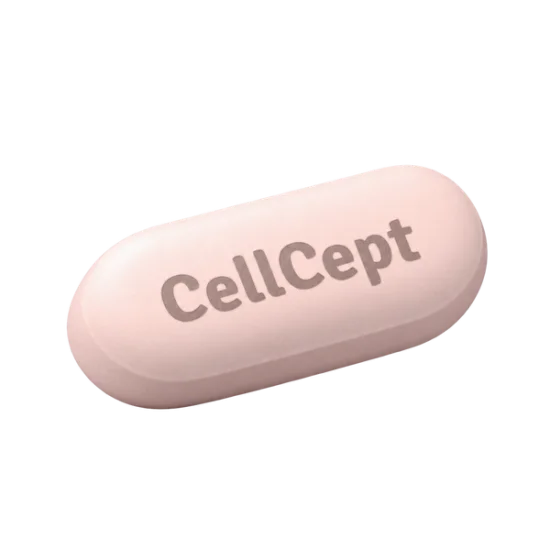
CellCept works through lymphocyte purine synthesis inhibition. Other transplant medicines act on different immune pathways, and transplant regimens often combine agents to control rejection through complementary mechanisms.

Approach Main immune effect Common clinical limitation
CellCept — mycophenolate mofetil Reduces activated T- and B-lymphocyte proliferation Diarrhoea, low blood counts, and infection risk
Calcineurin inhibition Reduces T-cell activation and cytokine signalling Kidney toxicity, blood-pressure changes, tremor, and metabolic effects
mTOR inhibition Reduces lymphocyte growth and cell-cycle progression Mouth ulcers, lipid changes, swelling, and wound-healing concerns

CellCept is often selected as part of a combination regimen because its mechanism differs from calcineurin inhibition. The choice depends on rejection risk, kidney function, infection history, wound healing, blood counts, and previous intolerance.

A transplant specialist may adjust or replace one component when adverse effects become clinically significant. The substitute is not chosen by matching tablet strength alone. Immunosuppressants have different monitoring requirements and interaction profiles.

What doctors say

Doctor Perspectives

In transplant practice, physicians usually frame CellCept around consistency rather than immediate symptoms. Rejection can develop without dramatic early warning signs, so feeling well does not prove that the immune response is fully controlled.

A transplant physician would also separate two problems: inadequate immunosuppression and excessive immunosuppression. A rising creatinine level, new organ-specific symptoms, or abnormal drug exposure may require a transplant assessment, while fever, neutropenia, or severe diarrhoea may require temporary adjustment.

The dose is not chosen from body weight alone. Age, organ function, pregnancy potential, infection risk, other immunosuppressants, and laboratory results all influence the treatment plan.

The WHO transplant-care literature supports structured follow-up, adherence, infection surveillance, and monitoring for complications in people receiving long-term immunosuppression [4].

Comparison

Comparison table: Immunosuppressants

Common questions

What should I do after missing a CellCept dose?

Take the missed dose when remembered unless the next scheduled dose is close. Do not take two doses together to compensate. The FDA transplant information available in 2025 continues to emphasize adherence and contacting the transplant team when a missed dose creates uncertainty. Vomiting soon after a dose also deserves specific advice because absorption may be incomplete.

How does CellCept differ from calcineurin inhibitors?

CellCept contains mycophenolate mofetil, which reduces lymphocyte proliferation by inhibiting purine synthesis. Calcineurin inhibitors reduce T-cell activation through a different signalling pathway. EMA transplant guidance reviewed in 2024 describes these medicines as mechanistically distinct components that may be combined rather than treated as direct substitutes. A change between them requires specialist monitoring because the risks, interactions, and laboratory targets differ.

How soon does the effect of CellCept become noticeable?

CellCept is intended to prevent immune-mediated rejection, so its benefit may not produce a noticeable sensation. The drug’s immunological effect begins after treatment is absorbed, while the clinical assessment depends on organ function, blood tests, symptoms, and the full transplant regimen. Health Canada information reviewed in 2025 supports monitoring rather than judging treatment by how the patient feels on a particular day. Never use the absence of symptoms as a reason to stop treatment.

What should I do if the expected result does not come?

Contact the transplant team promptly if tests show worsening organ function or if symptoms suggest rejection or infection. Do not increase CellCept yourself, because a higher exposure can increase infection, gastrointestinal, and blood-count risks. WHO transplant-care guidance published in 2010 supports rapid assessment of possible rejection and medication adherence before treatment is changed. Bring a complete list of medicines and recent missed doses to the clinical review.

Which symptoms mean stopping CellCept and seeking urgent medical care?

Severe allergic symptoms, breathing difficulty, confusion, fainting, uncontrolled bleeding, severe infection symptoms, or rapidly worsening weakness require urgent medical care. A high fever, severe sore throat, painful urination with fever, new shortness of breath, or extensive bruising may indicate infection or a blood-count problem. The FDA CellCept prescribing information reviewed in 2023 identifies serious infection, blood abnormalities, and pregnancy-related harm as major safety concerns. Do not make a permanent treatment decision alone during an emergency; obtain urgent assessment and tell the treating team that you use mycophenolate mofetil.

Do you offer anonymous delivery?

Your order will be securely packed and shipped within 24 hours. This is exactly what your package will look like (images of an actual item sent). It has the size and look of a regular private letter (24x11x0.7 cm) and its contents cannot be seen.

Customer Feedback on CellCept

4.3
Based on 3 reviews
Liam, 57 Vancouver Long-term
Verified
Rating: 5 out of 5

I used CellCept after my kidney transplant and kept the tablets beside my morning and evening routine. After the first few weeks, I felt more settled and had no trouble remembering the doses. My follow-up blood tests stayed on schedule, which gave me confidence in the routine.

Nov 5, 2026
Michael, 33 Barrie During the first month
Verified
Rating: 3.5 out of 5

CellCept was part of my treatment after a heart transplant. It helped keep my transplant care stable, but the diarrhoea during the first month was frustrating and made work difficult. The transplant clinic adjusted the timing of my medicines and the problem became easier to manage.

Oct 10, 2026
Jack, 49 Thunder Bay Long-term
Verified
Rating: 4.5 out of 5

I took CellCept as part of my liver-transplant regimen. The main benefit was having a clear routine that I could follow every day, including while travelling within Ontario. I appreciated that the clinic explained the blood tests and infection warnings in practical terms.

Oct 24, 2026

Sources

  1. U.S. Food and Drug Administration (2023). CellCept (mycophenolate mofetil) Prescribing Information.
  2. European Medicines Agency (2024). Summary of Product Characteristics (SmPC) — mycophenolate mofetil.
  3. Health Canada (2025). CellCept Product Monograph.
  4. World Health Organization (2010). WHO Guiding Principles on Human Cell, Tissue and Organ Transplantation.
Get our free app Shop faster and track your orders 4.0 · 269 reviews Install