Skip to content
Save up to 80%
Hoodia
Active ingredient: Hoodia

Hoodia

Quality products
24/7 Support
Fast delivery
Delivery from 4 days
Select pack Package Per unit Price

Free delivery on orders from $ 296.00, free express delivery from $ 444.00

Secure Payments
Track your order
Best price guarantee

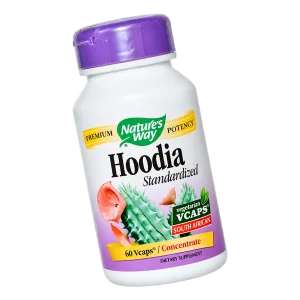
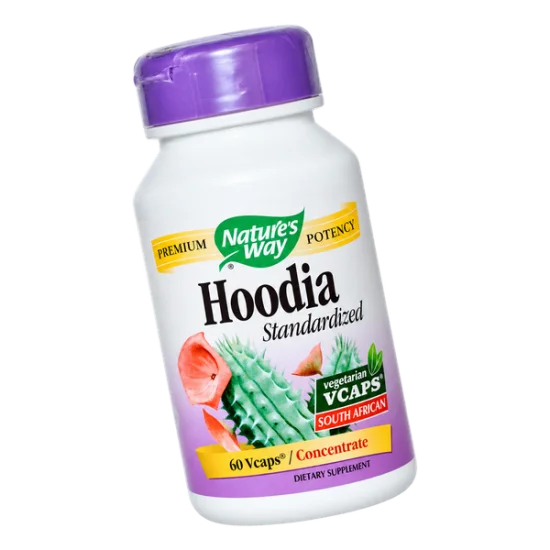
Adults considering an herbal appetite-support product may encounter Hoodia, a bottle of standardized vegetarian capsules containing a plant-derived Hoodia ingredient. It is marketed for appetite suppression and weight-loss support, yet clinical evidence remains limited and does not establish Hoodia as an obesity treatment.

Overview

Hoodia is a dietary supplement ingredient derived from a succulent plant. Commercial products most often associate it with Hoodia gordonii, a species traditionally linked with reduced hunger during prolonged activity. Modern marketing presents Hoodia as an appetite suppressant, weight loss supplement, herbal slimming support, or weight loss aid.

Appetite suppression means feeling less hungry or becoming satisfied with less food for a period of time. A temporary reduction in appetite does not automatically produce meaningful fat loss. Long-term weight management also depends on dietary pattern, activity, sleep, medical conditions, medicines, and sustained energy balance. Appetite responses can vary substantially between people. A short-term change should therefore be assessed alongside nutrition, symptoms, and longer-term outcomes.

Dosage and administration

  • Dose: The exact Hoodia dose in mg per capsule is unknown; agree how much to take with a doctor or pharmacist.
  • Frequency: The number of capsules to take per day is not established; agree the frequency with a doctor or pharmacist.
  • Timing: Whether to take it before or after meals, and the preferred time of day, is unknown; clarify timing with a doctor or pharmacist.
  • Duration: The appropriate duration of use is unknown; do not set a course without professional advice.
  • Route: Take the vegetarian capsules orally with water; do not use them topically or by another route.

Formulation

Hoodia is a plant-derived dietary supplement ingredient from a succulent plant, most often associated with Hoodia gordonii. This product is marketed in standardized vegetarian capsules for appetite suppression and weight-loss support; the specific Hoodia amount per capsule is not established by the available information.

How it affects the body

Hoodia is derived from a succulent plant and is marketed as an appetite suppressant. Its proposed biological effect is related to reduced hunger, but clinical research has not established a reliable pharmacological mechanism that produces sustained weight reduction.

Therapeutic indications

Hoodia claims to reduce hunger. That claim is not the same as proof that it increases long-term weight loss.

Hoodia is marketed as a weight loss supplement, but evidence for durable weight reduction remains limited. A herbal slimming support product should not be treated as equivalent to an approved obesity treatment with defined dosing, clinical monitoring, and long-term outcome data.

Common mistakes

Common mistakes include treating Hoodia as a replacement for meals, taking more because appetite does not change quickly, and combining it with stimulant-containing slimming products. Another error is assuming that a plant-derived ingredient cannot affect heart rate, blood pressure, digestion, or liver function.

Some users also judge success by a few days of reduced food intake. That measure can be misleading. Water changes, nausea, and normal appetite variation may look like weight-loss progress without representing sustained fat loss.

Do not increase the serving after one or two days because the expected effect has not appeared. Higher intake has not been established as a reliable route to better weight control.

When not to use it

Hoodia is not appropriate for self-directed use by someone who is pregnant or breastfeeding, under 18, medically frail, or living with significant heart, liver, kidney, blood-pressure, or blood-sugar disease without clinical advice.

Extra caution is needed when taking medicines that affect:

  • blood pressure or heart rhythm;
  • blood glucose;
  • liver metabolism;
  • appetite, mood, alertness, or the central nervous system;
  • fluid balance or digestion.

There is no reliable basis for assuming that Hoodia can be combined safely with every prescription medicine, stimulant, caffeine-heavy product, laxative, or weight-loss supplement. The absence of a listed interaction is not proof that an interaction cannot occur.

The European Medicines Agency’s general approach to herbal medicinal products distinguishes traditional use from evidence of established clinical efficacy and safety [2].

When this is not for you

This product is not for you if you cannot obtain clinical advice about pregnancy, breastfeeding, being under 18, significant heart, liver, kidney, blood-pressure, or blood-sugar disease, or your current medicines.

Possible side effects

Human safety data for Hoodia are limited. Reported or discussed reactions include nausea, headache, dizziness, abdominal discomfort, and other gastrointestinal symptoms. The frequency of these effects has not been established reliably across commercial products.

Concentrated supplements also raise questions about cardiovascular effects, liver effects, contamination, inaccurate ingredient amounts, and interactions with medicines. These concerns do not prove that every Hoodia product causes harm, but they make product-specific review important.

Possible warning symptoms include:

  • chest pain, rapid or irregular heartbeat, or fainting;
  • severe or persistent vomiting;
  • yellowing of the skin or eyes, dark urine, or marked abdominal pain;
  • facial swelling, wheezing, or difficulty breathing;
  • severe dizziness, confusion, or weakness.

Stop using the product and seek urgent medical care if chest pain, fainting, breathing difficulty, severe allergic swelling, or signs of liver injury occur.

Comparison

Hoodia differs from synthetic appetite suppressants and generic non-prescription diet pills in more than its plant origin. “Synthetic” describes how an ingredient is made; it does not automatically mean dangerous. “Natural” describes origin; it does not automatically mean safer.

Category Evidence and quality considerations
Hoodia Limited human evidence; variable extracts; uncertain long-term safety and dosing consistency
Regulated appetite-suppressant medicines Defined active ingredients, studied doses, formal contraindications, and clinical monitoring
Non-prescription diet pills Highly variable formulations; proprietary blends and exaggerated claims may limit assessment

A plant-derived product may be less predictable than a regulated medicine if its active constituents and extract strength are poorly characterized. A regulated medicine may also carry important adverse effects and require monitoring. The choice depends on health status, treatment goals, medical history, and professional assessment. Potential advantages of Hoodia include convenient capsule use, no need to prepare a tea, and an opportunity to track appetite changes. The drawback is that limited evidence and variable extract quality make any benefit uncertain.

What doctors say

In clinical practice, doctors generally separate a patient’s weight-management goal from the marketing claim attached to an herbal supplement. A physician would want to know whether hunger is related to sleep deprivation, diabetes, medication effects, depression, endocrine disease, or an eating disorder before focusing on an appetite suppressant.

Health Canada’s guidance for natural health products emphasizes product-specific directions, cautions, and risk information rather than assuming that all products within one plant category behave identically [1]. A clinician may also review blood pressure, heart rhythm, liver history, and current medicines before use.

The realistic expectation is limited. Hoodia has not demonstrated the level of evidence needed to replace established approaches to obesity care. A person who develops persistent nausea, dizziness, palpitations, or jaundice should stop using it and obtain medical assessment.

Comparison

Comparison table: Weight Loss

Common questions

Can Hoodia be combined with medicines or supplements?

The 2011 Hoodia trial did not establish safe combinations with every prescription medicine or supplement, and Health Canada treats natural health products as formulation-specific products. Combining Hoodia with stimulant-containing slimming products, high-caffeine products, laxatives, or appetite-directed medicines may increase uncertainty about side effects. A pharmacist or doctor should review the complete list before use.

What should be discussed with a doctor before starting Hoodia?

The 2011 randomized study reported in The American Journal of Clinical Nutrition involved healthy overweight women, so its findings do not cover pregnancy, breastfeeding, adolescents, older adults with multiple medicines, or people with chronic disease. Discuss heart rhythm, blood pressure, diabetes, liver or kidney problems, current medicines, and previous supplement reactions. The planned purpose of use should also be clear because dosing depends on that purpose.

Can Hoodia cause nausea or other side effects?

The 2011 clinical publication in The American Journal of Clinical Nutrition examined safety during 15 days of purified Hoodia extract use, but it could not define long-term adverse-effect rates for all commercial products. Nausea, abdominal discomfort, headache, and dizziness are possible concerns, while severe vomiting, fainting, chest pain, jaundice, or breathing difficulty require urgent care. Stop use if a serious reaction develops.

Can Hoodia be used during pregnancy or breastfeeding?

Health Canada’s natural health product framework does not make limited Hoodia weight-loss evidence sufficient to establish safety during pregnancy or breastfeeding. The 2011 Hoodia study was not designed to answer those questions. Avoid self-directed use during pregnancy or breastfeeding and obtain product-specific clinical advice.

Can Hoodia affect driving, concentration, or machinery work?

The 2011 trial reported in The American Journal of Clinical Nutrition does not provide enough evidence to guarantee normal alertness for every person using every Hoodia formulation. Dizziness, headache, nausea, weakness, or an unexpected reaction could impair driving or machinery work. Avoid those activities until you know how the product affects you.

How long does one Hoodia dose keep working?

The 2011 study reported in The American Journal of Clinical Nutrition assessed repeated use over 15 days rather than proving how long one capsule suppresses appetite. Hoodia does not have a reliably established duration of action for every commercial formulation. Do not repeat a dose early or increase the amount to extend an effect.

Do you offer anonymous delivery?

Your order will be securely packed and shipped within 24 hours. This is exactly what your package will look like (images of an actual item sent). It has the size and look of a regular private letter (24x11x0.7 cm) and its contents cannot be seen.

Hoodia Product Forms and Extract Types

Hoodia is sold in several forms, including capsules, tablets, powders, teas, and liquid extracts. The product on this page is supplied as vegetarian capsules in a bottle.

A capsule or tablet is not automatically stronger than a tea or powder. The form also does not prove effectiveness. Useful product information includes the botanical species, plant part, amount per serving, extract ratio or standardization method, contaminant screening, lot testing, and clear ingredient disclosure.

Product form Practical information
Capsules or tablets Convenient and portable; quality depends on species identification, extract details, and testing
Tea or powder May provide less consistent amounts of plant constituents; preparation can affect the quantity consumed
Liquid extract May allow flexible serving sizes; concentration, solvent, and stability information matter

Natural and Purified Extracts

A natural Hoodia extract contains processed plant material and may include multiple plant constituents. A purified Hoodia extract has undergone additional processing intended to concentrate or isolate selected constituents. Purification does not automatically prove clinical benefit.

Chemical composition can vary between manufacturers. The product form, botanical name, extract specification, and testing information should be considered before use rather than relying on the word “natural.”

Capsules, Tablets, Teas, Powders, and Liquid Extracts

Hoodia supplements can differ substantially in concentration and formulation. A bottle of capsules may not be equivalent to a tea, powder, or liquid extract made from the same plant name.

Customer Feedback on Hoodia

4.5
Based on 4 reviews
Thomas, 29 Saint John Several weeks
Verified
Rating: 5 out of 5

I used Hoodia capsules for several weeks while keeping my usual meals and work schedule. I felt less interested in snacking during the afternoon and was satisfied with that practical change. I did not expect dramatic weight loss, but the reduced grazing made the product useful for me.

Nov 7, 2026
Kevin, 39 St. John's A short period
Verified
Rating: 3.5 out of 5

I tried the capsules for a short period and noticed a modest reduction in evening hunger. The benefit was inconsistent, and I had mild nausea on some days, so I stopped taking it with an empty stomach. It helped a little, but it was not a complete solution.

Oct 10, 2026
Graham, 39 Kingston About a month
Verified
Rating: 4.5 out of 5

After using Hoodia for about a month, I found it easier to avoid second portions at dinner. The change was gradual rather than striking, and I was satisfied because the capsules fitted into my routine without making meals complicated.

Oct 27, 2026
Christopher F., 44 Red Deer By the third week
Verified
Rating: 5 out of 5

I used the capsules during a period when I was trying to reduce unnecessary snacking. By the third week, I felt more in control of between-meal eating and noticed a useful difference in my daily routine. The result was modest, but it matched what I had hoped for.

Oct 17, 2026

Sources

  1. Health Canada (2022). Natural health products: Product and site licensing.
  2. European Medicines Agency (2017). Guideline on the assessment of herbal medicinal products and traditional herbal medicinal products.
Get our free app Shop faster and track your orders 4.0 · 289 reviews Install