Skip to content
Save up to 80%
Lamisil
Active ingredient: Terbinafine

Lamisil

Quality products
24/7 Support
Fast delivery
Delivery from 4 days
Select pack Package Per unit Price

Free delivery on orders from $ 296.00, free express delivery from $ 444.00

Secure Payments
Track your order
Best price guarantee

Lamisil tablets contain terbinafine and are used for selected fungal infections affecting the skin, hair, or nails. Terbinafine blocks fungal growth at its source, though treatment duration depends on the infection site and response.

Overview

Lamisil is an antifungal brand containing terbinafine. The tablets are used when an oral treatment is appropriate for a confirmed or strongly suspected fungal infection. Common targets include dermatophyte infections of the skin, hair, and nails. The regimen for the chosen strength should be confirmed with a healthcare professional before starting.

Dosage and administration

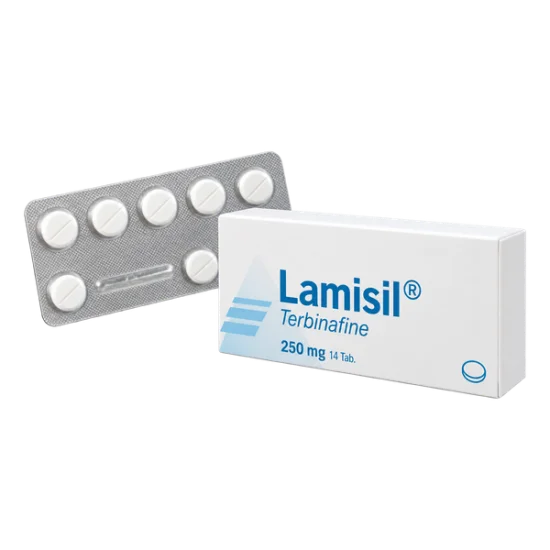
  • Take Lamisil tablets by mouth; the product marking is 250 mg per tablet.
  • Confirm the prescribed dose in mg, frequency, timing in relation to meals, and treatment duration with a healthcare professional before starting.
  • Use oral tablets only when an oral treatment is appropriate for a confirmed or strongly suspected fungal infection affecting the skin, hair, or nails.

Formulation

The active ingredient is terbinafine. The tablet strength and regimen are confirmed with a healthcare professional before treatment begins.

Terbinafine Concentration

A topical preparation and a tablet belong to different dosage forms. They reach different tissues and follow different treatment decisions. The form alone does not show which option is more suitable.

Health Canada product information identifies terbinafine as the active substance in Lamisil tablets, while the WHO describes dermatophyte infections as diseases requiring treatment matched to the organism and body site [1].

How it affects the body

Terbinafine is an allylamine antifungal. It inhibits fungal squalene epoxidase, an enzyme required to produce ergosterol. Ergosterol helps maintain the fungal cell membrane. Blocking this pathway causes toxic squalene to accumulate and weakens the fungal cell, limiting growth or causing fungal death, depending on the organism and exposure.

Therapeutic indications

Lamisil tablets are used when an oral treatment is appropriate for a confirmed or strongly suspected fungal infection. Common targets include dermatophyte infections of the skin, hair, and nails.

Oral terbinafine may be prescribed for:

  • Persistent dermatophyte infections affecting larger areas of skin.
  • Fungal infections involving hair-bearing areas.
  • Confirmed fungal nail infections.
  • Skin infections that have not responded to an appropriate topical antifungal.
  • Infections where the affected site makes topical treatment impractical.

Tinea corporis affects the trunk, limbs, or other areas of exposed skin. Tinea cruris affects the groin and nearby skin folds. Tinea pedis affects the feet, including the spaces between the toes and the soles.

Dermatophytosis is the broader term for infection caused by dermatophytes. These fungi use keratin found in skin, hair, and nails. The exact diagnosis matters because not every fungal-looking eruption responds to terbinafine.

Common mistakes

The most frequent avoidable problems are missed doses, early discontinuation, damp skin during topical application, and using a steroid combination without guidance. Each can make symptoms harder to interpret.

Patients also overlook reinfection from moist footwear, unwashed towels, or shared personal items. These practical details matter most when athlete’s foot or groin infection returns after an apparently successful course.

When this is not for you

NOT for you if: the diagnosis is uncertain, you have active liver disease without specialist assessment, or a clinician has advised against oral treatment.

Possible side effects

Topical and oral terbinafine have different safety profiles. Skin products may cause local irritation, dryness, burning, redness, or contact allergy. Tablets can produce systemic adverse effects because terbinafine circulates throughout the body.

A Canadian product monograph describes oral terbinafine precautions involving liver function, taste or smell disturbances, serious skin reactions, blood-cell abnormalities, and medicine interactions [2].

Reaction pattern What it may mean Action
Mild local burning, dryness, or redness Irritation at the application site Monitor and avoid eyes or broken skin
Facial swelling, blistering, widespread rash, or breathing difficulty Possible serious allergic reaction Obtain urgent medical care
Persistent nausea, dark urine, pale stools, jaundice, or marked fatigue Possible liver injury during oral treatment Stop and seek urgent medical assessment

Topical Reactions

Mild, short-lived irritation can occur with topical terbinafine. Facial swelling, blistering, widespread hives, or breathing difficulty may signal a serious allergy and requires urgent care.

Topical treatment should not be applied inside the mouth, vagina, eyes, or other mucous membranes. Accidental eye exposure should be rinsed promptly with clean water.

Oral Terbinafine Safety Signals

Oral terbinafine can rarely cause serious liver injury. Warning symptoms include yellowing of the skin or eyes, unusually dark urine, pale stools, persistent nausea, loss of appetite, right-upper-abdominal discomfort, severe itching, or unusual fatigue.

Taste or smell changes can occur and may affect appetite or eating. Severe skin rash, blistering, mouth sores, fever, facial swelling, or breathing difficulty requires urgent medical attention.

Baseline liver testing and follow-up testing may be considered according to the patient’s history, treatment duration, and prescriber judgment.

Comparison

Terbinafine and azole antifungals treat fungi through different biochemical pathways. Terbinafine inhibits squalene epoxidase, while azoles such as clotrimazole interfere with fungal ergosterol synthesis through a different enzyme pathway.

Approach Typical role Limitation
Terbinafine Dermatophyte skin infections and selected nail disease Oral treatment needs systemic safety assessment
Azole antifungal cream Several superficial fungal and yeast infections May require a longer topical course
Non-antifungal treatment Eczema, psoriasis, bacterial or inflammatory rashes Does not treat dermatophyte infection

The best option depends on the organism, body site, skin sensitivity, diagnosis, and ability to follow the course. No antifungal class is right for every rash.

Terbinafine and Azole Antifungals

Terbinafine can be useful when dermatophytes are the likely cause. Azole antifungals may be selected when yeast is suspected or when the clinical pattern supports that class. Atypical or persistent disease may require testing rather than repeated product changes.

Choosing a Topical Antifungal

Topical treatment suits many localised skin infections. Oral therapy has a broader systemic role but carries risks that do not apply in the same way to a cream.

What doctors say

A pharmacist reviewing oral terbinafine would focus first on diagnosis, the treatment site, liver history, and medicine interactions. The next priorities are adherence and realistic expectations about skin, hair, or nail recovery.

The WHO notes that fungal disease can vary widely by organism, location, and patient factors, which is why persistent or atypical infection warrants reassessment [3].

Comparison

Comparison table: Antifungals

Common questions

What is the best time of day to take Lamisil tablets?

Lamisil tablets can generally be taken at a consistent time each day, with or without food, unless the prescriber gives different instructions. Taking the dose with food may be more comfortable for someone who experiences stomach upset. Health Canada product information supports following the prescribed oral regimen consistently rather than changing timing from day to day [4]. The 2020 Health Canada product monograph describes the same approach.

Can Lamisil cause taste changes?

Yes. Oral terbinafine can cause altered or reduced taste, and some people also report changes in smell. The effect may influence appetite or eating and should be reported if it is persistent, severe, or associated with weight loss. The EMA product information identifies taste and smell disturbances among recognised oral terbinafine safety concerns. The 2023 EMA product information provides the relevant safety reference.

Is Lamisil suitable for older adults?

Older adults may use oral terbinafine when the diagnosis and health profile support it. Prescribers usually review liver function, kidney status, other medicines, and the ability to recognise adverse effects. Health Canada guidance supports an individual medication review because age-related changes and polypharmacy can affect treatment safety. The 2020 Health Canada product monograph provides the corresponding product-specific information.

How long does a Lamisil course last, and is long-term use acceptable?

The course depends on whether the infection affects skin, hair, or nails, and on the response to treatment. Nail disease generally requires a longer treatment plan than a limited skin infection, while visible nail recovery continues after fungal activity has stopped. Long-term or repeated oral treatment should remain clinician-directed, with monitoring when indicated; WHO guidance links treatment duration to the infection and patient factors. The 2022 WHO fungal priority pathogens list provides additional dated context.

How does Lamisil differ from clotrimazole?

Lamisil contains terbinafine, an allylamine that inhibits fungal squalene epoxidase. Clotrimazole is an azole antifungal that disrupts ergosterol production through a different enzymatic pathway. Health Canada and EMA product information support selecting between these classes according to the suspected organism, infection site, formulation, and treatment response. The 2023 EMA product information provides a dated regulatory reference.

What should be checked before starting Lamisil tablets?

Before starting, discuss liver disease, previous reactions to terbinafine, pregnancy or breastfeeding, current medicines, supplements, and any past taste or smell disturbance. The prescriber may decide whether liver testing or follow-up is appropriate. The Canadian product monograph for Lamisil tablets provides the relevant safety framework for this review. The 2020 Health Canada product monograph is the dated product-specific reference.

Do you offer anonymous delivery?

Your order will be securely packed and shipped within 24 hours. This is exactly what your package will look like (images of an actual item sent). It has the size and look of a regular private letter (24x11x0.7 cm) and its contents cannot be seen.

Lamisil Formulations and Product Selection

Form Clinical role Main limitation
Oral terbinafine tablets Selected skin, hair, and nail infections Requires medication and liver-risk assessment
Topical terbinafine cream or spray Localised superficial skin infections May not reach established nail infection adequately
Single-application topical treatment Specific superficial skin infections Only applies to the formulation’s approved directions

Single-Application and Oral Treatment Roles

The regimen for the chosen strength should be confirmed with a healthcare professional before starting. That assessment may include the infection site, previous treatment, liver history, current medicines, pregnancy or breastfeeding status, and the need for laboratory monitoring.

Customer Feedback on Lamisil

3.6
Based on 5 reviews
David P., 29 Winnipeg
Verified
Rating: 4 out of 5

I completed the prescribed Lamisil tablet course for a persistent fungal infection and noticed the scaling settle after the first few weeks. The skin looked much clearer by the end, and the improvement held after treatment finished.

Nov 7, 2026
Liam, 32 Kingston
Verified
Rating: 3.5 out of 5

The infection improved, but the itching took longer to settle than I expected. I also had mild stomach discomfort during the first week, so I took the tablets with food and discussed it with my prescriber.

Nov 1, 2026
Paul K., 51 Kelowna
Verified
Rating: 4 out of 5

Lamisil helped with a stubborn infection that kept coming back with topical treatment. The visible changes did not disappear immediately, but the new skin looked healthier as treatment progressed.

Oct 15, 2026
Richard, 63 Barrie Months
Verified
Rating: 4.5 out of 5

I used the tablets for a confirmed nail infection and understood that the nail would take months to grow out. The nail gradually looked clearer from the base, which made the slow progress easier to judge.

Oct 10, 2026
Peter, 26 Hamilton
Verified
Rating: 2 out of 5

The tablets did not improve my rash, and I developed an unpleasant taste that made eating difficult. I stopped after speaking with my doctor, and the diagnosis was reviewed instead of simply changing to another antifungal.

Oct 24, 2026

Sources

  1. WHO (2022). WHO fungal priority pathogens list to guide research, development and public health action.
  2. Health Canada (2020). Product Monograph: Lamisil Tablets (terbinafine hydrochloride).
  3. WHO (2023). Fungal diseases — Fact sheet.
  4. Health Canada (2020). Lamisil Tablets (terbinafine hydrochloride) Product Monograph.
Get our free app Shop faster and track your orders 4.0 · 269 reviews Install