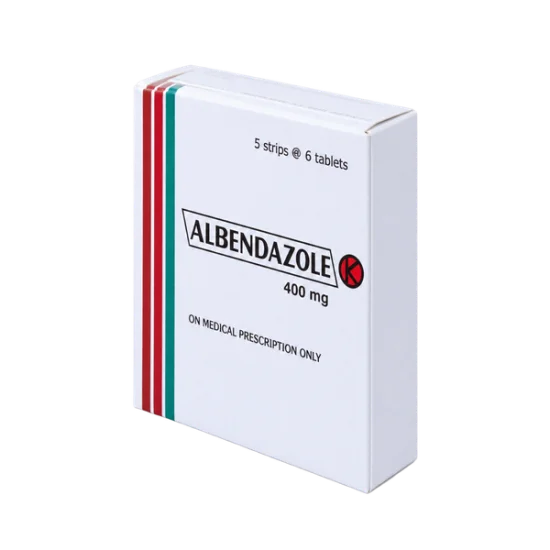
I took the prescribed albendazole tablets at the prescribed dose for the prescribed course for an intestinal infection and noticed that the abdominal cramping settled over the following days. The course was easy to fit around work, and I was satisfied with the result.
Albendazole is an antihelmintic medicine for diagnosed intestinal or tissue-based parasitic infections. It disrupts parasite beta-tubulin and energy production, helping eliminate susceptible parasites; the amount taken at one time is set individually rather than being fixed for every person. [1]
Overview
Albendazole is a benzimidazole antihelmintic. Its active substance interferes with tubulin, a structural protein that parasites need to maintain their cells and absorb nutrients.
The drug binds to parasite beta-tubulin and disrupts microtubule formation. The parasite then loses its ability to absorb glucose efficiently, depletes its energy stores, and eventually dies. Human cells are less affected at therapeutic exposure because the drug has greater activity against parasite tubulin.
Dosage and administration
The tablet is swallowed by mouth. Whether it should be taken with food, and whether a treatment plan requires one intake or repeated doses, depends on the infection being treated. For tissue infections, clinicians may use a longer course and monitor blood counts and liver enzymes.
The amount taken at one time is determined individually for each person rather than being one fixed amount for every patient. A child’s dose may be weight-based, while adults with neurocysticercosis or hydatid disease may need a structured course involving repeated doses.
A practical administration plan includes:
- Take the prescribed amount by mouth at the scheduled time.
- Swallow the tablet with water.
- Follow the treatment duration selected for the diagnosed parasite.
- Take albendazole with food when the regimen is intended to improve systemic absorption, especially in tissue infections.
- Do not add extra tablets because symptoms have not improved quickly.
- If a dose is missed, take it when remembered unless the next scheduled dose is near; skip the missed dose rather than doubling.
- Complete the prescribed course when repeated treatment is required.
Intestinal infections may use a shorter regimen than neurocysticercosis or cystic hydatid disease. The correct schedule cannot be chosen from the tablet strength alone.
Formulation
Albendazole is the active substance in this antihelmintic medicine. It interferes with parasite beta-tubulin and disrupts microtubule formation, reducing the parasite’s ability to absorb glucose and maintain its cells.
How it affects the body
Antihelmintics are medicines used against parasitic worms, including roundworms, hookworms, pinworms, and certain tapeworms. Albendazole is a benzimidazole antihelmintic. Its active substance interferes with tubulin, a structural protein that parasites need to maintain their cells and absorb nutrients.
The drug binds to parasite beta-tubulin and disrupts microtubule formation. The parasite then loses its ability to absorb glucose efficiently, depletes its energy stores, and eventually dies. Human cells are less affected at therapeutic exposure because the drug has greater activity against parasite tubulin.
Therapeutic indications
Albendazole is used for several parasitic infections, but the required treatment plan differs substantially between an intestinal infestation and a larval infection affecting tissue. Health Canada and international clinical references describe albendazole use within diagnosis-specific treatment plans rather than as a single universal course. [2]
Systemic Larval Infections
Neurocysticercosis is caused by larval forms of the pork tapeworm, Taenia solium. The larvae can form cysts in the brain, where treatment may involve albendazole, corticosteroid management, seizure treatment, imaging, or specialist observation depending on the number, location, and stage of the lesions.
Cystic hydatid disease is caused by the larval dog tapeworm, Echinococcus granulosus. Cysts may develop in the liver or lungs and can require prolonged albendazole therapy around surgery or other specialist procedures. These infections are not managed like a short course for a simple intestinal worm.
Intestinal Parasitic Infestations
Albendazole may be used against susceptible intestinal worms, including hookworms and pinworms. It also has activity against selected roundworms and tapeworm infections. Testing, exposure history, symptoms, and local clinical practice help determine whether treatment is needed and whether household or environmental measures are also relevant.
| Parasite or infection | Typical clinical site |
|---|---|
| Neurocysticercosis from pork tapeworm larvae | Brain and central nervous system |
| Cystic hydatid disease from dog tapeworm larvae | Liver, lungs, or other tissues |
| Hookworms and pinworms | Intestinal tract |
The same tablet strength can be used in different clinical settings, but that does not mean the same number of tablets or treatment duration applies to every infection.
Common mistakes
Several mistakes can reduce treatment success or increase risk:
- Taking an extra tablet because symptoms remain after the first intake.
- Assuming every worm infection needs the same regimen.
- Stopping a prolonged course without discussing it with the prescriber.
- Forgetting to mention cimetidine, dexamethasone, praziquantel, theophylline, or supplements.
- Ignoring liver disease or previous abnormal liver tests.
- Treating household symptoms without confirming whether the same parasite is present.
- Crushing the tablet when swallowing difficulty has not been discussed.
- Missing scheduled blood tests during a prolonged course.
- Confusing a medicine for parasitic worms with treatment for a viral or bacterial illness.
A missed dose is generally handled by taking it when remembered unless the next scheduled dose is close. Doubling the next intake increases exposure without reliably improving parasite clearance.
When not to use it
- Known allergy to albendazole or another benzimidazole medicine.
- Active liver disease or significantly abnormal liver tests.
- Pregnancy, especially during the first trimester, unless the expected benefit clearly outweighs the risk.
- Breastfeeding, where the clinician must assess the indication and treatment duration.
- A planned prolonged course without a monitoring plan.
- Unexplained neurological symptoms that have not been assessed.
- Use of medicines that may alter liver metabolism or increase toxicity.
When this is not for you
Albendazole is not suitable for every patient or every suspected infection. Albendazole may not be for you if the illness has not been diagnosed as a susceptible parasitic infection, if significant liver disease is untreated, or if pregnancy requires an individual risk assessment.
Women who could become pregnant may be asked to complete pregnancy testing or use reliable contraception during treatment, depending on the indication and course length. Human pregnancy data are limited, and animal studies have raised developmental concerns; treatment decisions therefore depend on clinical necessity.
For neurocysticercosis, killing larvae can provoke inflammation around brain lesions. Corticosteroids and seizure medicines may be needed as part of the treatment plan. Albendazole should not be started casually when a central nervous system infection is suspected.
Possible side effects
Short courses can be tolerated without major problems, though abdominal discomfort, nausea, vomiting, headache, dizziness, or diarrhoea may occur. Symptoms may also come from the parasite itself, making it difficult to identify the cause from timing alone.
During longer treatment, clinically important reactions include liver enzyme elevation, reduced blood-cell counts, fever, unusual bruising, or severe fatigue. Severe abdominal pain, yellowing of the skin or eyes, dark urine, persistent vomiting, confusion, or a widespread rash requires prompt medical assessment.
Common practical points include:
- Mild stomach upset may improve when the dose is taken with the food specified in the treatment plan.
- Do not use alcohol to manage nausea or discomfort during therapy.
- Report fever, sore throat, mouth ulcers, or unusual bruising during prolonged treatment.
- People with liver disease may need closer laboratory monitoring.
- New seizures or worsening neurological symptoms during treatment for neurocysticercosis require urgent clinical attention.
A rare but important issue is liver toxicity. Risk rises with prolonged exposure and repeated courses, which is why systemic infections are managed differently from uncomplicated intestinal infestations.
Comparison
Albendazole, mebendazole, and praziquantel all belong to the wider field of antihelmintic treatment, yet they are not interchangeable. Selection depends on the parasite species, tissue location, drug penetration, age, pregnancy status, liver function, and interaction profile.
| Treatment category | Main pharmacological role |
|---|---|
| Albendazole | Benzimidazole antihelmintic used for selected intestinal and tissue-based worm infections |
| Mebendazole | Benzimidazole agent used mainly for several intestinal nematode infections |
| Praziquantel | Different antihelmintic class used for selected tapeworm and fluke infections |
Mebendazole and albendazole share a benzimidazole mechanism, so both interfere with parasite microtubules. Their licensed indications, dosing schedules, and tissue activity still differ. Praziquantel acts through parasite membrane permeability and muscle contraction, making it useful for organisms outside the main range of benzimidazole treatment.
Praziquantel may be used alongside albendazole in selected specialist protocols, including some cases of neurocysticercosis. That combination requires deliberate prescribing because both the disease and the medicines can create neurological or inflammatory complications.
What doctors say
Clinicians first identify the likely parasite. They then determine whether infection is confined to the intestine or has reached tissue. That distinction determines the dose schedule and treatment length. For tissue infections, the plan may include corticosteroids, imaging, and laboratory follow-up. Intestinal infections often require a shorter, diagnosis-specific regimen.
A physician treating a simple intestinal infestation may use a short, diagnosis-specific regimen. A physician treating hydatid disease or neurocysticercosis may plan repeated treatment, imaging, liver tests, and blood counts. The tablet strength alone cannot predict the full course.
Doctors also consider reinfection. Pinworm control may require attention to close contacts, hand hygiene, and laundering, while hydatid disease involves a completely different clinical pathway. Albendazole works best when the treatment plan matches the organism and its location.
The WHO model list places albendazole among medicines used in programmes addressing several neglected tropical diseases, reflecting its established role in parasitic disease control. [3]
Comparison
Common questions
What should be discussed with a doctor before starting Albendazole?
Discuss the suspected parasite, pregnancy possibility, breastfeeding, liver disease, previous abnormal liver tests, and any allergy to benzimidazole medicines. Include cimetidine, dexamethasone, praziquantel, theophylline, and regular supplements in the medication history. For prolonged treatment, ask how liver enzymes and blood counts will be monitored. FDA prescribing information from 2023 describes these precautions for longer or repeated courses. [4]
How soon does Albendazole begin to produce a noticeable effect?
The timing varies with the parasite, infection site, and severity. Intestinal symptoms may improve over several days, while tissue infections such as neurocysticercosis or cystic hydatid disease require clinical follow-up rather than symptom timing alone. A lack of immediate improvement does not justify taking extra tablets. The European Medicines Agency describes antiparasitic treatment as indication-specific in guidance from 2023, with assessment based on the infection and response pattern.
Can Albendazole be used during pregnancy or breastfeeding?
Pregnancy requires an individual risk–benefit decision, with extra caution during early pregnancy because developmental concerns have been identified in animal data. Breastfeeding also requires a treatment-specific decision, since the length and intensity of therapy affect exposure considerations. Do not begin, stop, or repeat treatment for a suspected worm infection without discussing pregnancy or breastfeeding status. Health Canada product information from 2024 provides the relevant reproductive-use precautions for albendazole products.
What should be done after a missed Albendazole dose?
Take the missed dose when remembered if the next scheduled intake is not close. If the next dose is due soon, skip the missed intake and continue with the planned schedule. Do not double the next amount, because extra albendazole does not compensate predictably for a missed dose and may increase adverse effects. The CDC clinical care guidance from 2024 for parasitic infections supports following the diagnosis-specific regimen rather than improvising additional doses.
What is the best time of day to take Albendazole?
The best time depends on the treatment plan and whether food is being used to improve systemic absorption. Take each dose at the scheduled time and follow the food instruction selected for the infection being treated. A regimen for an intestinal worm may differ from a prolonged plan for tissue infection. WHO treatment guidance from 2023 supports adapting administration to the specific parasite and clinical indication rather than using one universal time of day.
Do you offer anonymous delivery?
Your order will be securely packed and shipped within 24 hours. This is exactly what your package will look like (images of an actual item sent). It has the size and look of a regular private letter (24x11x0.7 cm) and its contents cannot be seen.
Customer Feedback on Albendazole
I used albendazole at the prescribed dose for the prescribed course for a diagnosed worm infection. The itching and stomach discomfort gradually improved, and by the end of the treatment I felt much more like myself.
My treatment involved repeated doses at the prescribed dose for the prescribed course rather than just taking one tablet and forgetting about it. The symptoms improved steadily, and the scheduled follow-up helped confirm that the plan was working.
I took albendazole at the prescribed dose for the prescribed course, but it did not improve my symptoms, and I developed enough stomach upset that I stopped taking further doses until I had spoken with a doctor. It turned out that the original symptoms needed a different assessment.
Sources
- U.S. Food and Drug Administration (2023). ALBENZA (albendazole) tablets, for oral use: Prescribing Information.
- Health Canada (2024). Albendazole: Canadian product information and safety information.
- World Health Organization (2023). WHO Model List of Essential Medicines, 23rd list.
- Centers for Disease Control and Prevention (2024). Clinical Care of Cysticercosis.