Skip to content
Save up to 80%
Allegra
Active ingredient: Fexofenadine

Allegra

Quality products
24/7 Support
Fast delivery
Delivery from 4 days
Select pack Package Per unit Price

Free delivery on orders from $ 296.00, free express delivery from $ 444.00

Secure Payments
Track your order
Best price guarantee

Allegra is used for seasonal allergy symptoms and chronic hives. Its active ingredient, fexofenadine, helps relieve sneezing, runny nose, itchy eyes, and hives by blocking peripheral histamine H1 receptors. It is designed to provide symptom control with little effect on alertness at standard doses.

Overview

Fexofenadine, the active ingredient in Allegra, is a second-generation antihistamine for seasonal allergic rhinitis and chronic idiopathic urticaria. It relieves sneezing, runny nose, itchy eyes, and hives by blocking peripheral histamine H1 receptors with little effect on alertness at standard doses.

Dosage and administration

The dose of Allegra is decided individually, taking age, other medicines, kidney function, and health conditions into account. The tablet is taken by mouth with water and swallowed according to the prescribed schedule.

Common clinical dosing patterns for fexofenadine vary according to age, indication, and tablet strength. Adults and adolescents may receive once-daily or twice-daily treatment, while children require age-appropriate formulations and instructions. The correct strength matters because adult tablets should not be treated as interchangeable with paediatric products.

Key administration points include:

  • Take the tablet with water.
  • Avoid apple, orange, and grapefruit juice around the dose.
  • Do not take aluminium- or magnesium-containing antacids at the same time.
  • Separate these antacids from fexofenadine by at least two hours.
  • If a dose is missed, take it when remembered unless the next scheduled dose is close.
  • Do not double the next dose to compensate for a missed tablet.
  • Continue treatment for the duration prescribed for the allergy or hives pattern.

Kidney function can affect how long fexofenadine remains in the body. A person with reduced renal function may require a different starting dose or dosing interval. Older adults may also need individual assessment because kidney function can decline without obvious symptoms.

Fruit juice is an easy detail to miss. Components in grapefruit, orange, and apple juice can interfere with intestinal transport of fexofenadine, reducing exposure to the medicine. Plain water avoids this interaction.

If you take an antacid for heartburn, schedule it at least two hours apart from Allegra. This simple separation prevents aluminium or magnesium from reducing fexofenadine absorption.

Adult and Paediatric Administration

Children should receive a formulation and strength intended for their age group. Adult tablets should not be split, substituted, or repurposed for a child unless a prescriber has provided specific instructions.

Paediatric dosing depends on age, body size, kidney function, the allergic condition being treated, and the formulation available. Children under 18 should use Allegra only with age-appropriate medical direction, especially when symptoms are persistent, severe, or associated with breathing difficulty.

If the person taking Allegra has kidney disease, the dose should be established before regular treatment begins. The same applies when several medicines are used together, since individual factors can change the most suitable regimen.

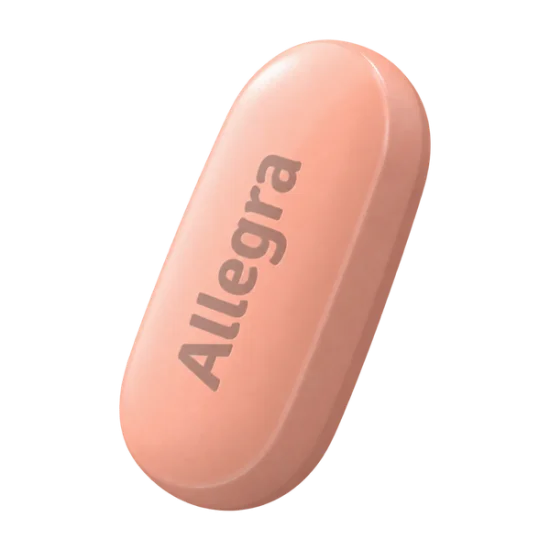
Formulation

Allegra tablets contain fexofenadine hydrochloride, a selective peripheral H1-antihistamine. Histamine is a chemical released during an allergic response. It contributes to sneezing, nasal discharge, itching, watery eyes, skin redness, and raised hives.

Fexofenadine is the active molecule. Allegra is the product name used for the tablet formulation.

How it affects the body

Fexofenadine belongs to the second-generation antihistamine class. It blocks histamine H1 receptors on tissues involved in allergic inflammation. This prevents histamine from producing much of the itching, sneezing, swelling, and watery discharge associated with an allergic reaction.

The medicine does not work by suppressing the immune system broadly. It targets one signalling pathway involved in allergy symptoms. This means it may relieve symptoms without treating infection, asthma inflammation, or the cause of food allergy.

Its action is mainly outside the brain because fexofenadine crosses the blood-brain barrier only to a limited degree. This pharmacological profile helps explain its lower tendency to cause drowsiness than older antihistamines.

Therapeutic indications

Fexofenadine is used for:

  • Seasonal allergic rhinitis, commonly called hay fever
  • Itchy or watery eyes linked to allergies
  • Sneezing and a runny or blocked nose caused by allergens
  • Chronic idiopathic urticaria, which causes recurring itchy wheals without an identified external trigger

The medicine reduces symptoms rather than removing the underlying sensitivity to pollen, dust mites, mould, animal dander, or other allergens. It does not prevent future exposure reactions. Symptom control can vary with allergen levels.

Food and Drug Administration describe fexofenadine as a non-sedating antihistamine with established use in allergic rhinitis and urticaria [1].

Common mistakes

Several practical errors can reduce the benefit of Allegra:

  • Taking the tablet with apple, orange, or grapefruit juice
  • Using an aluminium- or magnesium-containing antacid at the same time
  • Taking two antihistamines together without medical direction
  • Increasing the dose because one dose did not provide immediate relief
  • Using an adult tablet for a child without age-appropriate instructions
  • Ignoring kidney disease when the dose is selected
  • Driving immediately after the first dose without assessing individual response
  • Stopping and restarting treatment unpredictably during recurring exposure
  • Treating throat swelling or breathing difficulty as ordinary hay fever
  • Assuming persistent symptoms always mean the antihistamine has failed

A missed dose should not be replaced with a double dose. Taking extra tablets can increase the chance of headache, dizziness, nausea, or other unwanted effects without reliably improving allergy control.

Write down the time you take Allegra for several days. This makes it easier to spot whether symptoms occur before the dose, after a juice interaction, or during a predictable exposure period.

When not to use it

  • A known allergy to fexofenadine or an ingredient in the tablet
  • Significant kidney impairment
  • A history of serious medicine-related hypersensitivity
  • Pregnancy or breastfeeding requiring a treatment decision
  • Persistent symptoms that may indicate asthma, infection, or another condition
  • Severe or unexplained hives accompanied by swelling of the lips, tongue, or throat

Aluminium hydroxide and magnesium hydroxide antacids can reduce fexofenadine absorption. Keep them at least two hours apart from Allegra.

Do not combine multiple antihistamines for the same symptoms unless a clinician has specifically directed this approach.

When this is not for you

Allegra is NOT for you if any of these situations apply without individual medical review:

  • You may be allergic to fexofenadine or an ingredient in the tablet.
  • You have significant kidney problems.
  • You have previously had a serious reaction to a medicine.
  • You are pregnant or breastfeeding and need help deciding on treatment.
  • Your symptoms may be caused by asthma, an infection, or another condition.
  • Your hives are severe or unexplained and you have swelling of the lips, tongue, or throat.

Older adults often need the same practical review. Age alone does not automatically rule out Allegra, but kidney function, blood pressure medicines, antacids, and other treatments should be considered together.

Possible side effects

Most people tolerate fexofenadine without major problems. Reported reactions include headache, nausea, dizziness, fatigue, and mild gastrointestinal discomfort. In controlled studies, several symptoms occurred at rates close to placebo, meaning the symptom was also reported by people who did not receive the active medicine.

Possible effects include:

  • Headache
  • Nausea or stomach discomfort
  • Dizziness
  • Tiredness or mild fatigue
  • Sleep disturbance
  • Dry mouth
  • Mild diarrhoea

A low drowsiness risk is not the same as zero drowsiness. A person who is unusually sensitive, sleep-deprived, taking other sedating medicines, or unwell may feel less alert after taking an antihistamine.

Rare allergic reactions can involve facial swelling, throat tightness, wheezing, widespread rash, or difficulty breathing. Those symptoms require urgent medical attention. Severe skin reactions are uncommon but warrant immediate assessment when a rash is extensive, blistering, painful, or associated with mouth or eye involvement.

One practical detail is that dizziness may be mistaken for dehydration, low blood pressure, or poor sleep. If it appears soon after starting treatment or after a dose change, avoid driving until the effect is clear.

The World Health Organization describes antihistamines as medicines used to control histamine-mediated allergic symptoms, while product information for fexofenadine identifies headache and gastrointestinal symptoms among reported reactions [2].

Comparison

Active ingredient Typical profile Sedation and kidney considerations
Fexofenadine Peripheral H1 blockade; commonly used once or twice daily depending on strength and indication Low sedation potential; kidney function affects dosing
Loratadine Long-acting H1 blockade after conversion to an active metabolite Usually low sedation; liver and kidney factors may influence use
Cetirizine H1 blockade with generally rapid symptom relief Drowsiness occurs more often than with fexofenadine; renal function matters

Fexofenadine is relatively hydrophilic and has limited penetration into the central nervous system. Cetirizine may cause more noticeable sleepiness in some people, even though it is also classified as a second-generation antihistamine. Loratadine is usually non-sedating at standard doses, though individual responses vary.

The preferred option depends on the symptom pattern, kidney and liver health, concurrent medicines, previous response, and the need for daytime alertness. Switching between antihistamines without a clear plan can make it difficult to identify which medicine is helping or causing a reaction.

A person who develops sleepiness with one antihistamine may respond differently to another. Conversely, a person who feels alert with fexofenadine should still assess their own response before driving or operating machinery.

What doctors say

In clinical practice, physicians usually judge Allegra by symptom control across the day rather than by whether every symptom disappears immediately. Reduced sneezing with continued congestion may indicate that the nasal inflammation needs a different treatment approach or that allergen exposure remains high.

A doctor will often review:

  • The timing and duration of symptoms
  • Seasonal versus year-round exposure
  • Hives, facial swelling, or breathing symptoms
  • Kidney function and age
  • Antacid use
  • Other antihistamines or sedating medicines
  • The patient’s response after consistent administration

Persistent hives deserve a separate assessment when they continue for weeks, recur without a clear trigger, or involve swelling beneath the skin. Allergy symptoms with wheezing or chest tightness also require evaluation beyond antihistamine treatment.

Comparison

Comparison table: Allergies

Common questions

What should I do if Allegra does not provide the expected result?

Persistent symptoms may reflect continued allergen exposure, severe nasal inflammation, an incorrect dosing schedule, or a different diagnosis. Do not take extra tablets or combine antihistamines without a treatment decision based on your symptoms and other medicines. Health Canada product information reviewed in 2024 supports assessing the indication, dose, kidney function, and interactions when response is inadequate.

Can Allegra affect driving, concentration, or machinery work?

Fexofenadine has a low potential for central nervous system sedation, but dizziness or fatigue can occur in some people. Assess your individual response before driving or operating machinery, especially after the first dose or after adding another medicine. The European Medicines Agency’s antihistamine safety framework, updated in 2023, supports distinguishing low-sedation medicines from a guarantee of zero impairment.

What should I discuss with a doctor before starting Allegra?

Mention kidney disease, pregnancy, breastfeeding, previous reactions to antihistamines, antacid use, and all medicines that may cause drowsiness. Describe whether symptoms involve hives, facial swelling, wheezing, fever, or persistent nasal blockage. FDA prescribing information reviewed in 2025 identifies renal function and concomitant medicines as relevant factors in selecting and using fexofenadine.

What is the best time of day to take Allegra?

The best time depends on the prescribed schedule and when allergy symptoms occur. A once-daily dose is often taken at a consistent time, while a twice-daily schedule should be spaced as directed. Clinical guidance from the British National Formulary in 2024 supports regular timing and water administration, with attention to interactions from fruit juice and mineral antacids.

Which condition rules out Allegra?

A known allergy to fexofenadine or any tablet ingredient rules out its use. Severe kidney impairment does not always prohibit treatment, but it can require a different starting dose or interval selected by a clinician. The European Medicines Agency’s product-safety principles from 2022 support individual review when renal clearance or hypersensitivity is a concern.

Can people under 18 use Allegra?

Children and adolescents should use an age-appropriate formulation and dose. Adult tablets should not be given to a child simply because the child has similar symptoms to an adult. Paediatric use should follow the relevant Health Canada directions from 2024 and account for age, kidney function, formulation, and the condition being treated.

Do you offer anonymous delivery?

Your order will be securely packed and shipped within 24 hours. This is exactly what your package will look like (images of an actual item sent). It has the size and look of a regular private letter (24x11x0.7 cm) and its contents cannot be seen.

Customer Feedback on Allegra

4.5
Based on 4 reviews
Ben, 39 Ottawa Three weeks
Verified
Rating: 5 out of 5

I took one tablet daily for the spring pollen season and noticed much less sneezing and eye watering after the first few days. I stayed focused during work and was satisfied with the daytime relief after using it for three weeks.

Nov 6, 2026
Megan V., 45 Barrie Two weeks
Verified
Rating: 3 out of 5

I took one tablet daily for two weeks. Allegra reduced my hives, but the improvement was slower than I expected and was not complete every day. I also noticed mild stomach discomfort at first, although it passed.

Oct 10, 2026
Jonathan, 34 Saskatoon A month
Verified
Rating: 5 out of 5

I took one tablet daily for recurring seasonal symptoms and found that my nose was calmer during outdoor activities. The tablet fitted easily into my morning routine, and I was pleased that I could concentrate normally after using it for a month.

Nov 8, 2026
Emma, 38 Kamloops Three weeks
Verified
Rating: 5 out of 5

I took one tablet daily during a difficult allergy period. Allegra helped with sneezing and itchy eyes, and I appreciated being able to use it for three weeks without feeling noticeably sleepy during the day.

Oct 15, 2026

Sources

  1. U.S. Food and Drug Administration (2011). Allegra (fexofenadine hydrochloride) Prescribing Information.
  2. World Health Organization (2020). WHO Expert Committee on Specifications for Pharmaceutical Preparations: Good Storage and Distribution Practices for Medical Products.
Get our free app Shop faster and track your orders 4.0 · 269 reviews Install