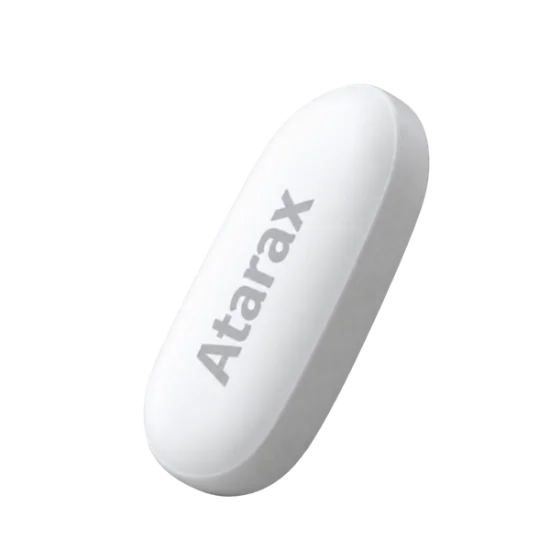
I used Atarax tablets as prescribed for intense itching that kept waking me. After several nights, the scratching settled enough for me to sleep through most of the night. I was satisfied with the relief and found the tablets straightforward to take.
Atarax contains hydroxyzine, a first-generation antihistamine used for allergic itching, hives, and some dermatitis symptoms. It can also provide short-term calming or sedation when clinically appropriate, but drowsiness is an important part of its effect.
Overview
Atarax contains hydroxyzine, a first-generation antihistamine that blocks histamine and can calm activity in the central nervous system. It is prescribed for allergic itching, hives, and some dermatitis symptoms, with short-term use in anxiety or sedation when clinically appropriate. Drowsiness is a central part of its pharmacological profile.
Dosage and administration
Use the prescribed regimen as follows:
- Take Atarax by mouth with water.
- Swallow the tablet as directed.
- Use it at the scheduled time selected for the treatment purpose.
- Avoid driving or hazardous work until the sedative effect is known.
- Do not take an extra tablet to compensate for a missed dose.
- If a dose is missed, take it when remembered unless the next scheduled dose is near; avoid doubling.
Do not crush, split, or alter a tablet unless the product instructions and a healthcare professional confirm that doing so is appropriate. Different tablet strengths can look similar, and changing the tablet can create an unintended dose.
Formulation
Atarax contains hydroxyzine, a first-generation antihistamine. It blocks H1 histamine receptors and can calm activity in the central nervous system. The exact amount for the chosen strength and any additional ingredients should be confirmed with a healthcare professional before use.
How it affects the body
Atarax is the product name associated with hydroxyzine, an antihistamine with sedative and anxiolytic properties. Hydroxyzine reduces histamine-driven itching and wheals while also lowering central nervous system activity. Health Canada and the European Medicines Agency describe hydroxyzine as a medicine requiring attention to sedation, heart-rhythm risk, and individual patient factors [1].
Receptor Activity and Histamine Blockade
Histamine is a chemical messenger involved in itching, redness, swelling, and hives. Hydroxyzine blocks H1 histamine receptors, reducing the signal that makes the skin feel itchy and contributes to an allergic wheal.
The medicine does not remove the underlying cause of eczema, dermatitis, or urticaria. Its role is symptom control, especially when itching disrupts sleep or creates an itch-scratch cycle.
Central Nervous System Effects
Hydroxyzine crosses into the brain more readily than newer, less-sedating antihistamines. That central action explains its calming and sedative effects. It also explains why driving, operating machinery, or making safety-sensitive decisions can become risky after taking it.
Therapeutic indications
Hydroxyzine is used in clinical practice for allergic skin symptoms, pruritus, short-term anxiety, and sedation before certain procedures. The same mechanism that reduces itching can also cause sleepiness, slower reaction time, dry mouth, and impaired coordination.
Hydroxyzine reduces itching associated with hives, eczema, and dermatitis by blocking H1 histamine receptors. It can be useful when itching is intense at night, causes repeated scratching, or interferes with sleep. The American Academy of Dermatology recognises antihistamines as one component of symptom management for selected itchy skin conditions, while treatment of the underlying skin inflammation may require other measures.
In urticaria, hydroxyzine may reduce the sensation of itch and the discomfort caused by raised wheals. In eczema or dermatitis, the benefit may be greatest when scratching and sleep disruption are prominent. The medicine does not replace treatment directed at inflammation, infection, irritant exposure, or another underlying trigger.
Breaking the Itch-Scratch Cycle
Scratching damages the skin barrier and can produce more inflammation. Night-time sedation may help some patients interrupt repeated scratching, though the trade-off is reduced alertness the following day.
A patient with persistent hives, facial swelling, breathing difficulty, fever, blistering, or rapidly worsening skin symptoms needs urgent assessment rather than repeated self-treatment with an antihistamine.
Atarax may be used as a short-term anxiolytic when a clinician wants calming effects without prescribing a controlled benzodiazepine. Hydroxyzine can reduce physical tension and alertness, but it does not treat the underlying causes of chronic anxiety in the same way as structured psychotherapy or long-term maintenance medicines.
Its sedative action can also be used before selected medical or surgical procedures. The timing and dose for procedural sedation must be determined by the treating clinical team because excessive sedation can affect breathing, blood pressure, and protective reflexes.
Hydroxyzine has no established dependence profile comparable to benzodiazepines, yet that does not make unsupervised repeated use appropriate. Tolerance to sedation can develop, and persistent anxiety requires assessment rather than indefinite reliance on a sedating antihistamine.

Common mistakes
Several avoidable patterns reduce benefit or increase risk:
- Taking a second tablet because drowsiness or itch relief was not immediate.
- Combining Atarax with alcohol, opioids, or another sedating medicine.
- Driving after the first dose because the person feels “only slightly tired.”
- Using an old regimen for a new rash without assessing the cause.
- Treating chronic anxiety indefinitely with a sedating medicine.
- Forgetting to mention heart-rhythm medicines or a history of fainting.
- Assuming cetirizine and hydroxyzine can be substituted without checking strength and timing.
- Stopping prescribed treatment after a single unpleasant night without discussing the reaction.
Hydroxyzine does not require the same tapering process as benzodiazepines for most short courses, yet stopping a longer treatment plan should still be discussed when it has been used regularly for anxiety, sleep, or another ongoing symptom.
When not to use it
- Known allergy to hydroxyzine, cetirizine, aminophylline, or ethylenediamine.
- A history of QT prolongation or torsades de pointes.
- Significant cardiovascular disease or a very slow resting heart rate.
- Low potassium or magnesium that has not been corrected.
- Use of medicines known to prolong the QT interval.
- Severe kidney or liver impairment without an adjusted treatment plan.
- Pregnancy or breastfeeding unless the prescriber has assessed the circumstances.
- Older age with high fall risk, confusion, urinary retention, or substantial anticholinergic burden.
- Glaucoma, bladder outflow obstruction, or other conditions that may worsen with anticholinergic effects.
Medicines that may intensify sedation include opioids, sleep medicines, sedative antidepressants, antipsychotics, anticonvulsants, and other antihistamines. Alcohol can add to drowsiness and impaired coordination. The combination of hydroxyzine with a QT-prolonging medicine requires specific review rather than informal dose spacing.
The EMA issued restrictions on hydroxyzine use because of cardiac rhythm concerns, including using the lowest suitable exposure and avoiding treatment in patients with significant risk factors [2].
When this is not for you
Atarax is NOT for you if you have a known hydroxyzine allergy, significant QT-risk factors, or an unsafe sedative interaction unless a clinician specifically approves it.
Possible side effects
The most recognisable adverse effect is drowsiness. Other possible effects include dry mouth, dizziness, blurred vision, constipation, headache, fatigue, reduced concentration, and impaired coordination. Older adults may be more sensitive to confusion, falls, urinary retention, and prolonged sedation.
Hydroxyzine can prolong the QT interval, an electrical measurement of cardiac repolarisation. In susceptible people, this can increase the risk of a serious rhythm disturbance called torsades de pointes. The risk rises with certain heart conditions, electrolyte abnormalities, slow heart rate, and other QT-prolonging medicines.
Seek urgent medical attention for fainting, a racing or irregular heartbeat, severe breathing difficulty, facial swelling, or a widespread blistering rash.
A less obvious issue is urinary retention. People with prostate enlargement or bladder-emptying problems may find anticholinergic effects more troublesome. Dry mouth can also become uncomfortable, especially when the medicine is taken at night and fluid intake is limited.
Comparison
Atarax differs from cetirizine and benzodiazepine anxiolytics through both receptor activity and central nervous system effects. Cetirizine is a newer antihistamine with less central sedation for many people. Benzodiazepines such as alprazolam, lorazepam, and diazepam act at GABA-A receptors and carry recognised tolerance, dependence, and withdrawal concerns.
| Treatment category | Main role | Sedation and dependence profile |
|---|---|---|
| Hydroxyzine | Itching, selected anxiety, procedural sedation | Sedation is common; dependence risk is lower than with benzodiazepines |
| Cetirizine | Allergic rhinitis and urticaria | Usually less sedating, though drowsiness can still occur |
| Benzodiazepine anxiolytics | Acute anxiety or selected seizure and sedation indications | Sedation, tolerance, dependence, and withdrawal risk require close control |
Hydroxyzine is not automatically the best choice for every allergic condition. A less-sedating antihistamine may suit someone who needs daytime alertness, while hydroxyzine may be selected when severe night-time itching or short-term calming is part of the treatment goal.
The key trade-off is clear: hydroxyzine can address itch and calmness through one medicine, but its central effects can impair alertness. Cetirizine is pharmacologically related, and the brand name Zyrtec is associated with cetirizine, but the two medicines should not be treated as dose-for-dose substitutes.
What doctors say
In clinical practice, physicians usually judge hydroxyzine by the symptom being targeted. For severe itching that prevents sleep, its sedative property may be useful. For daytime allergy symptoms in a person who drives or operates equipment, a less-sedating antihistamine may be more practical.
Doctors also review the complete medication list, not only prescription medicines. A patient may forget to mention over-the-counter sleep products, motion-sickness tablets, sedating cough medicines, or recreational substances that increase drowsiness.
A prescriber will also ask about palpitations, fainting, family history of sudden cardiac death, kidney disease, liver disease, pregnancy, breastfeeding, and previous reactions to antihistamines. These questions directly affect whether hydroxyzine is appropriate.
One practical prescribing point is that hydroxyzine can make anxiety feel quieter without addressing the driver of persistent anxiety. When symptoms continue for weeks or interfere with work, sleep, or relationships, the treatment plan may need broader assessment.
Comparison
Common questions
Does Atarax cause drowsiness?
Yes. Drowsiness is one of hydroxyzine’s expected pharmacological effects because it enters the central nervous system and reduces neuronal activity. Health Canada and the EMA (2015) identify sedation, impaired alertness, and reduced coordination as clinically relevant concerns in hydroxyzine treatment [3]. The effect may last into the next morning, especially in older adults or when another sedative is used. Avoid driving until the individual response is known.
Can people under 18 use Atarax?
Hydroxyzine may be prescribed to children or adolescents for selected indications, but age, body weight, formulation, medical condition, and cardiac risk affect the regimen. The EMA’s 2015 hydroxyzine safety restrictions apply to paediatric use as well as adults, with exposure kept within appropriate limits. Atarax tablets should not be given to someone under 18 using an adult’s regimen. A paediatric clinician must determine whether the medicine and formulation are suitable.
What happens when Atarax is stopped, and is tapering needed?
Most short courses of hydroxyzine can be stopped without a benzodiazepine-style taper. The original symptom may return, such as itching, anxiety, or difficulty sleeping, because the medicine controls symptoms rather than removing every underlying cause. WHO’s 2022 guidance on rational medicine use supports reviewing ongoing sedative treatment when symptoms persist rather than extending it automatically [4]. Regular long-term use should be reviewed before stopping, especially when it has been part of a broader psychiatric or sleep-treatment plan.
What should be discussed with a doctor before starting Atarax?
Mention heart disease, fainting, palpitations, slow pulse, kidney disease, liver disease, glaucoma, urinary retention, pregnancy, and breastfeeding. Provide a complete list of medicines, including sleep aids, antihistamines, opioids, antidepressants, antipsychotics, and supplements. Health Canada’s 2023 safety information places special emphasis on QT prolongation and interactions with medicines that affect cardiac rhythm. Also discuss whether daytime alertness is essential for driving, childcare, machinery work, or other safety-sensitive tasks.
Can Atarax be combined with other sedating medicines or supplements?
Combining hydroxyzine with opioids, benzodiazepines, sedating antidepressants, antipsychotics, sleep medicines, sedating antihistamines, or alcohol can intensify drowsiness and impair coordination. The FDA’s 2023 general prescribing information for central nervous system depressants supports caution with additive sedation and respiratory effects. Supplements marketed for sleep or relaxation can also contribute to sedation, even when they are not prescription products. The combination should be reviewed before starting rather than tested by taking both together.
What is the best time of day to take Atarax?
The best timing depends on whether the intended benefit is relief of daytime itching, night-time itching, anxiety, or procedural sedation. A dose used for night-time itching is often scheduled in the evening because drowsiness may be expected, while a daytime regimen requires special attention to driving and concentration. The EMA’s 2015 hydroxyzine guidance supports using the lowest suitable exposure for the shortest practical duration. Follow the confirmed regimen and avoid moving a dose to a different time without checking how that change affects sedation and symptom control.
Do you offer anonymous delivery?
Your order will be securely packed and shipped within 24 hours. This is exactly what your package will look like (images of an actual item sent). It has the size and look of a regular private letter (24x11x0.7 cm) and its contents cannot be seen.
Available Tablet Form and Related Hydroxyzine Preparations
Atarax is supplied on this page as pills in tablet form. Hydroxyzine may also exist in other oral preparations, including liquid formulations, but the administration method and strength must match the specific product prescribed for the patient.
Generic Atarax refers to a product containing the same active substance, hydroxyzine. The therapeutic category remains antihistamine, while the sedative and anxiolytic effects arise from hydroxyzine’s central nervous system activity.
| Preparation | Route | Main practical feature |
|---|---|---|
| Atarax tablets | Oral | Solid dosage form for swallowing |
| Hydroxyzine oral liquid | Oral | Useful when a liquid formulation is specifically prescribed |
| Hydroxyzine tablets or capsules | Oral | Solid forms with strength selected by the prescriber |
Customer Feedback on Atarax
I took Atarax as prescribed for a few days, but it did not help my anxiety as much as I expected. It made me sleepy during the day, so I stopped using it and discussed the problem with my doctor. The sedation was more noticeable than the calming benefit.
I used the prescribed evening dose for several nights for an itchy skin flare that was worst after dinner. It reduced the urge to scratch and helped me rest. I was pleased with the result.
I used Atarax as prescribed for a short period when itching and nervous tension were occurring together. The calming effect was clear within the evening, and I appreciated not needing to take it repeatedly during the night.
Sources
- European Medicines Agency (2015). Hydroxyzine-containing medicinal products: referral under Article 31 of Directive 2001/83/EC — safety information and restrictions of use.
- European Medicines Agency (2015). Hydroxyzine-containing medicinal products: referral assessment report.
- Health Canada (2023). Canadian Product Monograph: Hydroxyzine hydrochloride.
- World Health Organization (2022). WHO Medication Without Harm: Global Patient Safety Action Plan 2021–2030.