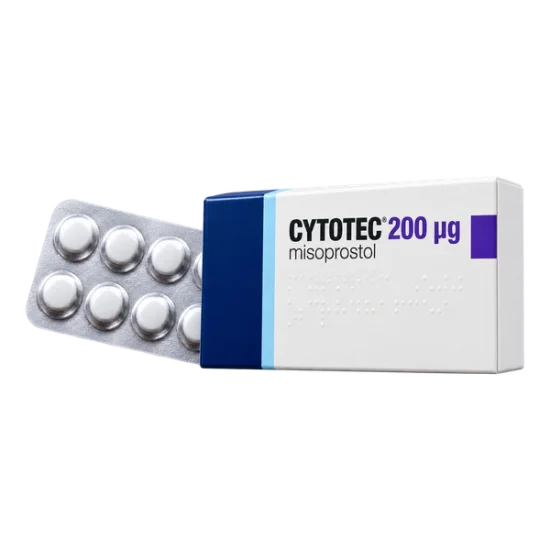
I used the prescribed 200-microgram tablets daily for several weeks alongside my prescribed anti-inflammatory treatment for ulcer protection. After several weeks, I had less burning discomfort after meals and could continue my treatment with fewer stomach problems. The tablets were easy to take with food.
Patients with NSAID-related ulcer risk, selected obstetric indications, or early pregnancy loss may be prescribed Cytotec under a defined clinical protocol. Cytotec contains misoprostol, a synthetic prostaglandin E1 analogue that protects the stomach lining and changes cervical and uterine activity.
Overview
Cytotec tablets contain misoprostol, a synthetic analogue of prostaglandin E1. Misoprostol belongs to the anti-ulcer agent group and also acts on smooth muscle in the uterus and cervix. Its gastrointestinal action reduces acid secretion and strengthens protective factors within the gastric mucosa.
Dosage and administration
- Regimen: Confirm the regimen for the selected strength with a healthcare professional before starting.
- Frequency: Use only the frequency prescribed for the specific indication; no universal schedule is established by the available information.
- Timing: Follow the prescribed timing. Gastrointestinal use may be linked to meals, while obstetric use follows a clinical protocol.
- Duration: Use for the duration specified by the healthcare professional; the appropriate duration varies by indication.
- Route: Use the route prescribed by the healthcare professional. The available information does not establish one route for all uses.
- Do not change the dose, frequency, timing, duration, or route without clinical instructions.
Formulation
Cytotec tablets contain misoprostol, a synthetic analogue of prostaglandin E1.
Active Ingredient Properties
Misoprostol is converted into an active prostaglandin analogue after administration.
How it affects the body
In the stomach, it reduces basal and stimulated gastric acid secretion while supporting mucus and bicarbonate production. These effects help the mucosal barrier resist injury from nonsteroidal anti-inflammatory drugs, including medicines such as ibuprofen, naproxen, and diclofenac.
In the uterus, misoprostol increases contractile activity. In the cervix, it promotes tissue remodelling and softening. The same pharmacology that protects the stomach can create serious pregnancy-related effects, so the intended use must be clear before treatment begins. The FDA prescribing information describes Cytotec primarily in relation to NSAID-induced gastric ulcer risk [1].
Therapeutic indications
Misoprostol is used in obstetrics for cervical ripening and induction of labour when clinical assessment supports that approach. Cervical ripening means softening and shortening the cervix so it can dilate more readily. Misoprostol also stimulates uterine contractions, which can help initiate or strengthen labour.
Misoprostol is used in medical abortion care and in the management of early pregnancy loss. In these settings, it causes uterine contractions and cervical opening, allowing pregnancy tissue to pass. Some protocols use misoprostol alone, while others use sequential treatment with mifepristone, which changes progesterone activity and improves the response in selected clinical situations.
Misoprostol was developed for gastrointestinal protection, especially for people who require long-term NSAID treatment and have increased risk of gastric or duodenal ulceration. It decreases acid secretion and supports the mucosal barrier.
The World Health Organization provides recommendations for induction of labour that distinguish drug choice, timing, cervical findings, and monitoring requirements [2].
The WHO Abortion Care Guideline describes medication abortion and miscarriage-management approaches according to pregnancy duration and clinical circumstances [3].
Common mistakes
Several mistakes can produce poor outcomes or delay urgent care:
- Using Cytotec for a different purpose than the prescribed protocol
- Starting treatment before pregnancy location or gestational age has been assessed
- Repeating a dose because cramping or bleeding has not started quickly
- Combining it with oxytocin or another uterotonic without an explicit clinical plan
- Ignoring a previous caesarean birth or other uterine surgery
- Taking magnesium-containing antacids while already experiencing diarrhoea
- Assuming all vaginal bleeding is expected, even when pain is one-sided or severe
- Crushing or chewing a tablet when the confirmed route requires it to remain intact
- Driving while dizzy or faint after taking a dose
- Failing to report anticoagulants, corticosteroids, or medicines that increase bleeding risk
One detail patients often miss is that the treatment goal determines the monitoring plan. A regimen for gastric protection is not a substitute for a regimen used in obstetrics.
When not to use it
- Previous caesarean birth or other uterine surgery
- Suspected ectopic pregnancy
- Unexplained vaginal bleeding
- Severe anaemia or a bleeding disorder
- Current anticoagulant treatment
- Allergy to misoprostol or prostaglandins
- Severe cardiovascular disease when major bleeding or intense pain would create added risk
- Inability to reach urgent medical care when a pregnancy-related regimen is used
Anticoagulants, corticosteroids, antiplatelet medicines, and other drugs that increase bleeding risk require clinical review.
When this is not for you
Cytotec is not for you if you are pregnant and the intended treatment is only NSAID-related ulcer prevention. Misoprostol can cause miscarriage, premature labour, birth defects, or uterine rupture. Pregnancy must be assessed before using Cytotec for gastrointestinal protection.
Possible side effects
Misoprostol commonly causes prostaglandin-related gastrointestinal symptoms. Reported reactions include diarrhoea, abdominal pain, nausea, vomiting, headache, dizziness, chills, and fever. Cramping is expected in many obstetric and gynaecological protocols, though the severity varies.
Clinical trial and prescribing information data associate Cytotec with diarrhoea and abdominal pain more often than with several other reported reactions. Symptoms can be dose-related and may improve after treatment ends. The FDA label describes gastrointestinal adverse reactions and pregnancy-related warnings in detail [4].
Common Reactions
- Abdominal cramping or pain
- Diarrhoea or loose stools
- Nausea and vomiting
- Headache
- Dizziness or light-headedness
- Chills or transient fever
- Vaginal bleeding when used for uterine evacuation or pregnancy-related care
Serious Obstetric Risks
Excessive uterine stimulation can cause tachysystole, meaning contractions occur too frequently or last too long. This may affect fetal oxygenation during labour. Uterine rupture is rare but potentially fatal, with risk increased in some patients who have a uterine scar, including a previous caesarean birth.
Comparison
Misoprostol, oxytocin, and dinoprostone are all used in selected obstetric settings, but they differ in pharmacology, administration, and monitoring needs.
| Agent | Main role and route | Practical distinction |
|---|---|---|
| Misoprostol | Cervical ripening, uterine contractions; route depends on the protocol | Prostaglandin E1 analogue with gastrointestinal and uterine effects |
| Oxytocin | Labour induction or augmentation; controlled intravenous infusion | Short-acting and titratable, with continuous clinical monitoring |
| Dinoprostone | Cervical ripening and labour induction; vaginal preparations | Prostaglandin E2 agent with a different formulation and release profile |
Dinoprostone is the active ingredient in some vaginal cervical-ripening products, including products commonly referred to as Cervidil. Misoprostol and dinoprostone both affect the cervix, though their formulations and administration protocols differ. Oxytocin does not provide the same cervical-ripening action and is often selected when the cervix is already favourable or when contraction strength requires careful adjustment.
Choice depends on parity, cervical score, fetal presentation, uterine scar, gestational age, and hospital protocol. No single agent is suitable for every patient. A previous caesarean birth is a major factor because prostaglandin exposure can raise concern about excessive uterine activity and uterine rupture.
What doctors say
Clinicians usually treat Cytotec as a protocol-dependent medicine rather than a general-purpose tablet. The same active ingredient may be used for gastric protection, cervical ripening, labour induction, miscarriage care, or abortion care, yet each purpose uses different clinical safeguards.
A doctor will usually confirm the diagnosis, pregnancy status, gestational age when relevant, previous uterine surgery, bleeding risk, and concurrent medicines. In labour settings, fetal monitoring and contraction assessment guide decisions. In miscarriage or abortion care, clinicians also assess pain, bleeding, infection risk, and the possibility of ectopic pregnancy.
One practical observation from clinical practice is that the written regimen matters more than the tablet strength alone. A 200-microgram tablet does not tell the patient whether treatment should be oral, buccal, sublingual, or vaginal, nor does it determine how many tablets are appropriate.

Comparison
Common questions
What condition rules out Cytotec for ulcer prevention?
Pregnancy rules out Cytotec for routine NSAID-related ulcer prevention because misoprostol can stimulate uterine contractions and cause pregnancy loss. The FDA Cytotec prescribing information from 2002 carries a pregnancy warning for this reason, including the risk of uterine injury later in pregnancy. A suspected ectopic pregnancy also requires urgent assessment rather than self-treatment with misoprostol. A clinician confirms the indication before treatment begins.
Which habits can help or hinder the result?
For gastrointestinal protection, taking Cytotec with food may improve tolerability, while magnesium-containing antacids can worsen diarrhoea. Alcohol may aggravate stomach irritation and dehydration when vomiting or diarrhoea occurs. In obstetric care, exercise or dietary changes do not replace the monitoring required for uterine contractions and bleeding. Guidance from the WHO in 2022 places clinical assessment and the correct protocol above home measures.
How should Cytotec be stored at home and while travelling?
Health Canada advises in its 2024 medicine-storage guidance that medicines should be protected from excess heat and moisture, with tablets kept in their intended protective packaging until use. Avoid leaving Cytotec in a hot vehicle, a steamy bathroom, or direct sunlight. During travel, keep it in carry-on luggage when possible and retain the prescription information with your medicines. The EMA’s general medicine-handling guidance supports keeping tablets dry and protected from temperature extremes.
Can the Cytotec tablet be split, crushed, or chewed?
Do not split, crush, or chew Cytotec unless the confirmed clinical instructions specifically permit that method. The correct route may be oral, buccal, sublingual, or vaginal depending on the indication, and changing the route can change absorption and clinical effect. The tablet strength alone does not establish the correct method. A 2021 NICE guideline on induction of labour stresses that medication choice and administration must match the clinical protocol.
What is the best time of day to take Cytotec?
There is no universal time of day because Cytotec schedules differ between ulcer prevention, obstetric use, miscarriage management, and abortion care. A gastrointestinal regimen may be linked to meals, while an obstetric regimen follows a timed clinical protocol. Do not move doses to evening or morning based only on convenience. WHO guidance published in 2022 supports indication-specific scheduling rather than one fixed daily time.
What should happen after a missed dose?
For ulcer prevention, take the missed dose only according to the confirmed instructions and do not double the next dose. For pregnancy-related treatment, do not automatically repeat or add tablets because the timing of bleeding and contractions requires clinical interpretation. If vomiting occurs soon after an oral dose, the correct next step also depends on the indication and route. Health Canada patient-information principles published in 2024 support obtaining specific dosing instructions from the prescribing team rather than improvising.
Do you offer anonymous delivery?
Your order will be securely packed and shipped within 24 hours. This is exactly what your package will look like (images of an actual item sent). It has the size and look of a regular private letter (24x11x0.7 cm) and its contents cannot be seen.
Customer Feedback on Cytotec
I used the prescribed 200-microgram tablets for several weeks, but Cytotec caused more diarrhoea and cramping than I expected, and it did not suit me for ulcer prevention. I stopped after discussing the reaction with my doctor and changed to another plan.
I followed the prescribed 200-microgram dose for one day in a short, clearly explained clinical protocol. The cramping was manageable, and the intended result occurred within the timeframe I had been given. Having written instructions made the process less stressful.
I used the prescribed 200-microgram tablets daily for several weeks for the reason they were prescribed and found them straightforward to take. The stomach discomfort I had been worried about improved, and I was satisfied with the result.
Sources
- U.S. Food and Drug Administration (2002). Cytotec (misoprostol) Prescribing Information
- World Health Organization (2011). WHO Recommendations for Induction of Labour
- World Health Organization (2022). Abortion Care Guideline
- U.S. Food and Drug Administration (2002). Cytotec Medication Guide and Pregnancy Warning Information