Regina, I used Medrol tablets for an inflammatory flare and noticed the swelling eased within the first several days. I could move around the house more comfortably and return to my usual morning routine. The planned course was easy to follow, and I was satisfied with the improvement.
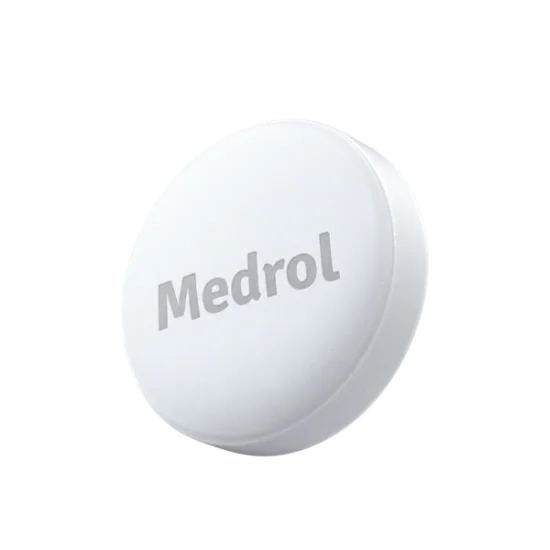
Medrol tablets are taken by mouth, with timing and food instructions set by the prescribed regimen. They contain methylprednisolone, a corticosteroid used for selected inflammatory, allergic, rheumatic, and immune-mediated conditions by reducing inflammation and abnormal immune activity.
Overview
Medrol is a prescription corticosteroid medicine containing methylprednisolone. It belongs to the synthetic glucocorticoid class and is used to reduce inflammation and abnormal immune activity in selected inflammatory, allergic, rheumatic, and immune-mediated conditions.
Dosage and administration
The dose is decided individually, taking age, other medicines, and health conditions into account. Prescribers also consider the diagnosis, severity, formulation, previous corticosteroid exposure, and response to treatment.
- Take Medrol exactly as prescribed.
- Use the oral route.
- Follow the prescribed timing and sequence.
- Take it with food if this is part of the treatment instructions or if stomach irritation occurs.
- Follow any tapering schedule precisely.
- Do not double the next dose after a missed dose unless specifically instructed.
- Do not stop prolonged treatment suddenly.
Published corticosteroid regimens can be weight-based or body-surface-area-based, and some protocols use high-dose treatment. These figures are clinical references, not self-dosing instructions. The correct dose may be lower, higher, or structured in a completely different way.
Dose Selection and Tapering
A taper reduces the dose gradually when the body may have become accustomed to external glucocorticoid exposure. The need for tapering depends on dose, treatment duration, repeated courses, and the person’s clinical status.
A short course and prolonged high-dose treatment may have very different stopping instructions. Never copy a taper from another person’s prescription.
Tablet Administration Mistakes
Common administration problems include taking the wrong day of a dose-pack, confusing tablet strength with total daily dose, and taking tablets at irregular times. A missed dose should be handled according to the specific prescribed schedule rather than by doubling.
Formulation
Medrol contains methylprednisolone, a synthetic glucocorticoid and steroid medicine. It is an anti-inflammatory and immunosuppressive treatment used when inflammation or immune activity contributes to tissue swelling, pain, allergic symptoms, or disease activity. Medrol is a prescription-only medicine and must be used under the supervision of a licensed healthcare professional. [1]
The treatment plan depends on the diagnosis, symptom severity, age, other medicines, and health conditions. The tablet strength and pack format do not determine the correct regimen.
Active Ingredient and Drug Class
Methylprednisolone acts like cortisol, a natural glucocorticoid produced by the adrenal glands. Its pharmacological effects include:
- Reducing inflammatory signalling
- Decreasing swelling, redness, and immune-cell activity
- Suppressing excessive immune responses at higher exposures
- Supporting short-term control of selected inflammatory conditions
Medrol Tablets are taken orally. Corticosteroids are not anabolic steroids used for muscle growth; they belong to a separate therapeutic group with different effects and risks.
Oral Forms and Dose-Pack Presentation
How it affects the body
Methylprednisolone enters cells and binds to glucocorticoid receptors. The resulting complex influences gene activity involved in inflammation, immune-cell recruitment, blood-vessel permeability, and production of inflammatory mediators. This action helps reduce swelling and inflammatory discomfort, but it does not automatically remove the underlying cause of a disease. [2]
Inflammation Reduction
Inflammation involves chemical signals that widen small blood vessels and attract immune cells. In an inflamed joint, skin, airway, or other tissue, these processes can cause heat, redness, swelling, and impaired function. Glucocorticoid activity reduces several of those signals.
This can provide substantial symptom control. The response does not prove that the original condition has resolved, so the prescribed duration remains clinically relevant.
Immune Suppression at Higher Doses
At higher doses or with prolonged corticosteroid therapy, methylprednisolone can reduce protective immune responses as well as excessive inflammation. Infection symptoms may be less obvious during immunosuppressive treatment.
Do not raise, lower, or restart the dose independently. The balance between inflammation control and immune suppression depends on the condition, dose, duration, and individual risk.
Therapeutic indications
Medrol may be prescribed for inflammatory, allergic, rheumatic, and immune-mediated conditions that respond to corticosteroid therapy. It is not intended for every form of pain, every rash, or every type of rheumatism.
| Condition category | Treatment purpose | Supervision need |
|---|---|---|
| Inflammatory and rheumatic disease | Reduce inflammation and functional impairment | Diagnosis and response determine duration |
| Allergic or immune-mediated disease | Dampen excessive immune activity | Infection and recurrence risks require review |
| Severe inflammatory symptoms | Rapidly control clinically significant inflammation | The cause may need separate treatment |
Inflammatory and Rheumatic Conditions
A physician may use methylprednisolone for rheumatism responsive to corticosteroid therapy, selected joint or connective-tissue disorders, and other inflammatory diseases. The medicine controls inflammatory activity; it does not necessarily correct structural damage or cure the underlying disease.
Treatment length varies widely. Some patients receive a brief course, while others need a carefully reduced regimen after longer exposure.
Immune-Mediated and Allergic Conditions
Medrol may be selected when allergic or immune-mediated inflammation requires corticosteroid treatment. The indication depends on clinical examination and the severity of the presentation.
Severe breathing difficulty, facial swelling, fainting, extensive blistering, or rapidly worsening symptoms require urgent medical assessment rather than self-treatment with leftover tablets.
Common mistakes
Common mistakes include:
- Doubling after a missed tablet
- Treating a previous prescription as a current one
- Taking doses at inconsistent times
- Assuming a stronger tablet can replace several weaker tablets without calculation
- Stopping after symptoms improve during prolonged treatment
If the dose-pack sequence is interrupted, obtain a specific instruction before improvising. The correct action depends on the time elapsed and the regimen.
Abrupt cessation is more concerning after prolonged treatment, repeated courses, or high-dose exposure. Possible consequences include adrenal insufficiency and return of the inflammatory condition.
A short prescribed course may have a different stopping plan. Never assume that another person’s taper applies to you.
When not to use it
Medrol is not suitable for everyone. Serious hypersensitivity to methylprednisolone or a product component is a contraindication. Certain untreated systemic infections can also make systemic corticosteroid therapy inappropriate, depending on the clinical situation and product formulation.
Absolute or Formulation-Specific Restrictions
Medrol should not be used in people with a known serious allergic reaction to methylprednisolone or its ingredients. Systemic corticosteroids may be unsuitable during some untreated systemic infections because immune suppression can allow the infection to worsen.
Restrictions can differ between oral and injectable corticosteroid products. The treatment decision must match the exact formulation and clinical indication.
Conditions Requiring Individual Risk Assessment
Extra caution or specialist review may be needed with:
- Diabetes or unstable blood glucose
- Hypertension or significant fluid retention
- Peptic ulcer disease
- Osteoporosis
- Glaucoma or cataracts
- Severe depression, mania, psychosis, or previous steroid-related mood symptoms
- Liver or kidney impairment
- Pregnancy or breastfeeding
- Recent live vaccination
- Recurrent or difficult-to-detect infections
When this is not for you
This medication is not for you if you have a serious methylprednisolone allergy, an untreated systemic infection that makes corticosteroid therapy unsafe, or a prescription plan that cannot be followed safely.
Possible side effects
Side effects depend on dose, treatment duration, individual susceptibility, and underlying illness. A brief course can still affect sleep, appetite, mood, blood glucose, or the stomach. Higher-dose or prolonged immunosuppressive treatment carries broader risks.
Common Short-Term Effects
Possible effects include:
- Indigestion, nausea, or stomach discomfort
- Increased appetite
- Difficulty sleeping
- Restlessness or irritability
- Mood changes
- Facial flushing
- Fluid retention
- Temporary increases in blood pressure or blood glucose
Taking the tablet earlier in the day may reduce sleep disruption when that timing fits the prescribed regimen. Food may reduce stomach discomfort, though the treatment instructions take priority.
Longer-Term and High-Dose Risks
Longer exposure or high-dose treatment can increase the risk of:
- Infection
- Adrenal suppression
- Bone loss and fractures
- Cataracts or glaucoma
- Muscle weakness
- Persistent high blood glucose
- Worsening blood pressure
- Skin thinning and slower wound healing
- Menstrual changes or other endocrine effects
People with diabetes may need closer glucose monitoring during treatment. Anyone with osteoporosis risk, eye disease, recurrent infection, or a history of severe mood symptoms may need additional follow-up.
Serious Symptoms Requiring Medical Attention
Seek urgent medical help for difficulty breathing, facial or throat swelling, severe allergic symptoms, black or bloody stools, severe abdominal pain, major vision changes, confusion, psychosis, or suicidal thoughts.
Fever, unusual weakness, persistent cough, painful urination, or a wound that becomes increasingly red can indicate infection. Immunosuppressive treatment may reduce the intensity of fever, so a person should not rely on fever alone.
Marked weakness, vomiting, dizziness, fainting, or collapse after abrupt cessation can signal inadequate adrenal response and requires prompt assessment.

Comparison
Medrol and other corticosteroid options differ in route, duration of action, clinical setting, and dose-equivalence calculations. A related corticosteroid is not automatically a substitute.
| Option | Route and setting | Main substitution issue |
|---|---|---|
| Medrol | Oral tablets for prescribed outpatient or ongoing treatment | Dose and taper are diagnosis-specific |
| Injectable methylprednisolone | Injection in a controlled clinical setting | Route and monitoring differ from tablets |
| Other corticosteroid therapy | Oral, inhaled, topical, or injectable options | Potency and duration are not directly interchangeable |
A tablet regimen should not be replaced with an injection, and an injection should not be replicated with tablets. The prescriber calculates corticosteroid equivalence when a change is clinically required.
Corticosteroid Selection in Clinical Practice
Clinical practice often aims for the lowest effective exposure over the shortest clinically appropriate period. NICE guidance also emphasizes matching corticosteroid dose and duration to the clinical indication. That principle does not create a universal regimen. The diagnosis, response, relapse risk, and complications determine the treatment plan.
What doctors say
Clinicians generally view methylprednisolone as a useful treatment when inflammation is causing meaningful disease activity. The benefit must be balanced against corticosteroid exposure. Dose selection should reflect the diagnosis and treatment response. Treatment duration should be reviewed as symptoms and risks change. The stopping plan requires clinical oversight, especially after prolonged or high-dose therapy.
A physician will usually want to know whether symptoms improved, whether sleep or mood changed, whether blood glucose increased, and whether infection symptoms appeared. People with diabetes, recurrent infections, osteoporosis, or psychiatric vulnerability may need closer observation.
The practical clinical goal is not simply to suppress every symptom. It is to control the disease process while limiting unnecessary immunosuppressive and adrenal effects.
Comparison
Common questions
How long does a Medrol course last, and is long-term use acceptable?
The duration can range from a brief course to prolonged treatment, depending on the condition and response. Long-term use can be appropriate for selected diseases, but it requires a planned dose, monitoring, and review of complications. Health Canada product information describes corticosteroid risks that increase with dose and duration. [1]
Can Medrol be taken with food or on an empty stomach?
Medrol may be taken with food when this is included in the prescribed instructions or when food helps reduce stomach discomfort. The exact timing can depend on the regimen and other medicines. EMA corticosteroid information supports following the individual administration plan rather than applying one rule to every patient. [3]
What is the best time of day to take Medrol?
Many regimens place oral corticosteroid doses earlier in the day because this may reduce sleep disruption and better reflect the body’s natural cortisol rhythm. The prescribed schedule takes priority, especially when the daily dose is divided or arranged as a dose-pack. Moving the dose independently can change symptom control and tolerability. A 2023 U.S. Food and Drug Administration prescribing label advises following the prescribed schedule and discussing changes with a clinician.
What happens when Medrol is stopped, and does it need to be tapered?
Stopping Medrol can allow the treated inflammation to return. After prolonged, repeated, or high-dose exposure, sudden cessation can also cause adrenal suppression symptoms such as weakness, dizziness, nausea, or low blood pressure. A taper is not required in every short course, so the prescriber’s stopping plan must be followed. Health Canada product information from 2024 describes tapering decisions as dependent on corticosteroid exposure and clinical context.
Can I drive, concentrate, or work with machinery while taking Medrol?
Some people can drive and work normally, while others experience insomnia, dizziness, blurred vision, agitation, slowed concentration, or mood changes. Do not drive or operate machinery if these effects impair alertness or judgement. The WHO’s essential medicines guidance treats corticosteroid use as clinically individual, with monitoring shaped by the medicine and the patient’s condition. [4]
Do you offer anonymous delivery?
Your order will be securely packed and shipped within 24 hours. This is exactly what your package will look like (images of an actual item sent). It has the size and look of a regular private letter (24x11x0.7 cm) and its contents cannot be seen.
Customer Feedback on Medrol
London, I took Medrol for a short inflammatory problem and saw a clear difference by the end of the first week. The tablets were straightforward to take with breakfast, and the improvement made work and exercise less difficult. It was not an instant change, but the result was useful.
Toronto, Medrol did not help my symptoms enough to justify continuing it. I also developed poor sleep and felt unusually irritable, so I stopped and spoke with my doctor about another approach. The experience reminded me that corticosteroids can affect mood as well as inflammation.
Sources
- Health Canada (2024). Medrol (methylprednisolone) product monograph.
- U.S. Food and Drug Administration (2023). Methylprednisolone prescribing information.
- European Medicines Agency (2023). Summary of Product Characteristics (SmPC) — methylprednisolone.
- World Health Organization (2023). WHO Model List of Essential Medicines — corticosteroids.