Skip to content
Save up to 80%
Amitriptyline
Active ingredient: Amitriptyline

Amitriptyline

Quality products
24/7 Support
Fast delivery
Delivery from 4 days
Select pack Package Per unit Price

Free delivery on orders from $ 296.00, free express delivery from $ 444.00

Secure Payments
Track your order
Best price guarantee

Amitriptyline is prescribed for depression, nerve pain, migraine prevention, and selected sleep-related symptoms. Its effects on serotonin and norepinephrine can improve mood and change how the nervous system processes pain.

Overview

Adults with major depressive disorder, persistent neuropathic pain, or recurrent migraine may be prescribed Amitriptyline, a tricyclic antidepressant. Available strengths and individual treatment needs differ, so no single amount suits everyone. It increases serotonin and norepinephrine signalling, which can improve mood and alter how the nervous system processes pain.

Dosage and administration

  • Dose: The prescribed amount varies by strength and individual treatment needs; no single dose in mg suits everyone. The available pack includes 50 mg tablets.
  • Frequency: Take the prescribed amount at the frequency directed by the clinician; the appropriate number of times per day varies by treatment plan.
  • Timing: Take the tablet at the planned time of day. Evening use may be selected when sedation is expected.
  • Duration: Continue for the duration prescribed for depression, neuropathic pain, migraine prevention, or selected sleep-related symptoms.
  • Route: Take the tablet by mouth.

Formulation

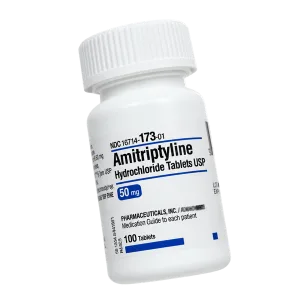
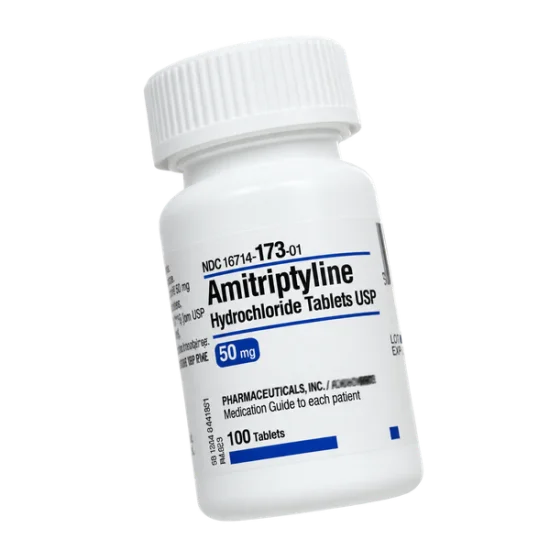
The product is labeled Amitriptyline Hydrochloride Tablets USP. The pack marking identifies a 50 mg strength and contains 100 tablets.

How it affects the body

Amitriptyline is a tricyclic antidepressant. It blocks the reuptake of serotonin and norepinephrine, leaving more of these neurotransmitters available between nerve cells.

Serotonin and norepinephrine influence mood, sleep, attention, and the spinal pathways that relay pain. Raising their availability does not create an immediate antidepressant effect; nerve circuits adapt over time. The medicine also blocks muscarinic, histamine H1, and alpha-1 adrenergic receptors, which accounts for dry mouth, sleepiness, constipation, blurred vision, and postural dizziness.

The liver converts amitriptyline into nortriptyline, an active metabolite that also has antidepressant and pain-modulating properties. CYP2C19 contributes to this conversion, while CYP2D6 helps process both amitriptyline and nortriptyline further.

Genetic differences in CYP2D6 and CYP2C19 can change blood concentrations. A person who metabolizes the medicine slowly may develop stronger sedation, dry mouth, confusion, or dizziness at an ordinary prescribed amount. Medicines that inhibit CYP2D6 can have a similar effect.

The World Health Organization lists amitriptyline among medicines used in essential mental-health and pain-care contexts, while recognizing the need for careful selection according to adverse-effect burden [2].

Therapeutic indications

Amitriptyline is used for depression and is also prescribed for selected pain and sleep-related symptoms when the clinical goal is appropriate. Its sedating and pain-modulating effects explain why the same medicine may be used differently across patients.

Approved Use in Depression

Amitriptyline has a long-established indication for major depressive disorder. Depression treatment aims to reduce persistent low mood, loss of interest, sleep disruption, appetite changes, and impaired concentration. The antidepressant response is gradual, and the prescribed amount is individualized rather than based on one universal dose.

The US Food and Drug Administration product information identifies amitriptyline for depressive illness and carries a boxed warning concerning suicidal thoughts and behaviours in children, adolescents, and young adults using antidepressants [1].

Clinical Uses Beyond Depression

Clinicians also use amitriptyline off label for chronic pain syndromes. These uses include diabetic neuropathy, fibromyalgia, migraine prophylaxis, tension-type headache, and some sleep difficulties linked to pain.

Clinical goal Role of Amitriptyline Typical treatment focus
Major depressive disorder Antidepressant treatment Mood, sleep, daily functioning
Neuropathic pain or fibromyalgia Pain-modulating treatment Burning, tingling, widespread pain
Migraine prophylaxis or insomnia Preventive or night-time treatment Fewer headache days or improved sleep continuity

Amitriptyline can be useful when pain, poor sleep, and depressive symptoms overlap.

Common mistakes

Several practical errors make amitriptyline harder to tolerate or less useful:

  • Taking an evening dose too late, then struggling with morning grogginess.
  • Stopping suddenly after several weeks or months of regular use, which can cause nausea, headache, insomnia, irritability, and flu-like symptoms.
  • Combining it with over-the-counter sleep aids or antihistamines without considering additive anticholinergic effects.
  • Ignoring constipation, urinary difficulty, palpitations, or fainting episodes.
  • Doubling the next dose after a missed tablet.
  • Using alcohol to counter insomnia or emotional distress while taking a sedating antidepressant.
If a dose is missed, take it when remembered unless it is close to the next scheduled dose. Skip the missed dose when timing is close; taking two doses together increases adverse-effect risk.

When not to use it

This medication is not for you if you are using a monoamine oxidase inhibitor, have used one within the required washout period, or have recently had a heart attack. It is also unsuitable for people with known hypersensitivity to amitriptyline hydrochloride.

Avoid combining amitriptyline with phenelzine or tranylcypromine. Linezolid can also act as an MAOI and may raise serotonin toxicity risk. A 14-day washout is generally required when changing between amitriptyline and an MAOI, except when a prescriber provides a specific supervised plan.

Medicines that prolong QTc, such as some antipsychotics, antibiotics, and antiarrhythmics, may increase cardiac risk.

Health Canada product information warns against MAOI combinations because serotonin syndrome and severe reactions can occur [4].

When this is not for you

This medication is not for you if you are using a monoamine oxidase inhibitor, have used one within the required washout period, or have recently had a heart attack. It is also unsuitable for people with known hypersensitivity to amitriptyline hydrochloride.

Alcohol, opioids, benzodiazepines, sedating antihistamines, and cannabis can amplify impaired coordination and drowsiness. Medicines that prolong QTc, such as some antipsychotics, antibiotics, and antiarrhythmics, may increase cardiac risk.

Possible side effects

Amitriptyline commonly causes dry mouth, constipation, blurred vision, drowsiness, sweating, increased appetite, weight gain, and difficulty passing urine. These effects come largely from anticholinergic and antihistamine activity.

Orthostatic hypotension can occur. This means blood pressure drops after standing, causing light-headedness, blurred vision, or fainting. Rise slowly from bed, and pause before walking if dizziness occurs.

More serious reactions include a fast or irregular heartbeat, QTc prolongation on an electrocardiogram, seizures, severe confusion, mania in susceptible people, and syndrome of inappropriate antidiuretic hormone secretion. SIADH can lower blood sodium and may present with headache, nausea, unusual weakness, confusion, or seizures.

The FDA label describes potentially serious cardiac effects and the antidepressant boxed warning, while the American Geriatrics Society Beers Criteria identifies amitriptyline as strongly anticholinergic and often unsuitable for older adults [3].

Constipation is easier to prevent than reverse. Adequate fluids, fibre, and regular movement are useful from the first week, unless a clinician has set fluid or dietary restrictions.

Comparison

Amitriptyline and nortriptyline belong to the tricyclic antidepressant group. Nortriptyline is also an active metabolite formed after amitriptyline is processed by the liver.

Feature Amitriptyline Nortriptyline
Main pharmacology Serotonin and norepinephrine reuptake inhibition with stronger anticholinergic effects Norepinephrine-focused reuptake inhibition with less anticholinergic activity
Common clinical limitation Dry mouth, constipation, sedation, dizziness May still cause dizziness and cardiac effects, though often less sedating
Clinical selection Useful when night-time sedation may be helpful Often considered when amitriptyline’s anticholinergic burden is poorly tolerated

Amitriptyline’s drawback is that sedation and anticholinergic effects can be limiting, especially in older adults.

What doctors say

In clinical practice, prescribers often choose amitriptyline when symptoms overlap. A person with neuropathic pain and fragmented sleep may benefit from its sedating profile, while someone who needs sharp morning concentration may find the same effect unacceptable.

The key clinical question is not whether amitriptyline works. It is whether its benefit outweighs its anticholinergic and cardiovascular burden for that individual. Improvement in pain may be noticed sooner than improvement in depression, though both require regular dosing and reassessment.

Older adults need extra caution. The 2023 American Geriatrics Society Beers Criteria advises avoiding amitriptyline in many adults aged 65 years and over because strong anticholinergic effects and orthostatic hypotension can contribute to falls, delirium, constipation, and urinary retention .

Comparison

Comparison table: Antidepressants

Common questions

Can Amitriptyline be taken with food or on an empty stomach?

Amitriptyline may be taken with or without food. Taking it after a light evening meal can help some people who experience nausea or stomach discomfort. The FDA prescribing information, revised in 2014, does not require a special meal pattern, but the dose should be taken consistently at the planned time. Evening administration is common because the medicine may cause sedation.

How does Amitriptyline differ from nortriptyline?

Nortriptyline is an active metabolite of amitriptyline and belongs to the same tricyclic antidepressant class. Amitriptyline tends to have stronger antihistamine and anticholinergic activity, so dry mouth, constipation, and sleepiness may be more prominent. The FDA product information (2014) identifies amitriptyline as a tricyclic antidepressant that affects norepinephrine signalling, while the medicines have different receptor profiles. Clinicians may favour nortriptyline when amitriptyline causes excessive sedation or anticholinergic effects.

Is Amitriptyline suitable for older adults?

Amitriptyline can be prescribed to an older adult only after careful assessment of falls risk, heart rhythm, constipation, glaucoma, prostate symptoms, and other medicines. The American Geriatrics Society Beers Criteria, updated in 2023, lists amitriptyline among medicines often avoided in older adults because of strong anticholinergic effects and orthostatic hypotension. Confusion or new unsteadiness deserves prompt clinical review. A lower-risk alternative may be selected when these risks are significant.

Can Amitriptyline affect driving, concentration, or machinery work?

Yes. Drowsiness, delayed reactions, blurred vision, and dizziness can impair driving and machinery work, especially after starting treatment or changing the prescribed amount. Health Canada advises caution with medicines that affect alertness, and this remains relevant in 2026. Avoid driving until you know how Amitriptyline affects you. Alcohol and sedatives make impairment more likely.

Can Amitriptyline tablets be split, crushed, or chewed?

Amitriptyline tablets are immediate-release tablets, yet alteration should only be done when a prescriber or pharmacist has confirmed that the specific tablet may be divided. Crushing or chewing can leave a bitter taste and may make it harder to take the full prescribed amount consistently. The FDA product information from 2014 supports individualized dosing, so tablet handling should match the prescribed regimen. Do not alter tablets simply to compensate for a missed dose.

Can Amitriptyline be used during pregnancy or breastfeeding?

Amitriptyline crosses the placenta, and treatment during pregnancy requires an individualized assessment of maternal benefit and fetal risk. Health Canada product information (2023) advises individualized assessment of neonatal effects when antidepressants are used late in pregnancy. Small amounts can pass into breast milk, and infant drowsiness, poor feeding, or unusual irritability require medical assessment. Pregnancy or breastfeeding does not automatically rule out treatment, but it does require a prescriber-led plan.

Do you offer anonymous delivery?

Your order will be securely packed and shipped within 24 hours. This is exactly what your package will look like (images of an actual item sent). It has the size and look of a regular private letter (24x11x0.7 cm) and its contents cannot be seen.

Customer Feedback on Amitriptyline

4.4
Based on 4 reviews
Neil, 35 St. John's Over two months
Verified
Rating: 4 out of 5

The burning in my feet stopped waking me near dawn after the first few weeks. I slept through the night more often and could manage full shifts without thinking about the pain constantly.

Oct 30, 2026
Darren, 57 Nanaimo Over six weeks
Verified
Rating: 3.5 out of 5

My headache days dropped, which was the part that mattered most. The first week left me foggy in the morning, so I took the tablet earlier in the evening and that made the routine easier.

Nov 5, 2026
David, 68 Saint John Over three months
Verified
Rating: 5 out of 5

I had fewer sharp pain episodes by the second month and was able to take my usual walks again. The improvement was steady rather than dramatic, but it made daily activity feel manageable.

Oct 10, 2026
John, 54 Thunder Bay Over ten weeks
Verified
Rating: 5 out of 5

My sleep became more regular first, then my mood lifted enough that I resumed seeing friends and finishing tasks at home. I was satisfied with the gradual change.

Oct 20, 2026

Sources

  1. US Food and Drug Administration (2014). ELAVIL (amitriptyline hydrochloride) tablets, USP: Prescribing Information.
  2. World Health Organization (2023). WHO Model List of Essential Medicines: 23rd List.
  3. American Geriatrics Society (2023). American Geriatrics Society 2023 Updated AGS Beers Criteria® for Potentially Inappropriate Medication Use in Older Adults.
  4. Health Canada (2023). Product Monograph: Amitriptyline Hydrochloride Tablets.
Get our free app Shop faster and track your orders 4.0 · 289 reviews Install