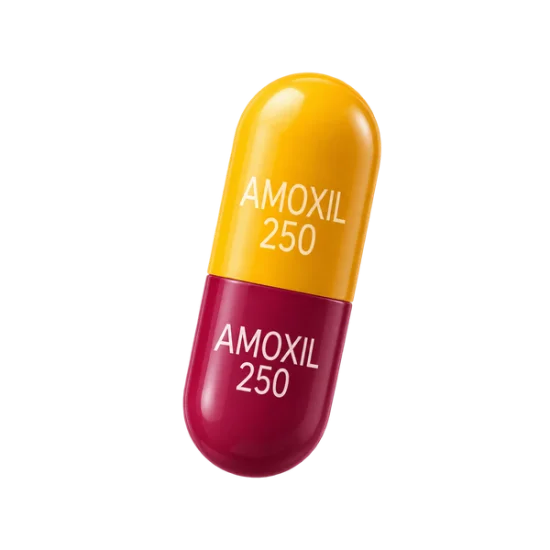
I used the capsules for a bacterial chest infection. The fever eased after a few days, and I was able to return to my normal walks once the course was finished.
Amoxil 250 contains amoxicillin, which stops susceptible bacteria from building their protective cell wall. It is prescribed for confirmed or strongly suspected bacterial infections, including throat, ear, sinus, chest, and some stomach infections.
Overview
Amoxil is the brand name associated with amoxicillin, an aminopenicillin in the beta-lactam antibiotic class. The product presentation is a 250 mg capsule.
Dosage and administration
The exact regimen for the Amoxil strength should be confirmed with a healthcare professional before starting. The appropriate amount and frequency depend on the infection, age, kidney function, body weight, and bacterial susceptibility.
Use the capsules as follows:
- Take Amoxil by mouth at the prescribed intervals.
- Swallow the capsule with water.
- Take doses at evenly spaced times when possible.
- Continue for the full prescribed duration.
- If a dose is missed, take it when remembered unless the next scheduled dose is near; do not double the next dose.
- Do not share capsules with another person.
- Do not use leftover capsules for a later illness.
Food may be taken according to the prescribed product instructions, although taking doses at consistent times can make the regimen easier to remember. Severe vomiting or diarrhoea can interfere with treatment and may require medical advice.
Kidney function deserves attention because amoxicillin is cleared largely through the kidneys. People with reduced renal function may need a modified interval or dose. Infants, children, and adults with low body weight also require weight-based prescribing.
Formulation
Amoxicillin acts on bacterial penicillin-binding proteins, enzymes that help construct and maintain the bacterial cell wall.
When these proteins are blocked, the cell wall becomes unstable and the susceptible bacterium breaks down. The effect depends on the organism being sensitive to amoxicillin and on achieving suitable exposure during treatment. Health Canada and the European Medicines Agency describe amoxicillin as an antibacterial agent for a range of susceptible infections [1].
Active pharmaceutical ingredient
Amoxicillin is the active antibacterial substance in Amoxil. It belongs to the penicillin family and has activity against selected Gram-positive and Gram-negative bacteria.
The drug does not kill viruses. A blocked nose, uncomplicated cough, influenza, and most sore throats caused by viruses will not improve because of an antibiotic. Using amoxicillin when bacteria are absent can expose the patient to adverse effects without treating the cause.
Amoxicillin can be absorbed after oral administration and reaches several tissues and body fluids. Its usefulness depends on the infection site, bacterial susceptibility, kidney function, and the prescribed regimen.
Brand and formulation considerations
Amoxicillin can appear in different pharmaceutical presentations, including standard immediate-release capsules, tablets, and oral liquid. The active substance may be the same, but the strength, release design, excipients, and dosing schedule can differ.
Amoxil capsules should be taken as the prescribed regimen. An immediate-release capsule should not be treated as an extended-release product, and an extended-release formulation should not be substituted without confirmation from the prescriber.
How it affects the body
Amoxicillin acts on bacterial penicillin-binding proteins, enzymes that help construct and maintain the bacterial cell wall. When these proteins are blocked, the cell wall becomes unstable and the susceptible bacterium breaks down. Some bacteria produce beta-lactamases that can inactivate amoxicillin, so another antibiotic or a different combination may be selected.
Therapeutic indications
Amoxil may be prescribed when a clinician diagnoses, or has strong clinical reasons to suspect, a bacterial infection that is susceptible to amoxicillin. Common clinical uses include streptococcal throat infection, selected cases of tonsillitis, acute middle ear infection, sinus infection, and some lower respiratory tract infections.
| Indication | Clinical focus | Typical age group |
|---|---|---|
| Streptococcal pharyngitis or tonsillitis | Susceptible group A Streptococcus | Children and adults |
| Acute middle ear infection | Susceptible respiratory bacteria | Mainly children, also adults |
| Bacterial sinus or chest infection | Organism and local resistance pattern guide choice | Children and adults |
Strep throat can cause sudden throat pain, fever, painful swallowing, and swollen neck glands. A positive test or a clinical assessment supports treatment decisions. Tonsillitis may be bacterial or viral, so the presence of enlarged tonsils alone does not establish a need for amoxicillin.
Acute otitis media, or middle ear infection, is common in children. Ear pain, fever, irritability, and reduced hearing can occur. Some mild cases are monitored before antibiotics are used, while younger children or patients with more significant symptoms may require treatment.
The Canadian Paediatric Society and Health Canada support using antibacterial therapy when the clinical diagnosis and expected benefit justify it. A course should be taken for the prescribed duration, even if pain or fever improves earlier.
Management of respiratory and sinus infections
Amoxicillin may be selected for acute bacterial sinusitis when symptoms, examination findings, or their duration make a bacterial cause more likely. Sinus pressure alone does not prove bacterial infection. Viral upper respiratory infections often cause similar congestion and facial discomfort.
For lower respiratory tract infections, the clinician considers pneumonia, bacterial bronchitis, aspiration, chronic lung disease, and local resistance patterns. A chest infection with shortness of breath, chest pain, confusion, bluish lips, or severe weakness requires urgent medical assessment rather than self-treatment with leftover antibiotics.
Amoxicillin distributes into respiratory tissues and secretions. Its clinical effect still depends on whether the infecting organism is susceptible and whether the prescribed exposure is maintained.
Course length is not identical for every respiratory or sinus infection. It depends on the diagnosis, age, severity, kidney function, response, and local clinical guidance. Do not shorten a prescribed course because symptoms settle after the first few doses.
Helicobacter pylori eradication and peptic ulcer disease
Helicobacter pylori is a bacterium that can colonize the stomach lining and contribute to gastritis, peptic ulcer disease, and an increased long-term risk of gastric cancer. Amoxicillin is used as one part of selected eradication regimens.
It is not used alone for this purpose. Treatment normally combines amoxicillin with acid suppression and one or more additional antimicrobial agents selected according to resistance patterns, previous treatment, allergy history, and regional guidance.
A proton pump inhibitor reduces gastric acid and helps create conditions that support antimicrobial activity and ulcer healing. The other antibiotics target H. pylori through different mechanisms. Using multiple agents reduces the chance that resistant organisms survive monotherapy.
The American College of Gastroenterology guidance published in 2024 places major emphasis on resistance-aware regimen selection and confirmation of eradication after treatment [2]. Persistent ulcer symptoms do not prove that H. pylori remains present; testing is used to assess treatment success.
Common mistakes
- Starting capsules for a cold, influenza, or an undiagnosed sore throat.
- Saving unused capsules for a future illness.
- Taking doses only when fever or pain returns.
- Doubling a dose after forgetting one.
- Stopping when symptoms improve without confirming the planned duration.
- Hiding a previous penicillin reaction.
- Crushing or opening the capsule without confirming that the formulation allows it.
- Taking another person’s antibiotic.
- Ignoring severe diarrhoea during or after treatment.
- Forgetting to mention warfarin, methotrexate, probenecid, kidney disease, or pregnancy.
One common misconception is that a stronger-feeling antibiotic is automatically better. The correct medicine is the one that reaches the infection and covers the causative organism while imposing the least unnecessary harm.
Another mistake is assuming that a rash has only one meaning. A non-itchy rash during a viral illness differs clinically from rapidly developing hives with throat tightness. The timing and associated symptoms should be documented.
When not to use it
Amoxil is not suitable for you if you previously experienced an immediate severe allergic reaction to amoxicillin, penicillin, or a closely related beta-lactam antibiotic. This includes anaphylaxis, angioedema, breathing difficulty, or widespread immediate hives.
Extra caution is needed with:
- A history of antibiotic-associated colitis.
- Kidney disease or reduced kidney function.
- Glandular fever or suspected infectious mononucleosis, because a prominent rash may develop.
- Previous liver problems associated with antibiotics.
- Pregnancy or breastfeeding.
- Treatment with anticoagulants, methotrexate, probenecid, or certain other medicines.
Amoxicillin may increase the anticoagulant effect of warfarin in some patients, requiring closer clinical monitoring. Probenecid can reduce renal excretion of amoxicillin and increase exposure. Methotrexate toxicity may increase when its elimination is affected.
Health Canada advises attention to beta-lactam allergy, renal dosing, and serious antibiotic-associated diarrhoea in amoxicillin prescribing information [3].
When this is not for you
Do not take Amoxil if you have ever had a severe immediate reaction to penicillin, amoxicillin, or a related antibiotic. Tell a healthcare professional about kidney disease, previous antibiotic-related colitis, liver problems, glandular fever, pregnancy, breastfeeding, or medicines such as warfarin, methotrexate, or probenecid.
Hormonal contraceptive effectiveness is not generally reduced by amoxicillin itself, but vomiting or severe diarrhoea can impair absorption of an oral contraceptive. Pregnancy decisions should be based on the infection, alternatives, and clinical assessment rather than on stopping an antibiotic without a replacement plan.
Possible side effects
Common adverse effects include nausea, loose stools, abdominal discomfort, and a mild skin rash. Taking the medicine with suitable food may help some stomach symptoms, although persistent or severe diarrhoea needs assessment.
A rash during treatment has several possible causes. It may be a drug allergy, a viral illness occurring at the same time, or a non-allergic reaction. A widespread, rapidly developing, blistering, or peeling rash requires urgent care.
Seek urgent medical attention for:
- Swelling of the lips, tongue, face, or throat.
- Wheezing, breathing difficulty, faintness, or widespread hives.
- Severe skin blistering or peeling.
- Profuse or bloody diarrhoea during treatment or after completion.
- Yellowing of the skin or eyes, dark urine, or marked weakness.
- Seizures or severe confusion, especially with kidney impairment.
Antibiotic-associated diarrhoea can occur during treatment or weeks later because antibiotics disturb normal intestinal bacteria. Clostridioides difficile infection is uncommon but clinically significant when diarrhoea is severe, persistent, or bloody.
Comparison
Amoxil should be compared by formulation and clinical purpose rather than by brand appearance. Immediate-release capsules deliver amoxicillin through the usual oral absorption process. Liquid formulations may be selected when a patient cannot swallow capsules, while modified-release products require a separate prescribing decision.
| Approach | Main characteristic | Clinical limitation |
|---|---|---|
| Immediate-release amoxicillin capsule | Standard oral delivery of amoxicillin | Requires adherence to the prescribed schedule |
| Amoxicillin oral liquid | Useful when swallowing capsules is difficult | Measuring and storage requirements vary |
| Combination therapy for H. pylori | Amoxicillin paired with acid suppression and other antimicrobials | More medicines create more opportunities for missed doses and interactions |
The antibacterial target remains the bacterial cell wall, but the practical dosing schedule can differ between formulations. A capsule should not be crushed, opened, or mixed into food unless the prescriber or dispensing pharmacist has confirmed that the specific product permits it.
Amoxicillin is not automatically the preferred option for every infection. A history of immediate penicillin allergy, recent antibiotic exposure, resistant organisms, or infection with a beta-lactamase-producing bacterium can change the choice.
What doctors say
In clinical practice, doctors usually make three decisions before prescribing Amoxil: whether the illness is bacterial, whether amoxicillin covers the likely organism, and whether the patient can take it safely.
The greatest benefit comes when the diagnosis and bacterial susceptibility align. The medicine will not shorten a typical viral cold, and a lingering cough does not automatically justify a second antibiotic course.
Physicians also examine what happened during earlier antibiotic treatment. Persistent fever, worsening pain, new breathing difficulty, or symptoms that return soon after completion can indicate an incorrect diagnosis, resistance, poor absorption, a complication, or a second infection.
Patients often focus on how quickly the first capsule works. Fever and pain may improve before the infection has been fully treated, so symptom relief is not a reliable reason to stop early. The prescribed duration reflects the clinical diagnosis, not just the time needed to feel better.
A doctor may also change the regimen after a culture result becomes available. This is called targeted therapy: selecting an antibiotic based on the organism and its susceptibility rather than treating only from symptoms.
Comparison
Common questions
What should be discussed with a doctor before starting Amoxil?
Discuss previous reactions to penicillin or cephalosporin antibiotics, kidney disease, liver problems, pregnancy, breastfeeding, and current medicines. Warfarin, methotrexate, and probenecid are relevant examples because they can change treatment monitoring or drug exposure. The clinician also needs to know whether the illness has features of a viral infection or a complication. Health Canada’s 2024 amoxicillin safety information supports reviewing allergy history, renal function, and significant interactions before treatment.
Is Amoxil suitable for older adults?
Older adults can receive amoxicillin when the infection and bacterial susceptibility support its use. Kidney function often declines with age, even without obvious symptoms, and this can affect the prescribed interval or dose. Older patients also have a higher clinical risk from dehydration and antibiotic-associated diarrhoea. WHO antimicrobial stewardship guidance published in 2022 supports adapting antibiotic treatment to the patient’s organ function and infection severity.
Can Amoxil be used during pregnancy or breastfeeding?
Amoxicillin may be prescribed during pregnancy when treating a bacterial infection offers a clear benefit. The decision considers the infection, allergy history, gestational stage, and suitable alternatives. Small amounts may pass into breast milk, and an infant may rarely develop diarrhoea, thrush, or a rash. The EMA product information for amoxicillin, published in 2023, supports an individual risk–benefit assessment rather than routine avoidance.
How long does one Amoxil dose keep working?
Amoxicillin is cleared from the body relatively quickly, so prescribed doses are spaced through the day to maintain antibacterial exposure. The duration of action is not the same as the duration of the complete treatment course. Missing doses can reduce exposure, while taking extra capsules does not reliably restore treatment success. The FDA prescribing information for oral amoxicillin, updated in 2023, describes dosing intervals according to the infection and patient factors.
Can an Amoxil capsule be split, crushed, or chewed?
Capsules should be swallowed whole unless a healthcare professional confirms another method for that specific formulation. Opening or crushing may alter how the contents are delivered and can make the full dose harder to measure. A liquid formulation may be more suitable for a person who cannot swallow capsules. The European Medicines Agency’s 2023 amoxicillin product information addresses administration by formulation rather than treating all oral presentations as interchangeable.
What happens after stopping Amoxil, and is tapering required?
Amoxicillin is not usually tapered like corticosteroids or some medicines that cause physiological withdrawal. The prescribed antibacterial course should be completed unless a clinician tells you to stop because of an adverse reaction, a changed diagnosis, or a different treatment plan. Symptoms that return after stopping require assessment, especially fever, breathing difficulty, worsening pain, or severe diarrhoea. NICE antimicrobial prescribing guidance published in 2024 supports reviewing deterioration or treatment failure rather than restarting leftover antibiotics.
Do you offer anonymous delivery?
Your order will be securely packed and shipped within 24 hours. This is exactly what your package will look like (images of an actual item sent). It has the size and look of a regular private letter (24x11x0.7 cm) and its contents cannot be seen.
Customer Feedback on Amoxil
Amoxil did not improve the sinus symptoms I was having. The congestion and pressure continued, so the treatment was stopped after a medical review.
It helped with the throat infection, but the first few days brought loose stools. The stomach issue settled after treatment ended, though the improvement was slower than I expected.
The ear infection became much less painful during treatment. I found it easiest to take each capsule at the same times every day.
The treatment cleared the infection and I felt noticeably stronger by the end of the course. Keeping the capsules beside my usual morning routine helped me remember them.
Sources
- Health Canada (2024). Product Monograph for Amoxicillin
- American College of Gastroenterology (2024). ACG Clinical Guideline: Treatment of Helicobacter pylori Infection
- Health Canada (2023). Canadian Product Monograph: Amoxicillin Capsules