I took Entresto at the prescribed twice-daily dose for several months after ongoing heart-failure symptoms. My breathlessness improved enough that I could walk farther around the neighbourhood, although the first dose increases made me light-headed and required a slower adjustment.
By combining sacubitril and valsartan, Entresto supports the heart’s natural pressure-regulating systems and reduces harmful hormonal effects in chronic heart failure. It is prescribed for adults with heart failure, especially when reduced pumping function increases the risk of hospitalisation and cardiovascular death.
Overview
Entresto contains the active substances sacubitril and valsartan. Sacubitril belongs to the neprilysin-inhibitor group, while valsartan is an angiotensin II receptor blocker, also called an ARB. Together, they address two linked processes that contribute to heart failure progression: excessive blood-vessel constriction and retention of sodium and water.
Dosage and administration
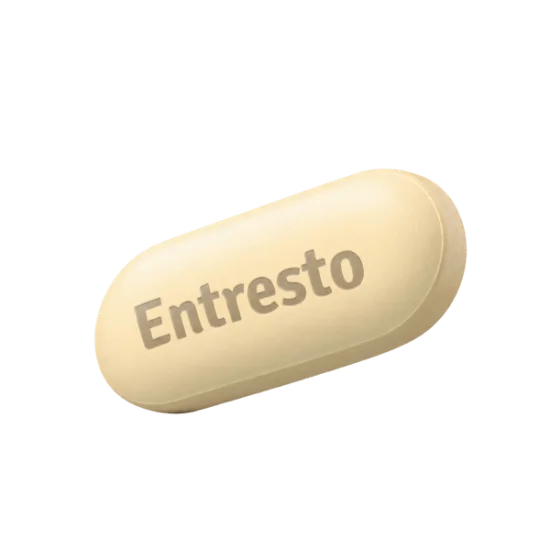
Entresto tablets are taken by mouth twice daily. The exact dose is selected for the individual patient, and dosing differs between strengths and between users.
- Take the prescribed tablet at approximately the same times each day.
- Swallow the tablet with water.
- Take it with or without food, but keep the routine consistent.
- Do not double the next dose after a missed dose.
- If a missed dose is remembered near the next scheduled dose, skip the missed dose and resume the regular schedule.
- Dose increases are gradual and depend on blood pressure, kidney function, potassium, symptoms, and the previous heart-failure regimen.
- Treatment may begin at a lower strength in people with low blood pressure, reduced kidney function, increased potassium, or previous exposure to certain medicines.
- A transition from an ACE inhibitor requires a washout period before Entresto is started.
The usual clinical plan is titration from a starting strength toward a maintenance strength when tolerated. The target dose is not suitable for every patient. A clinician may keep the dose lower when adverse effects, kidney impairment, hypotension, or electrolyte changes occur. Follow-up testing helps identify these problems early. Dose changes should be discussed with the prescriber.
Do not split, crush, or chew a tablet unless a prescriber has specifically confirmed that the particular tablet can be handled that way. A missed-dose error is common: taking two tablets together can increase hypotension and kidney-related risks.
Formulation
The product is supplied as tablets. Dosing differs between strengths and between users, so there is no single amount that suits everyone. Entresto Sprinkle capsules are a different dosage form and should not be assumed to be interchangeable with the tablets.
Entresto is also known pharmacologically as sacubitril/valsartan. The medicine is used within guideline-directed heart-failure treatment rather than as a general blood-pressure tablet.
How it affects the body
Sacubitril is converted in the body to its active metabolite, which inhibits neprilysin. Neprilysin normally breaks down several substances, including natriuretic peptides. When neprilysin activity falls, natriuretic peptide signalling increases, encouraging sodium excretion, relaxation of blood vessels, and reduction of pressure within the heart.
Valsartan blocks the angiotensin II type 1 receptor. Angiotensin II normally promotes vasoconstriction, aldosterone release, sympathetic activity, and sodium retention. Blocking its receptor helps limit narrowing of blood vessels and reduces signals that encourage fluid retention.
The two components complement each other. Sacubitril strengthens protective natriuretic-peptide pathways, while valsartan suppresses the renin–angiotensin–aldosterone system. Valsartan also prevents the rise in angiotensin II activity that could otherwise accompany neprilysin inhibition.
Entresto does not act by forcing the heart to beat faster. Its role is to reduce the pressure and hormonal workload placed on the heart over time. The PARADIGM-HF trial found that sacubitril/valsartan lowered the combined risk of cardiovascular death or heart-failure hospitalisation compared with enalapril in selected adults with chronic heart failure and reduced ejection fraction [1].
Endothelin-1 and angiotensin I belong to the wider cardiovascular signalling network involved in vascular tone and fluid balance. Entresto’s main direct pharmacological actions involve neprilysin inhibition and angiotensin II receptor blockade.
Therapeutic indications
It is prescribed for adults with heart failure, especially when reduced pumping function increases the risk of hospitalisation and cardiovascular death.
Common mistakes
Several practical mistakes can reduce treatment benefit or increase avoidable risk:
- Taking Entresto only on days when symptoms feel worse
- Doubling the next dose after forgetting one
- Starting an ACE inhibitor again without recognising the required washout period
- Using potassium salt substitutes without reporting them
- Taking NSAIDs repeatedly for pain without considering kidney effects
- Stopping treatment suddenly after one episode of dizziness
- Ignoring diarrhoea, vomiting, fever, or poor fluid intake during treatment
- Assuming ankle swelling always means the medicine is causing it
- Missing blood tests after a dose increase
- Sharing tablets with a family member who has similar heart symptoms
One practical mistake is checking blood pressure only once and treating that reading as definitive. Repeated readings taken under similar conditions give a clearer picture, especially when symptoms are intermittent.
Another is confusing a lower heart-failure risk with an immediate feeling of increased energy. Entresto works through ongoing cardiovascular and hormonal effects; symptom improvement may not occur at the same speed as a blood-pressure change.
When not to use it
- Previous angioedema linked to an ACE inhibitor or an ARB
- Current treatment with an ACE inhibitor
- Use within the required washout period after an ACE inhibitor
- Allergy to sacubitril, valsartan, or an excipient in the tablet
- Pregnancy, because medicines that block the renin–angiotensin system can harm the developing fetus
- Severe liver impairment where the treatment risk exceeds the expected benefit
When this is not for you
Entresto is not suitable for everyone. It should not be used in the following situations:
NOT for you if: you are taking an ACE inhibitor, have a history of medicine-related angioedema, are pregnant, or have a contraindication identified by your prescriber.
A history of angioedema deserves careful attention even if the episode occurred years earlier. Angioedema can recur without warning, and airway involvement may become life-threatening.
People with low blood pressure, dehydration, kidney disease, renal artery stenosis, high potassium, or severe heart failure may need closer monitoring during initiation and dose increases. Entresto can also worsen kidney function in susceptible patients when circulating blood volume is low.
Breastfeeding requires an individual assessment because treatment decisions depend on the severity of heart failure, available alternatives, and the infant’s age. The Canadian product information and Health Canada safety framework place special emphasis on pregnancy-related renin–angiotensin-system risks.
Possible side effects
The most clinically relevant adverse effects of Entresto involve blood pressure, potassium, kidney function, and angioedema. The FDA prescribing information identifies hypotension, hyperkalaemia, and changes in renal function among the key safety concerns [2].
Common or clinically observed problems may include:
- Dizziness or light-headedness from low blood pressure
- Cough
- Increased potassium in the blood
- Worsening kidney-function measurements
- Fatigue
- Headache
- Nausea or stomach discomfort
- Swelling of the hands, ankles, or feet
A cough can occur, although ACE inhibitors tend to cause cough more often because of their effect on bradykinin and related peptides. Low blood pressure becomes more likely when Entresto is combined with diuretics, dehydration, restricted salt intake, or other blood-pressure-lowering treatments.
High potassium may produce few early symptoms. Muscle weakness, unusual palpitations, or a slow or irregular heartbeat require urgent medical assessment. Kidney-function changes are more likely in people with renal artery narrowing, dehydration, advanced kidney disease, or concurrent medicines that affect renal blood flow.
Angioedema is uncommon but potentially dangerous. Swelling of the lips, tongue, face, or throat, together with difficulty breathing or swallowing, requires emergency care.
Patients sometimes notice dizziness during the first days of treatment, especially when standing up quickly. Sitting down before walking and rising slowly can reduce falls while the body adjusts, but persistent symptoms require clinical review.

Comparison
Treatment choices depend on ejection fraction, kidney function, potassium, blood pressure, rhythm, symptoms, comorbidities, and previous intolerance. The comparison below uses generic drug classes rather than commercial brands.
| Treatment approach | Main pharmacological role |
|---|---|
| Sacubitril/valsartan | Increases natriuretic-peptide activity and blocks angiotensin II receptors |
| ACE inhibitor or ARB | Suppresses harmful renin–angiotensin-system signalling through a single main pathway |
| Mineralocorticoid receptor antagonist | Reduces aldosterone-related sodium retention and cardiac remodelling |
| SGLT2 inhibitor | Promotes glucose and sodium excretion and supports heart-failure management, including in some patients without diabetes |
An ACE inhibitor such as ramipril or an ARB such as losartan may be used when Entresto is unsuitable or cannot be tolerated. Entresto has a broader dual mechanism than valsartan alone, but its additional benefits come with specific precautions involving angioedema, blood pressure, kidney function, and potassium.
Mineralocorticoid receptor antagonists such as eplerenone address aldosterone signalling. They may be used alongside other heart-failure treatments when kidney function and potassium permit. Their main limitation is also hyperkalaemia, so combining several potassium-raising therapies requires monitoring.
SGLT2 inhibitors such as dapagliflozin or empagliflozin act through a different pathway. They can form part of modern heart-failure treatment, yet they do not replace the neprilysin-inhibitor and ARB actions of Entresto.
The EMA describes sacubitril/valsartan as a treatment option for chronic heart failure in defined patient groups, while guidance from the Canadian Cardiovascular Society places it within structured heart-failure management rather than isolated self-treatment [3].
What doctors say
In clinical practice, physicians usually judge Entresto by several measures rather than by symptoms alone. Blood pressure, kidney function, potassium, exercise tolerance, swelling, breathlessness, weight trend, and hospital admissions all help show whether treatment is helping.
A common prescribing error is increasing the dose too quickly because the patient feels stable. Stability can be the result of the current treatment, and a faster increase may produce dizziness or kidney-function changes without adding benefit.
Doctors also distinguish treatment intolerance from disease progression. Worsening breathlessness, increasing ankle swelling, rapid weight gain, chest discomfort, or fainting may indicate a heart-failure problem rather than a routine side effect.
The European Medicines Agency and Health Canada both emphasise clinically appropriate monitoring for medicines that affect the renin–angiotensin system. Treatment decisions are more reliable when patients bring a complete list of prescription medicines, non-prescription painkillers, supplements, and salt substitutes.
Comparison
Common questions
What happens if Entresto is stopped, and does it need tapering?
Stopping Entresto can remove its protective effects on natriuretic-peptide and angiotensin pathways, allowing heart-failure symptoms or blood-pressure changes to return. The FDA prescribing information from 2024 does not describe a routine tapering schedule, but stopping suddenly without a replacement plan can leave the condition undertreated. A clinician may switch the patient to another heart-failure therapy, and the timing depends on the replacement medicine and clinical status.
Can Entresto be used during pregnancy or breastfeeding?
Entresto should not be used during pregnancy because valsartan can affect fetal kidney development and the wider fetal renin–angiotensin system. The 2024 Health Canada product information treats pregnancy as a serious safety concern for this medicine class. Breastfeeding decisions require an individual assessment because the mother’s heart-failure severity and the infant’s needs must be considered together.
How soon can the effect of Entresto become noticeable?
Some people notice less breathlessness, reduced swelling, or improved activity tolerance over the first several weeks, while others experience gradual change over a longer period. The 2023 European Medicines Agency product information supports assessment through symptoms, blood pressure, kidney function, and clinical outcomes rather than a single immediate sensation. A lack of instant improvement does not prove that the medicine is ineffective, and worsening symptoms require prompt medical assessment.
How long does an Entresto course last, and is long-term use acceptable?
Entresto is generally used as long-term heart-failure treatment when the benefits continue to outweigh adverse effects. The 2024 WHO cardiovascular-care framework supports sustained management of chronic cardiovascular disease, with treatment adjusted when kidney function, potassium, blood pressure, or symptoms change. There is no standard fixed course length for chronic heart failure; continuation is reviewed as part of ongoing care.
Do you offer anonymous delivery?
Your order will be securely packed and shipped within 24 hours. This is exactly what your package will look like (images of an actual item sent). It has the size and look of a regular private letter (24x11x0.7 cm) and its contents cannot be seen.
Customer Feedback on Entresto
I took Entresto at the prescribed twice-daily dose and noticed less ankle swelling and managed ordinary stairs more comfortably after several weeks. The twice-daily routine fitted easily into my morning and evening schedule, and I was satisfied with the change.
Entresto, taken at the prescribed twice-daily dose, helped me feel less winded during routine household tasks over several weeks. I did not notice a dramatic change overnight, but the improvement became clear after consistent use over the following weeks.
After several weeks at the prescribed twice-daily dose, my exercise tolerance gradually improved, and I could complete short walks without stopping as often. The tablets were straightforward to take, and I was pleased that daily activities felt less restricted.
I developed persistent dizziness after taking Entresto at the prescribed twice-daily dose for several weeks and stopped feeling comfortable driving. The medicine did not suit me, so I contacted my doctor and discussed a different heart-failure plan rather than restarting it on my own.
Sources
- New England Journal of Medicine (2014). Angiotensin-Neprilysin Inhibition versus Enalapril in Heart Failure
- U.S. Food and Drug Administration (2024). ENTRESTO (sacubitril/valsartan) Tablets, for Oral Use: Prescribing Information
- European Medicines Agency (2023). Entresto: EPAR — Product Information