Skip to content
Save up to 80%
Minocycline
Active ingredient: Minocycline

Minocycline

Quality products
24/7 Support
Fast delivery
Delivery from 4 days
Select pack Package Per unit Price

Free delivery on orders from $ 296.00, free express delivery from $ 444.00

Secure Payments
Track your order
Best price guarantee

Minocycline, a tetracycline antibiotic, is prescribed mainly for moderate-to-severe inflammatory acne vulgaris and selected bacterial infections. It is intended for patients whose acne needs more than topical treatment alone. By entering susceptible bacteria and inhibiting protein synthesis, minocycline reduces bacterial activity and inflammation.

Overview

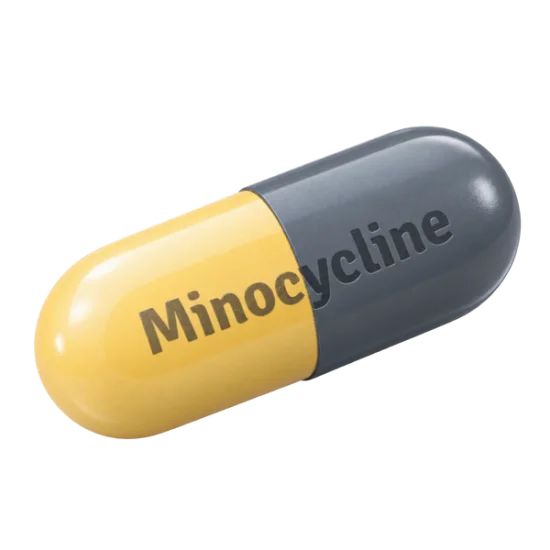
The active ingredient is minocycline. The product is supplied as capsules for oral use. Minocycline belongs to the tetracycline antibiotic class and acts against susceptible bacteria involved in infection and acne inflammation.

Dosage and administration

Use the prescribed dose and frequency for the formulation selected by the prescriber. Dosing differs between strengths and between users, so there is no single amount that suits everyone. Minocycline is taken by mouth with water, and the exact administration instructions depend on the formulation.

  • Take each dose at the scheduled time.
  • Swallow the capsule with a full glass of water.
  • Remain upright after taking it rather than lying down immediately.
  • Separate it from mineral supplements or antacids when the Canadian product monograph requires spacing.
  • If a dose is missed, follow the prescribed missed-dose instructions rather than doubling the next dose.
  • Continue or stop treatment only according to the treatment plan.

Acne improvement is gradual. Early changes may involve fewer new inflammatory lesions, while deeper nodules and discoloration take longer to settle. A review is needed if acne continues to scar, painful nodules develop, or the treatment causes troublesome dizziness or other systemic symptoms.

Antibiotics are often paired with topical acne treatment, such as benzoyl peroxide or a retinoid, because oral therapy alone does not address every acne mechanism. A clinician may reassess the plan when inflammation improves, since continuing an oral antibiotic longer than needed increases exposure and resistance pressure.

Do not stop treatment just because the skin looks better after a short period, and do not restart leftover capsules later. The correct duration depends on response, adverse effects, and the prescriber’s plan.

Formulation

The active ingredient is minocycline. The product is supplied as capsules for oral use. Minocycline belongs to the tetracycline antibiotic class and acts against susceptible bacteria involved in infection and acne inflammation.

How it affects the body

Minocycline targets bacterial protein production. The ribosome is the cellular structure bacteria use to assemble proteins; minocycline interferes with that process, slowing the activity of susceptible organisms.

The former name Propionibacterium acnes is now Cutibacterium acnes. Cutibacterium acnes contributes to acne pathogenesis, but acne is not caused by bacteria alone. Follicular plugging, sebum production, hormonal signalling, and the immune response also influence lesion formation.

Bacterial Protein Synthesis Inhibition

Minocycline binds to the bacterial 30S ribosomal subunit and reduces the addition of amino acids to new proteins. This bacteriostatic action limits bacterial multiplication rather than destroying every organism immediately. The FDA prescribing information describes this tetracycline mechanism and the systemic adverse effects that can accompany oral exposure [1].

Reducing Cutibacterium acnes activity can lessen inflammatory signalling. It does not permanently change sebum production or remove the tendency for follicles to become blocked, so topical maintenance treatment may remain necessary.

Cutibacterium acnes and Inflammatory Acne

Acne improvement depends on more than lowering bacterial activity. Sebum, plugged follicles, inflammation, and individual susceptibility continue to influence the result. This explains why minocycline may reduce red, tender lesions while comedones or post-acne marks require a separate plan.

Therapeutic indications

Minocycline is an oral tetracycline antibiotic used most often in dermatology for moderate-to-severe inflammatory acne vulgaris. Acne vulgaris involves blocked hair follicles, excess sebum, immune activity, and inflammation. Papules, pustules, and nodules are inflammatory lesions; blackheads and whiteheads are comedones, which may respond better to topical retinoids and other local treatments. Clinical assessment helps match the treatment to the lesion pattern and severity.

Minocycline does not treat every cause of acne. Its role is strongest when inflammatory lesions are prominent and topical treatment alone has not provided enough control. Large nodules, painful cysts, scarring, or acne that affects mood warrant earlier dermatology assessment.

Clinicians generally use oral antibiotics for a defined treatment period rather than indefinite maintenance. Antibiotic stewardship matters because unnecessary or prolonged antibiotic exposure increases resistance pressure and exposes the patient to systemic adverse effects.

Common mistakes

Common Patient Mistakes

  • Sharing capsules with a partner or family member.
  • Stopping as soon as a few lesions disappear.
  • Taking mineral supplements at the same time without checking spacing.
  • Driving after the first doses despite dizziness.
  • Continuing sun exposure or tanning while photosensitivity is possible.
  • Ignoring severe headache, blurred vision, or double vision.
  • Expecting clear skin within a few days.
  • Using leftover antibiotics after acne returns.

One practical detail is easy to miss: taking minocycline while lying down may increase irritation in the oesophagus. Water and an upright position reduce that avoidable problem.

Another is that treatment failure does not always mean the antibiotic was “too weak.” Acne may be driven by comedones, hormones, follicular plugging, or scarring that requires a different treatment strategy.

The WHO antimicrobial-resistance framework supports limiting antibiotic exposure to situations where the expected clinical benefit justifies it [5].

When not to use it

Minocycline is not suitable for everyone. Before treatment, the prescriber reviews allergy history, pregnancy status, breastfeeding, liver health, autoimmune conditions, neurological symptoms, and current medicines.

  • Serious allergy to minocycline or another tetracycline.
  • Pregnancy-related restrictions.
  • Significant liver disease.
  • Certain autoimmune problems.
  • Unexplained neurological symptoms.
  • Concomitant isotretinoin use may increase concern about intracranial hypertension.

Tetracyclines can affect developing teeth and bone, so age and developmental status influence prescribing decisions.

When this is not for you

This medication is not for you if you have a serious allergy to minocycline or another tetracycline, unless a specialist has established a specific plan. It may also be unsuitable with significant liver disease, pregnancy-related restrictions, certain autoimmune problems, or unexplained neurological symptoms.

Pregnancy, plans to become pregnant, and breastfeeding should be disclosed before starting minocycline. Young children require specialist assessment because tetracycline exposure can affect dental development.

Possible side effects

Minocycline can cause nausea, abdominal discomfort, dizziness, light-headedness, and vestibular symptoms. Dizziness may affect balance or concentration, especially during the first part of treatment. Extended-release formulations may have a lower incidence of vestibular effects in some studies, but they do not guarantee that dizziness will be avoided.

Health Canada product information describes important tetracycline safety considerations, including hypersensitivity, liver reactions, pigmentation, and neurological symptoms [2].

Common Gastrointestinal and Vestibular Effects

Nausea may be easier to tolerate when the medicine is taken with suitable food, provided the product-specific instructions allow it. Mineral-rich products, iron, calcium, magnesium, and aluminium-containing antacids can reduce absorption of tetracyclines, so spacing may be required.

Dizziness, spinning sensations, or unsteadiness should be taken seriously when they interfere with normal activity. Driving should wait until the person knows how minocycline affects them.

Liver Injury and Hypersensitivity Warnings

Rare but serious liver injury can occur. Seek prompt medical assessment for yellowing of the skin or eyes, dark urine, unusually pale stools, severe abdominal pain, marked fatigue, or persistent vomiting.

A widespread rash, facial swelling, wheezing, blistering skin, mouth sores, or fever may indicate a serious hypersensitivity reaction. Minocycline may require extra caution in people with liver disease, autoimmune illness, or a history of drug-related liver reactions.

Photosensitivity and Skin Pigmentation

Photosensitivity can make the skin react more strongly to ultraviolet exposure. Use protective clothing, shade, and broad-spectrum sunscreen during treatment. Avoid intentional tanning.

Minocycline can also cause blue-grey or brown pigmentation of skin, scars, gums, teeth, nails, or other tissues, especially with longer exposure. Report new or progressive pigmentation to the prescriber.

Pseudotumor Cerebri and Neurological Symptoms

Idiopathic intracranial hypertension, historically called pseudotumor cerebri, is an uncommon but important warning. Severe or persistent headache, blurred vision, double vision, reduced peripheral vision, or pain with eye movement needs urgent medical assessment rather than observation at home.

The British Association of Dermatologists and published tetracycline safety reviews describe this neurological risk and its potential association with visual symptoms [3]. Minocycline has also been associated with autoimmune reactions, joint symptoms, serum sickness-like reactions, and pigmentation changes.

Comparison

Oral tetracyclines are frequently prescribed for inflammatory acne, but treatment selection depends on lesion pattern, previous response, tolerability, pregnancy considerations, drug interactions, and resistance concerns.

Treatment category Main role and limitations
Minocycline or doxycycline Oral tetracyclines for moderate-to-severe inflammatory acne; systemic adverse effects and antibiotic resistance must be considered.
Clindamycin phosphate with benzoyl peroxide Topical antibiotic approach; benzoyl peroxide helps reduce resistance pressure, while antibiotic monotherapy is generally avoided.
Adapalene, other retinoids, or benzoyl peroxide Topical treatment for follicular plugging, comedones, and inflammation; dryness and irritation can occur.

Minocycline and Doxycycline

Doxycycline is another tetracycline antibiotic used for inflammatory acne. Some patients tolerate one better than the other, while others experience nausea, sun sensitivity, or dizziness with both. Individual response and contraindications often determine the choice.

Minocycline may be considered when its pharmacokinetic profile or previous response supports its use. Doxycycline may be preferred in other situations, including when the clinician is concerned about minocycline-specific vestibular, pigmentation, or autoimmune effects.

Minocycline and Topical Antibiotic Therapy

Topical clindamycin phosphate acts mainly at the skin surface. It may be included in a broader plan, but prolonged topical antibiotic monotherapy can encourage resistance. Benzoyl peroxide is commonly paired with topical antibiotic treatment to reduce this pressure.

Minocycline and Topical Retinoid Therapy

Adapalene and other retinoids help normalise follicular shedding and reduce comedone formation. They address a mechanism that minocycline does not fully control. Dryness, peeling, redness, and irritation are common practical limitations during the first weeks.

A combined plan may address inflammatory lesions and follicular blockage, but the sequence and frequency should follow the prescriber’s instructions. The American Academy of Dermatology acne guideline supports using treatments that target different acne pathways rather than relying on an oral antibiotic alone [4].

What doctors say

In clinical practice, doctors often view minocycline as a time-limited tool for inflammatory acne rather than a permanent solution. It can reduce active inflammation, yet it does not remove every trigger of acne or guarantee scar prevention.

A dermatologist also weighs the benefit against dizziness, pigmentation, liver effects, autoimmune reactions, and antibiotic resistance. Severe nodules, scarring, or substantial psychological distress call for a broader treatment assessment.

Comparison

Comparison table: Antibiotics

Common questions

What should be discussed with a doctor before starting Minocycline?

Discuss tetracycline allergies, liver disease, autoimmune conditions, pregnancy or breastfeeding, current medicines, mineral supplements, and previous problems with severe headache or visual changes. Health Canada product information from 2023 also supports reviewing the exact formulation, because administration instructions can differ between immediate-release and extended-release products. A history of dizziness or balance problems deserves attention before starting. The prescriber should also assess whether the acne is inflammatory enough to justify an oral antibiotic.

Can Minocycline be used during pregnancy or breastfeeding?

Pregnancy, plans for pregnancy, and breastfeeding should be disclosed before treatment begins. Tetracycline exposure can affect developing teeth and bone, so the prescriber weighs maternal benefit against potential developmental concerns. Health Canada information and the 2023 Canadian product monograph should guide the decision for the specific formulation. Do not start, continue, or stop treatment during pregnancy without a clinician-directed plan.

Can Minocycline be taken with food?

Food instructions depend on the formulation and the product monograph. Taking it with suitable food may reduce nausea, while iron, calcium, magnesium, and aluminium-containing products can interfere with tetracycline absorption. Health Canada guidance from 2023 supports checking spacing instructions for the exact product and supplement combination. A full glass of water and remaining upright after the capsule can reduce swallowing-related irritation.

Which diet, exercise, or habits help or hinder the result?

A consistent skincare routine, prescribed topical treatment, sun protection, and avoiding intentional tanning can support acne care. Diet alone does not replace antibiotic treatment, and there is no single exercise plan that clears acne. The American Academy of Dermatology guidance from 2024 supports combining treatment approaches according to acne type and severity. Exercise is compatible with treatment, but dizziness means avoiding activities that require balance until symptoms resolve.

Is alcohol safe while using Minocycline?

Alcohol may worsen nausea, dizziness, poor coordination, or impaired judgement while minocycline is being used. Heavy alcohol intake can also add strain for people with liver risk factors, which the prescriber reviews before treatment. The 2023 Health Canada product monograph should guide advice for the specific formulation and the patient’s medical history. Avoid alcohol if the medicine already causes dizziness, nausea, or unusual fatigue.

How soon might Minocycline improve acne?

Acne improvement is usually gradual, and inflammatory lesions may begin changing before comedones or post-inflammatory marks. The American Academy of Dermatology describes acne treatment as requiring sustained use and reassessment rather than expecting rapid clearance after a few doses. A lack of early improvement does not justify doubling the dose or using leftover antibiotics. Persistent nodules, scarring, or emotional distress should prompt an earlier clinical review.

Can Minocycline cause dizziness?

Yes. Dizziness, vertigo, or other vestibular symptoms are recognised adverse effects of oral minocycline. The 2019 FDA prescribing information advises attention to these reactions, especially when they affect driving or balance. Stop driving and seek medical advice if dizziness is severe or persistent; urgent assessment is needed for severe headache, blurred vision, double vision, or other visual changes.

Do you offer anonymous delivery?

Your order will be securely packed and shipped within 24 hours. This is exactly what your package will look like (images of an actual item sent). It has the size and look of a regular private letter (24x11x0.7 cm) and its contents cannot be seen.

Formulations and Delivery Methods

Minocycline is available in oral formulations, including minocycline hydrochloride capsules and extended-release products. Oral treatment creates systemic exposure, which can help when inflammatory acne affects several areas but also creates a wider range of potential adverse effects than a local product.

Treatment route Clinical role and practical considerations
Oral minocycline Systemic treatment for inflammatory acne or susceptible bacterial infections; can cause gastrointestinal, vestibular, skin, liver, and neurological effects.
Topical minocycline gel Local treatment studied for acne; systemic exposure may differ from oral therapy, but topical treatment still requires product-specific safety information.
Extended-release minocycline Formulation designed to release medicine over a longer period; some evidence reports fewer vestibular effects, but dizziness can still occur.

Extended-release capsules or tablets must be used exactly as prescribed. Do not crush, chew, or open a modified-release formulation unless its product instructions specifically permit that method.

If dizziness appears after a dose, avoid driving, cycling in traffic, ladders, and machinery until the symptom has fully settled. Vestibular effects can be more noticeable early in treatment.

Customer Feedback on Minocycline

4.3
Based on 5 reviews
Liam, 55 Regina At the prescribed dose
Verified
Rating: 5 out of 5

I used minocycline for inflammatory breakouts on my face and back. By about the fourth week, I had fewer painful spots and was more comfortable leaving the house without covering everything. The improvement felt gradual but clear.

Nov 3, 2026
Mark, 34 Moncton At the prescribed dose
Verified
Rating: 3.5 out of 5

Minocycline reduced the larger red lesions after several weeks, although the smaller bumps remained. I noticed some light dizziness after the morning capsule during the first days, so I avoided driving until I knew how it affected me.

Nov 7, 2026
Craig, 58 Nanaimo At the prescribed dose over several weeks
Verified
Rating: 5 out of 5

The treatment helped with recurring inflamed spots along my jaw and neck. It took patience, but new lesions became less frequent and the skin was easier to manage with the topical treatment prescribed alongside it.

Oct 11, 2026
Ian, 50 Sherbrooke At the prescribed dose
Verified
Rating: 3 out of 5

I saw some improvement, but it was slower than I expected. Nausea bothered me at first, and I discussed it with my doctor rather than changing the dose myself. The result was useful, though not complete.

Oct 15, 2026
Andrew, 48 Kitchener At the prescribed dose
Verified
Rating: 5 out of 5

After several weeks, the deep breakouts were much less frequent. I kept the capsules with my normal morning routine and used the accompanying topical treatment consistently, which made the treatment plan easier to follow.

Oct 22, 2026

Sources

  1. U.S. Food and Drug Administration (2019). MINOCIN (minocycline hydrochloride) Capsules, Prescribing Information.
  2. Health Canada (2023). Product Monograph — Minocycline hydrochloride.
  3. British Association of Dermatologists (2017). Guidelines for the management of acne vulgaris.
  4. American Academy of Dermatology (2024). Guidelines of care for the management of acne vulgaris.
  5. World Health Organization (2019). Antibiotic resistance: Key facts.
Get our free app Shop faster and track your orders 4.0 · 289 reviews Install