Skip to content
Save up to 80%
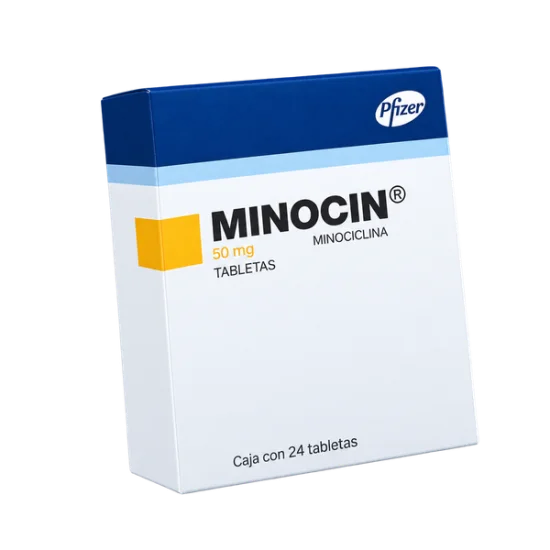
Minocin
Active ingredient: Minocycline

Minocin

Quality products
24/7 Support
Fast delivery
Delivery from 4 days
Select pack Package Per unit Price

Free delivery on orders from $ 296.00, free express delivery from $ 444.00

Secure Payments
Track your order
Best price guarantee

Minocin treats susceptible bacterial infections and inflammatory acne vulgaris. It contains minocycline, a systemic tetracycline antibiotic that limits bacterial protein production and may reduce acne-related inflammation. It is used in an individually prescribed amount.

Overview

Minocin contains minocycline, commonly supplied as minocycline hydrochloride, in tablet form. Minocycline is a systemic tetracycline antibiotic, meaning it travels through the bloodstream rather than acting only on the skin.

The active ingredient is used for selected bacterial infections and inflammatory Acne Vulgaris.

Dosage and administration

  • Dose: Minocin tablets are marked 100 mg, while the prescribed amount per intake is set individually for each person rather than being one fixed amount for everyone.
  • Frequency: Take Minocin at the frequency prescribed for the selected bacterial infection or inflammatory acne vulgaris.
  • Timing: Follow the prescribed timing in relation to meals and time of day.
  • Duration: Use Minocin for the individually prescribed treatment duration. Acne treatment forms part of a broader plan and is reviewed with the overall response to treatment.
  • Route: Take Minocin orally as tablets with water, following the prescribed instructions for the formulation.

Formulation

Minocin contains minocycline, commonly supplied as minocycline hydrochloride, in tablet form. Minocycline is a systemic tetracycline antibiotic, meaning it travels through the bloodstream rather than acting only on the skin.

The active ingredient is used for selected bacterial infections and inflammatory Acne Vulgaris. Acne vulgaris is the medical term for acne involving blocked pores, excess oil, bacteria, and inflammation. Minocin does not treat colds or influenza, which are usually caused by viruses.

Active Ingredient and Drug Class

Minocycline is the active medicine associated with the brand name Minocin. It belongs to the tetracycline antibiotic class and acts against susceptible bacteria. The Canadian product information identifies minocycline products as prescription medicines used only when the clinical diagnosis supports antibiotic treatment [1].

Clinical Uses in Acne and Bacterial Disease

For acne, oral minocycline may be prescribed when inflammatory lesions are widespread, painful, or unsuitable for topical treatment alone. Antibiotic therapy is usually part of a broader acne plan rather than a permanent stand-alone treatment. A clinician may combine it with a topical non-antibiotic treatment to reduce antibiotic exposure and support longer-term control.

The choice of antibiotic depends on the suspected organism, local resistance patterns, previous treatment, allergies, pregnancy status, and liver or kidney health. Minocin is not appropriate for every type of acne or every bacterial infection.

Take the prescribed amount at the same times each day. Irregular use can make it harder to judge whether the treatment is helping.

How it affects the body

Minocycline enters susceptible bacteria and attaches to the 30S ribosomal subunit. A ribosome is the bacterial structure that produces proteins needed for growth and survival. By interfering with protein production, minocycline slows bacterial proliferation rather than acting as a universal bactericidal agent.

Bacterial Protein-Synthesis Inhibition

The antibacterial action explains why Minocin may help with susceptible bacterial disease but cannot treat influenza, most colds, or other viral illnesses. The WHO antibiotic stewardship framework supports using antibiotics only for an appropriate indication and for the shortest clinician-directed course that addresses that indication [2].

Anti-Inflammatory Relevance in Acne

Acne improvement involves more than reducing bacteria. Minocycline can also reduce inflammatory activity associated with acne lesions, which may lessen redness, swelling, and tenderness over time. Improvement is gradual, and early lack of change does not justify increasing the amount independently.

Prolonged oral antibiotic monotherapy is generally avoided. Acne that persists, scars, or worsens needs reassessment so the treatment plan can be adjusted.

Therapeutic indications

The active ingredient is used for selected bacterial infections and inflammatory Acne Vulgaris. Acne vulgaris is the medical term for acne involving blocked pores, excess oil, bacteria, and inflammation. Minocin does not treat colds or influenza, which are usually caused by viruses.

For acne, oral minocycline may be prescribed when inflammatory lesions are widespread, painful, or unsuitable for topical treatment alone. Antibiotic therapy is usually part of a broader acne plan rather than a permanent stand-alone treatment. A clinician may combine it with a topical non-antibiotic treatment to reduce antibiotic exposure and support longer-term control.

The choice of antibiotic depends on the suspected organism, local resistance patterns, previous treatment, allergies, pregnancy status, and liver or kidney health. Minocin is not appropriate for every type of acne or every bacterial infection.

Common mistakes

Frequent mistakes include:

  • Taking Minocin together with iron, calcium, magnesium, zinc, or an antacid.
  • Swallowing it with very little water.
  • Lying down immediately after taking it.
  • Driving before knowing whether dizziness or vertigo occurs.
  • Stopping as soon as acne begins to look better.
  • Continuing leftover tablets for a later flare.
  • Sharing tablets with someone whose rash looks similar.
  • Forgetting to mention isotretinoin, retinoid drugs, supplements, or birth control.
Keep a simple intake reminder that includes mineral supplements and antacids. The aim is to prevent absorption problems, not to take extra tablets when the schedule becomes confusing.

When not to use it

Minocin is not for you if you have had a serious allergic reaction to minocycline, another tetracycline, or an ingredient in the prescribed formulation. It also requires specific medical review in the following situations:

  • Pregnancy or a possibility of pregnancy.
  • Breastfeeding.
  • Children younger than the age permitted by the prescriber.
  • Significant liver disease or previous antibiotic-related liver injury.
  • Kidney disease or substantial reduction in kidney function.
  • Autoimmune disease, especially with joint pain, rash, or unusual fatigue.
  • Previous intracranial hypertension or unexplained severe headaches.
  • A history of marked photosensitivity.
  • Treatment with rifampicin, retinoid medicines, anticoagulants, or mineral-containing products.

When this is not for you

Minocin may not be suitable if you have had a serious reaction to minocycline or another tetracycline. Talk with the prescriber before using it if you are pregnant, breastfeeding, have liver or kidney problems, autoimmune symptoms, severe headaches, strong sun sensitivity, or take rifampicin, retinoid medicines, anticoagulants, or mineral-containing products.

Possible side effects

Minocycline can cause nausea, dizziness, headache, and increased sensitivity to sunlight. Side effects vary with dose, duration, medical history, and individual response. Persistent or worsening symptoms need clinical review.

Common and Manageable Effects

Nausea may improve when minocycline is taken with the food permitted for that formulation. Adequate fluids can help with throat or oesophageal comfort. Sun protection is sensible because tetracycline antibiotics can increase photosensitivity.

Dizziness and vertigo deserve special attention. They can affect balance, cycling, climbing stairs, or driving, even when the person feels mentally alert. Do not drive until the effect on coordination is clear.

Serious Adverse Reactions

Seek urgent medical assessment for:

  • Trouble breathing, facial swelling, or a rapidly spreading rash.
  • Severe skin peeling, blistering, or sores involving the mouth or eyes.
  • Severe headache with blurred or double vision.
  • Yellowing of the skin or eyes, dark urine, or marked abdominal discomfort.
  • Severe weakness, unusual bruising, or rapidly worsening joint symptoms.

Severe headache with visual changes can signal raised intracranial pressure and should not be managed by simply stopping and restarting the medicine. The FDA prescribing information describes serious neurological, hepatic, skin, and hypersensitivity reactions associated with minocycline [3].

Longer-Term Monitoring Issues

Longer courses require attention to liver symptoms, pigmentation changes, autoimmune symptoms, and persistent dizziness. Unusual blue-grey or brown pigmentation of skin, nails, gums, teeth, or scars should be reported. Rare events are not expected outcomes, yet duration and individual risk factors influence monitoring needs.

Comparison

Alternatives to Minocin for Acne and Infection

Treatment alternatives depend on the diagnosis rather than the product name. Acne severity, scarring, pregnancy status, resistance, allergy history, and previous treatment all influence selection.

Treatment category Typical role and limitation
Minocycline or another tetracycline antibiotic Oral treatment for selected inflammatory acne or susceptible bacterial disease; requires interaction and adverse-effect review
Topical retinoid or other topical acne treatment Useful for localised acne and maintenance; irritation and gradual onset are common limitations
Isotretinoin Considered for severe, scarring, or treatment-resistant acne; requires specialist oversight and strict pregnancy-prevention procedures

Topical Retinoids and Other Non-Antibiotic Acne Treatments

Retinoid drugs act locally to reduce abnormal follicle blockage. They may cause dryness, peeling, and irritation before the skin settles. Pregnancy-specific advice applies to some retinoid treatments, so the exact product matters.

Topical treatment can reduce the need for prolonged oral antibiotic exposure. It may also be used after an oral antibiotic course to help maintain improvement.

Other Tetracycline Antibiotics

Other tetracycline antibiotics may be considered when tolerability, interactions, diagnosis, local guidance, or patient factors favour a different agent. No tetracycline is universally best for every patient. The prescriber should select the formulation and schedule rather than relying on a previous antibiotic course.

Isotretinoin for Severe or Resistant Acne

Isotretinoin may be considered when acne is severe, scarring, or resistant to appropriate treatments. It carries major pregnancy-related risks and requires structured monitoring, counselling, and pregnancy-prevention measures where applicable. It is not a routine replacement for Minocin.

What doctors say

In clinical practice, prescribers usually assess the diagnosis before deciding whether an oral antibiotic is justified. They also review other acne medicines, pregnancy possibility, allergy history, liver and kidney conditions, and previous antibiotic exposure.

A common medical counselling point is that improvement should be judged over an appropriate treatment interval rather than after one or two tablets. Increasing the amount independently can raise harm without correcting an incorrect diagnosis or resistant infection.

Comparison

Comparison table: Antibiotics

Common questions

Can alcohol be used while taking Minocin?

Alcohol is not known to create a routine direct interaction that makes every Minocin course unsafe. It can worsen dizziness, nausea, poor coordination, or dehydration, which are relevant because minocycline can cause vertigo and gastrointestinal symptoms. The WHO antibiotic stewardship guidance, updated in 2023, supports avoiding behaviour that makes side-effect assessment or adherence less reliable .

Can Minocin be taken with food or on an empty stomach?

Food instructions depend on the formulation and the prescribed product information. Taking the tablet with permitted food may reduce nausea, while calcium, iron, magnesium, zinc, and bismuth can reduce absorption if taken too close together. Health Canada’s Canadian product information should guide the timing, and a pharmacist can provide formulation-specific instructions in 2026 .

Can people under 18 use Minocin?

Minocycline is not automatically suitable for every child or adolescent. Tooth development, bone development, the indication, and the patient’s age must be considered before prescribing. Health Canada’s 2023 product information describes age-related tetracycline precautions, and the prescriber should make the individual decision [4].

Can Minocin be combined with supplements or other medicines?

Mineral supplements and antacids containing calcium, iron, magnesium, zinc, or bismuth can interfere with absorption. Rifampicin can alter hormonal contraceptive reliability, while other antibiotics such as amoxicillin, penicillin, or Augmentin should be combined only when a clinician identifies a clear reason. The American Academy of Dermatology acne guidance published in 2024 supports reviewing the complete treatment plan rather than adding antibiotics independently [5].

Do you offer anonymous delivery?

Your order will be securely packed and shipped within 24 hours. This is exactly what your package will look like (images of an actual item sent). It has the size and look of a regular private letter (24x11x0.7 cm) and its contents cannot be seen.

Customer Feedback on Minocin

4.2
Based on 5 reviews
Graham, 55 Toronto 8 weeks
Verified
Rating: 5 out of 5

I used the prescribed Minocin course for inflammatory acne on my back. By the later part of the course, the deeper sore spots had settled and I was satisfied with the improvement.

Oct 11, 2026
Thomas M., 44 Ottawa 8 weeks
Verified
Rating: 5 out of 5

Minocin helped reduce the painful facial breakouts I had been dealing with. The tablets were straightforward to take with a full glass of water, and the change became noticeable gradually.

Oct 19, 2026
Ian, 34 St. John's 6 weeks
Verified
Rating: 3 out of 5

The acne improved, although it took longer than I expected. I had some mild dizziness during the first part of treatment, so I was careful about driving until I knew how it affected me.

Oct 24, 2026
Jack, 38 Abbotsford 8 weeks
Verified
Rating: 5 out of 5

The inflamed spots became less frequent during my course of Minocin. I liked that the improvement was clear enough to notice when shaving and washing my face.

Nov 1, 2026
Steven, 33 Montreal 6 weeks
Verified
Rating: 3 out of 5

Minocin did not fully clear my skin, and the dizziness became bothersome enough that I stopped after speaking with my doctor. A different approach was needed for the remaining acne.

Nov 9, 2026

Sources

  1. Health Canada (2023). Drug Product Database: Minocin and minocycline product information.
  2. World Health Organization (2023). The WHO AWaRe Antibiotic Book.
  3. U.S. Food and Drug Administration (2020). Minocycline hydrochloride prescribing information.
  4. Health Canada (2023). Product Monograph: Minocin (minocycline hydrochloride).
  5. American Academy of Dermatology (2024). Guidelines of care for the management of acne vulgaris.
Get our free app Shop faster and track your orders 4.0 · 269 reviews Install